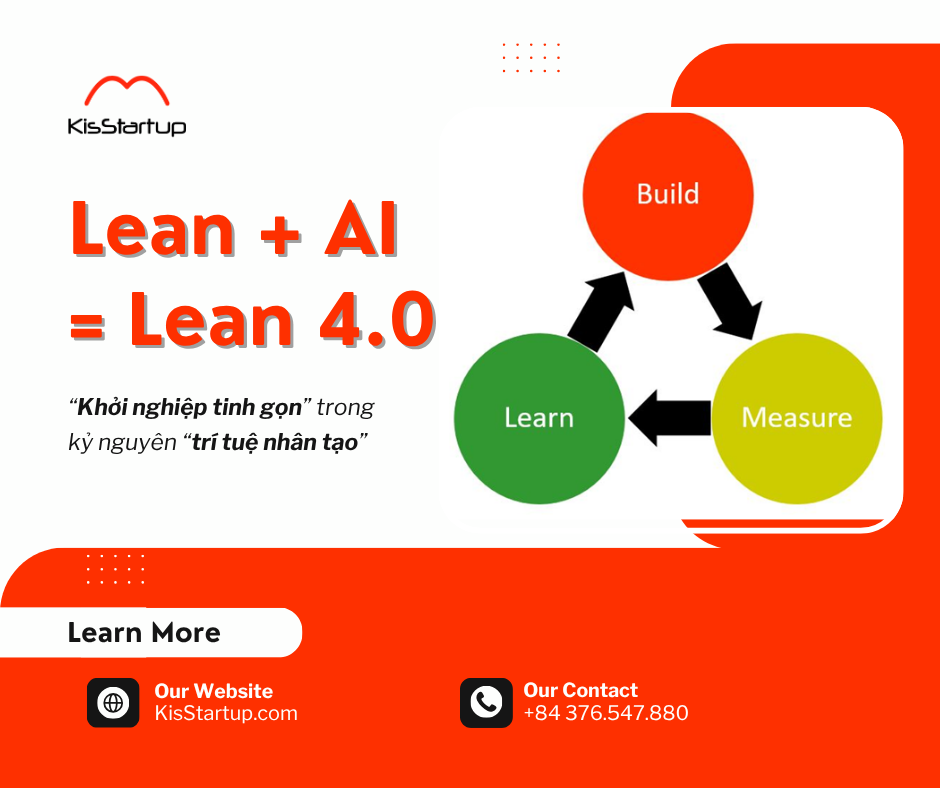
Lean startup

Lesson 11. Lean Storytelling: When Lean Startup Meets Product–Service Marketing
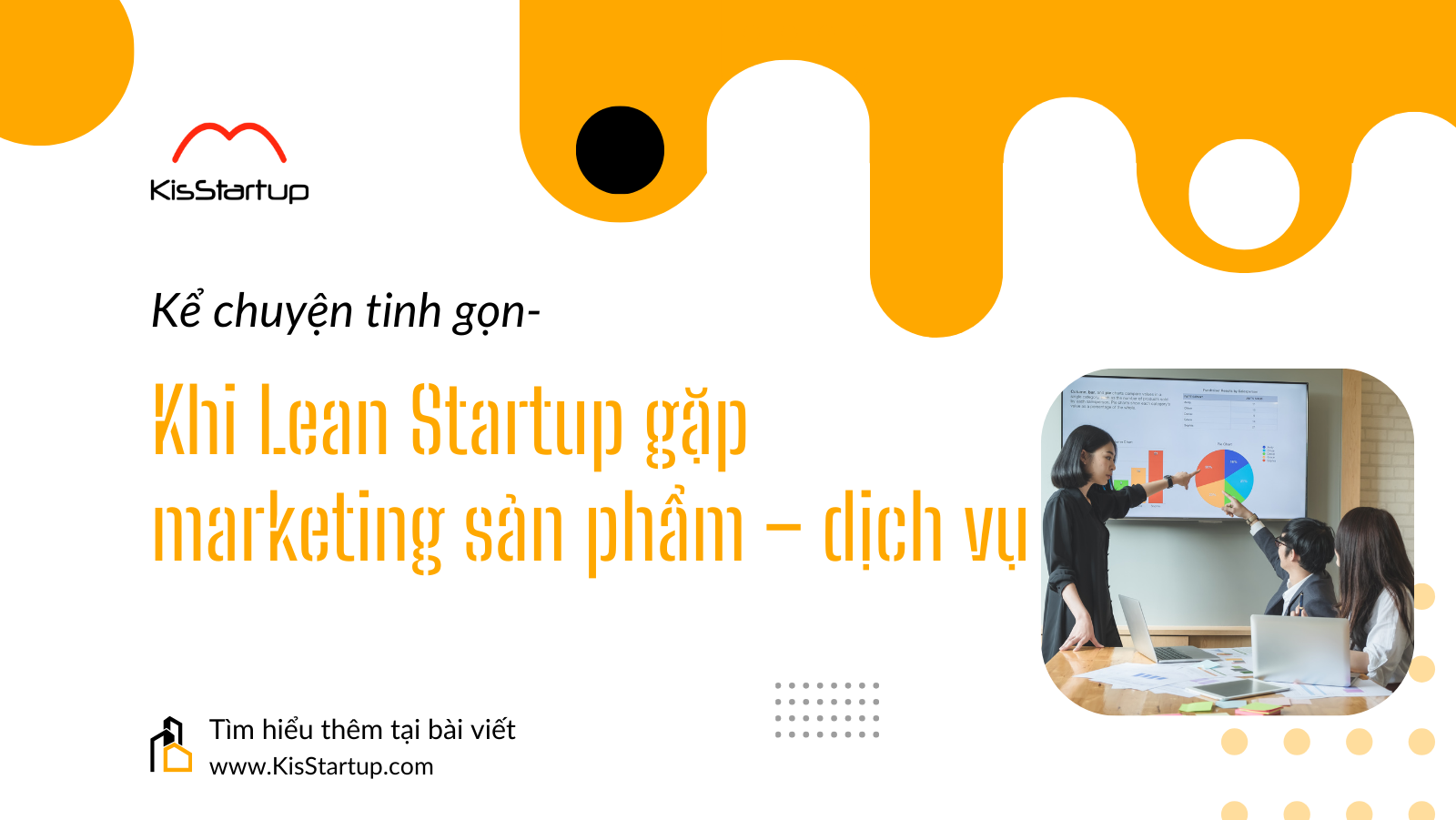
In marketing, people often begin with the question: “What story should we tell to make it compelling?” With the Lean Startup mindset, I would switch the order: “Which story has been validated to truly resonate with what customers are seeking?” When we change the question, the approach also shifts: instead of writing a grand narrative about the brand, we design small experiments with messages, usage scenarios, social proof, and calls to action; we measure responses like researchers, letting data guide us to the right story.

Three building blocks form what I call “lean storytelling”: human touchpoints, numbers that speak, and learning loops. When these pieces turn in sync, they transform ordinary words into real revenue—and more importantly, sustained trust.

Human Touchpoints: Stories Begin with Real Moments

Every product–service story should be anchored in a concrete moment: where the customer is, what they are facing, what frustration or expectation arises. At KisStartup, we often open our notebooks right after an interview to capture the customer’s “golden quote.” A homestay owner once told us: “I’m only afraid customers will say it looks nice but not like the photos.” We used that exact line as the headline for an interior service landing page: “Beautiful like the photos—only more durable.” Not fancy words, just authenticity.

Lean storytelling is not about polishing the product—it’s about returning real life to the words. If a customer says “easier on my hands,” don’t rewrite it as “optimized operation.” If they sigh with relief because they “no longer have to watch the clock to collect payments,” don’t dress it up as “improved cash flow.” Keep the raw texture of life, then add a minimal proof point: a before–after photo, an on-time invoice screenshot, a 12-second clip of real usage. The story gains weight because it preserves traces of reality.

Numbers That Speak: Every Story Needs a Measurement Lever

A good story evokes emotion. A correct story demonstrates changed behavior. Lean forces us to attach each content piece to a single measurable goal: booking a call, leaving a phone number, downloading a document, adding to cart, returning to purchase. I appreciate how small numbers lead the way.

Start with two versions of the same story: one emphasizing pain points, the other highlighting the desired future. Put them on two almost-identical landing pages—only the headline and intro differ—and split traffic for 48–72 hours. If the “pain point” version yields a 6.3% form-fill rate compared to 3.8% for the “future scenario” version, you have your first answer: customers respond more strongly to problem-solving than dreamy futures. But don’t stop there; examine the quality of the conversions—call duration, booking rate, questions asked. Numbers don’t replace listening, but they help you prioritize what to listen to.

Thin but useful indicators keep the story tied to behavior: time spent reading to 75%, save–share vs. like ratios, direct traffic percentage two weeks post-launch (a signal of brand recall), conversion rate of viewers who reach second 10 of a video, number of branded keywords searched after a campaign. You don’t need dozens of dashboards—just a few clear curves to make decisions.

The Learning Loop: Write – Measure – Adjust – Rewrite

Each story is a content MVP. Don’t wait for perfection—run through the loop instead. Day 1: publish a 250-word story about a “pain-trigger moment.” Day 3: based on responses, create a real-use video incorporating the customer’s exact quote and add subtitles. Day 6: write a 600-word case with post-use numbers. Change only one element per loop—headline, timeline, call to action, or social proof. Changing one variable at a time reveals what actually moves the needle.

Choose the right format for each story: “hear–see” fits short videos; “before–after” fits carousels; “benefit calculation” fits landing pages with savings tables. When a story shows traction—price inquiries, inbox messages for samples, email replies—archive it as a long-term asset: add it to your Customer Stories page, sales deck, or team training materials using the exact customer language.

Practice: Build a Lean Story Frame in One Afternoon

Suppose you sell a revenue–expense management solution for homestays. Start with one real person. Call them and ask three questions: “When was your last late payment?”, “How did you handle it?”, “What do you most fear repeating?” Keep the one quote that makes you sit up—use it as the opening line. Then describe the usage situation in 4–5 simple lines—no hype. Add minimal proof: a reconciled report screenshot or a message saying “no more watching the clock.” End with a small action: “Book a 15-minute demo—we’ll use your actual data.”

If possible, add a before–after metric over 14 days: “Late payments dropped from 7 to 2; average collection time decreased from 41 to 26 days.” Don’t claim “37% time saved” unless you’ve actually measured it; say exactly what’s true, then promise to update in 30 days. Marketing becomes not a promise, but a shared improvement journal.

Balancing Story and Data: Don’t Let Numbers Dry Out Words, or Words Blur Numbers

The trap in marketing is either “measuring by feeling” or “measuring everything.” Lean teaches focus: if this month’s objective is onboarding 20 new B2B clients, track three indicators—appointments from stories, appointment-to-trial rate, trial-to-contract rate. Let stories serve these ratios: open with copy that gets appointments, use short cases to secure trials, and simple ROI tables to close contracts. Numbers become the heartbeat of the words.

Conversely, don’t let words drown numbers. If a story performs well online but doesn’t appear in the CRM as “appointments,” ask: is the call to action clear? Is the timeline specific? Is the booking page mobile-friendly? A small tweak—from “Contact us for more info” to “Book a 15-minute demo with your data”—can move the numbers.

Ethics of Storytelling: Honesty, Respect, and Anti-Impact-Washing

The best stories are true stories. When using community data (artisans, farmers, patients…), ask permission, explain the purpose, credit contributors, share benefits. When discussing social or environmental impact, separate outputs from outcomes: training sessions don’t equal increased income; trees planted don’t equal restored biodiversity. Marketing may soar, but its wings must be stitched with honesty.

Two Examples, One Principle
Example A – “Pain Relief” Rhythm (B2B)

“Three late payments in a month made Ms. Hoa dread phone calls. ‘I hate the line “tomorrow, please,” when tomorrow never comes.’ After 14 days using automated revenue–expense tools, late payments dropped from 7 to 2, collection time decreased from 41 to 26 days. She said: ‘I no longer have to send reminders. The system does it—I don’t have to be the bad guy.’ Want to see a sample report using your data? Book a 15-minute demo—no commitments.”

Example B – “Future Vision” Rhythm (B2C)

“Minh roasts coffee and believes his beans ‘carry the highland spirit,’ yet online sales stagnate. ‘I want customers to drink it and immediately want to tell a friend.’ We suggested something simple: capture the exact dawn moment of roasting the first batch—keep the lid pop, keep the laughter. In a 58-second video, 42% watched to second 30; trial orders rose 2.1× week-over-week; 27% bought a 500g bag within 10 days. Minh said: ‘Maybe I should stop being philosophical and let customers hear real life.’ Do you have 90 spare minutes? Let’s build a 58-second story together.”

Both examples rest on one principle: real voice, real scenes, real numbers, small calls to action.

Embedding Lean Storytelling into the Organization

Once the team sees lean storytelling’s value, turn it into habit. Weekly: choose a real-life moment. Monthly: choose one vital metric. Quarterly: host a “word surgery” session to analyze high-converting stories and why. Store quotes, screenshots, and raw videos in a shared folder—name files by date–channel–goal. In just a few months, you’ll have a rich internal library enabling sales, customer service, and product teams to speak the same language: the customer’s language.

Write Less to Sell More

Lean storytelling isn’t about writing fewer words—it’s about removing words that don’t matter. When we center people, let numbers guide us, and honor the learning loop, marketing becomes less flashy, less generic, and more grounded. Customers don’t need us to be perfect—they need to feel understood, see us experiment, measure, improve. The story becomes not a poster but a handshake: warm, concise, trustworthy.

If you want one exercise for this afternoon: call a past customer, ask permission to record one honest moment of frustration—or joy—when using your product. Write 200 words around that quote, add a small proof, publish it with a specific call to action. Check numbers three days later. You may discover you weren’t missing a “big idea”—just two small metrics and one true sentence.

© Copyright belongs to KisStartup. Any copying, quoting, or reuse must cite KisStartup as the source.

Author: 
Nguyễn Đặng Tuấn Minh

Lesson 10. Lean Startup for Impact Business Models: When “Lean Innovation” Meets “Social & Environmental Value”

Across ten years working with impact-driven enterprises, we have learned a simple truth: impact does not emerge from good intentions—it emerges from disciplined learning. Lean Startup offers that discipline, turning impact vision into cycles of small experiments, real measurement, and constant learning. This article goes straight into practice: designing impact-focused MVPs, raising impact capital the lean way, building innovation accounting for impact, and addressing a question often asked by entrepreneurs in underserved regions: “Can a small, unprofitable mountain-based enterprise really raise impact investment?”

“Lean Impact”: Start From a Real Pain, Not a Beautiful Slogan

Every impact model begins with a socio-environmental problem with real “pain intensity”—and someone willing to pay for a solution. Lean anchors your vision in real behaviors:

  • Before saying “poverty reduction” or “cultural preservation,” identify the painful moment and real cost to the community: hours lost, money spent, opportunities missed.
  • Instead of heavy-tech MVPs, start with the smallest intervention that shifts behavior (a deposit, a training registration, a signed pilot, a consignment agreement). A 6-month procurement contract with 30 farmers generates far more learning than 1,000 symbolic signatures.

Impact must be defined as a measurable behavior change—not a message.

Impact MVP: Minimal Product – Non-Minimal Impact

Many teams assume that “doing impact” means doing everything at once—training, product, communications, reporting—leading to burnout. The lean approach cuts the MVP along one impact pathway but with deep measurable results.

Take a mountain-area example: Ms. Trần Thị Hiền in Sa Pa wants to “bring brocade into modern interiors.” Instead of opening a workshop and showroom immediately, a lean MVP could be a digital catalogue of 30 motifs, materials, and three interior concepts; signing three pilot rooms with local homestays/hotels. Impact is measurable right away: increased hourly weaving income, number of new artisans, percentage of motifs with benefit-sharing agreements, and degree of import substitution.

The MVP opens opportunities to redefine the product itself: selling treated brocade panels to interior workshops in Hanoi may deliver higher margins and faster turnover than complete products. As seen in many teams, shifting from “product love” to “market love” is a turning point.

Raising Impact Capital: Sell the Learning Curve, Not Dreams

Impact investors (GLI funds, cultural funds, climate funds, community funds) look for three things:

  1. A clear Impact Thesis: the problem, who benefits, the behavioral change, and why your approach is replicable.
  2. Sustainable Unit Economics: each unit of impact must not deepen losses. Who pays for the impact—the end customer, B2B partners, or blended finance in early stages?
  3. Data discipline: how impact is measured, by whom, how often, and how the data drives business decisions.

A lean capital-raising practice builds a thin but sharp “Impact Data Room”: a one-page impact thesis; a one-page logic model; revenue traction with 3–5 core impact metrics; three conditional LOIs; and a 12–18-month plan focused on testing assumptions for the next funding round.

For loss-making enterprises, what convinces investors is not “we’ll be profitable next year” but the shrinking loss curve together with rising impact indicators backed by root-cause learning (e.g., 18% defect reduction from fiber standardization; 22% more paid working hours due to digitalized scheduling; reduced receivable days from 45 to 21 through standardized hotel contracts).

Innovation Accounting for Impact: The Ledger of Learning

Thick “impact reports” are useless if not tied to decisions. Innovation Accounting integrates impact into core operations—measure less, measure well, measure to act.

Three layers must lock together:

  • Output: hours paid fairly, number of households involved, m² of fire-retardant brocade, tons of organic waste composted, training completion rates.
  • Outcome: increased income, attendance rates, re-order rates for interior products, percentage of hotels switching from imported to local materials, reduced chemical fertilizer cost per hectare.
  • Impact: improved livelihood resilience, reduced supply-chain emissions, preservation of traditional knowledge (with community consent).

Lean practice: choose 5–7 “vital metrics” per quarter, each with definition, data source, frequency, responsible owner, and decision thresholds.

Legal Digital Data: The Bridge to New Models & Cultural Funds

A recurring question from mountainous provinces (Lào Cai, Sơn La) is: “We are small and remote—how do we convince investors?”
The practical answer: build data assets—legally compliant, IP-respecting, community-benefit-aligned.

For Sa Pa brocade:

  • Digitize motifs with metadata about cultural owners, stories, knowledge holders, and benefit-sharing agreements.
  • License usage contexts: commercial interiors, capsule fashion, museum merchandise—each linked to community revenue-sharing.
  • Build a living supply-chain map: fibers, dyes, weaving, finishing, installation, bottlenecks, losses. This transparency attracts cultural and community funds (FPIC-compliant).

Digital data is not just for reporting—it's saleable: licensing motifs, selling fast-design packs to architects, providing traceability certificates for hotels. Once data has unit economics, cultural and GLI funds begin funding blended models.

Can Small Mountain Enterprises Raise Impact Capital?

Absolutely—if you shift the narrative from “we need money” to “we have an improving livelihood curve and need fuel to accelerate.”

Investors respond when they see:

  • A path out of losses (month-over-month loss reduction with a verified operational improvement).
  • Traction on both sides: at least three paying customers and one “anchor partner.”
  • “Saw-tooth” impact (seasonality, errors, fluctuations) with feedback loops to fix them.
  • Community governance, benefit-sharing, and talent succession.

When these sit in a thin Impact Data Room, doors open: GLI/ESG funds, cultural grants, data-infrastructure grants, community crowdfunding, and revenue-based financing.

Ethical Safeguards (Non-Negotiable)

Three principles:

  1. FPIC (Free, Prior, Informed Consent): communities may say no, withdraw, or require clarity.
  2. IP & Benefit Sharing: traditional motifs are not free resources; all licenses must include transparent sharing.
  3. No impact-washing: all metrics must trace back to raw data; distinctions between output and outcome must be clear.

A Lean 6–12 Month Roadmap (Suggested)

  • Months 1–2: Validate problem & rights; 20–30 interviews; logic model; FPIC; choose 5–7 vital metrics.
  • Months 3–4: MVP & paid pilots; finalize benefit-sharing terms; standardize data collection.
  • Months 5–6: Unit economics & data digitization; supply-chain mapping; publish traction+impact; first 6–12-month contract.
  • Months 7–9: Cautious scaling; optimize defects, receivables, re-orders; prepare Impact Data Room; approach funds.
  • Months 10–12: Deepen impact; train young artisans; test sustainability certifications; plan next funding.

Tell the Story So Investors Want to Join Your Learning Loop

Tell it like an investigation with progress:

“We hypothesized that artisan income increases with interior-grade quality standards. We defined ‘increase’ as +20% hourly income in 90 days. In March, we installed three pilot rooms; one failed due to fabric shrinkage. We added a moisture-control step; defects fell 18%, re-orders reached 67%. The bottleneck now lies in receivables. We seek USD 80,000 to consolidate inventory and scale finishing for 50 artisans, aiming for 12 hotels across 9 provinces in six months.”

That learning curve is what investors buy.

Impact is not a badge—it is the steering wheel that guides your enterprise through difficult curves, powered by data and community respect. Impact capital, then, is not magic—it is fuel for a learning engine already running.

© Copyright belongs to KisStartup. Any form of copying, quoting, or reuse must clearly cite KisStartup as the source.

Author: 
Nguyễn Đặng Tuấn Minh

Lesson 9. Lean Startup in Approaching Investors – Learning to “Raise Capital Leanly” Instead of “Asking for Money”


Nguyễn Đặng Tuấn Minh

There is an uncomfortable truth: most pitching sessions fail not because the idea is bad, but because there is no evidence of learning. Investors don’t buy blueprints; they fund disciplined learning. Lean Startup gives us the language and rhythm to turn fundraising into a real Build–Measure–Learn cycle: build a small step forward, measure with “real signals,” and learn to make the next decision. When you raise capital this way, you’re not “begging” for money; you’re inviting investors into a running loop of progress.

Over ten years of accompanying startups, KisStartup has seen both sides: deals that unlocked growth at the right moment—and opportunities lost simply because the data was hollow, the signals were noisy, or expectations were misaligned. This article synthesizes a practice-oriented perspective: what investors expect, where startups typically go wrong, and how to raise capital leanly—lean in assumptions, lean in evidence, lean in narrative.

The “marriage” between investors and startups begins with… progress

Comparing “choosing investors to choosing a life partner” isn’t just a fun metaphor. Marriage operates on trust; the strongest trust is built on repeated behavior. It’s the same in startups: professional investors rarely require a perfect solution; they look for a trajectory of progress. How do you understand the market better today than yesterday? Is this learning repeatable? Do you have the discipline to keep going when assumptions break?

From their perspective, four lenses appear frequently—not as a static checklist, but as a way to read your learning loop:

  • Market: large enough size, painful enough demand, open timing window. What they want to see is behavioral proof: deposits, trial payments, pilot contracts, binding letters of intent (LOI with terms).
  • Team: ability to learn fast, complementary roles, just enough consistency to avoid random pivots, and just enough humility to correct early.
  • Product/Technology: what is new, what is hard to copy, and more importantly: which real pain this novelty has already touched in the field.
  • Finance & Model: how you make money today, how that changes as you scale, and which assumptions have been validated with data.

If fundraising is “selling the future using present-day evidence,” then the most valuable evidence isn’t glossy slides—it’s the trace of validated learning.

Three common mistakes we encounter
1) “Market validation is the staff’s job”

Outsourced surveys, dozens of superficial interviews, reports filled with charts—but the founder has never spent an hour with a real customer. The result? Strategic decisions based on the team’s “echo,” not the customer’s voice. Lean demands the opposite: the founder must be the first person to hold raw data. You can delegate the running, but not the understanding.

Practical suggestion: for every major assumption cycle (problem, solution, pricing, channel), conduct at least 20 deep conversations led directly by a founder. Each conversation needs a timestamp, current cost, decision influencer, and a small commitment behavior after the interview (signing up for pilot, leaving payment info, refundable deposit). Without behavior, data remains… opinion.

2) “More than 100 data points is enough

The number of interviews doesn’t equal depth of learning. We’ve seen spreadsheets boasting “100 responses,” but the questions are closed, the answers are polite, and no real motivations are revealed. Investors value insight saturation, not sample count. Saturation appears when answers begin repeating within each target segment, and each segment links to a clear action implication (message change, channel shift, package restructuring, payer change).

Practical suggestion: instead of showing “100 surveys,” highlight three pivotal insights that led to three decisions and three measurable changes (e.g., CTA change increased sign-up completion from 9% to 17% in 14 days on channel X; pricing moved from A to B, paid-pilot close rate doubled; removed feature C, onboarding time dropped 30%).

3) “Not preparing traction as a learning story”

Traction is not “how much revenue”; it is the chain of evidence showing you’re approaching product–market fit. Many teams bring aggregated totals (downloads, sign-ups) and stop there. These numbers rarely convince. Investors want context: cohort return rates, B2B sales cycle length, CAC at pilot scale, funnel conversion step-by-step, willingness-to-pay after experiencing—or not experiencing—the core feature.

Practical suggestion: tell traction as a storyline:
“January: validated problem with 27 B2B customers; February: ran 5 paid pilots; March: closed first 12-month contract at USD 2,000 with renewal clause; sales cycle dropped from 78 to 49 days after changing ROI messaging; NPS for users of feature X is 46; 90-day churn 3.8% due to [reason], resolved by [action].”
Any number that doesn’t trigger a next action is decoration.

Lean fundraising: build the loop of learning – validation – raising
Define the assumptions of your fundraising cycle

The money you seek is fuel for a big experiment, not a warm blanket. State clearly: with amount Y in Z months, you will prove A–B–C at what standard (e.g., 20 B2B paid contracts at minimum USD 1,500/year; sales cycle < 60 days; CAC < 40% of first-year LTV). When standards are clear, decision branches are clear: hit → scale; miss → cut/pivot.

Create a lean Data Room

A lightweight but complete data room signals disciplined information management—a strong sign of execution capability. In practice, 8–10 documents are enough for early rounds:

  • One-pager & deck (problem, solution, market, model, team, fundraising roadmap)
  • Traction timeline with annotations on “pivot points”: what changed – why – results
  • Customer interviews/insight summaries (include 5–7 strong verbatim quotes)
  • 12–18 month plan: milestones, budget by category, key assumptions, risks & mitigations
  • Unit economics table (to the extent of “knowing what you don’t know”: weak assumptions & how you're validating them)
  • Framework term sheet (capital needed, use of funds, runway, milestones for next round)

“Investment is also learning”: choose investors like co-authors

Lean doesn’t encourage “taking money at all costs.” The best round is the one that adds intelligence. A simple practice: ask reverse questions. You are not in a “petition–approval” position; you’re finding a partner. Direct questions save enormous pain:

  • What is your maximum check size for this round, and what role do you expect to play?
  • How long is your due-diligence process, and what points can cause a stop?
  • In your current portfolio, what is the most recent success/failure case and key lesson?
  • Expected exit horizon? What level of operational involvement is “ideal” for you?

Their answers reveal alignment. Good partnerships start with honest agreements.

Storytelling that makes investors want to “enter your loop”

Don’t present like a dry chronicle. Tell it like an investigation:

  • We believed X.
  • We defined X by behavior Y and set standard Z.
  • We tried A; results diverged; root cause was B.
  • We fixed C; remeasured; trajectory shifted to D.
  • Now we need capital to validate E at scale F before unlocking G.

This narrative sounds honest and shows you’re steering. That builds trust.

A note for the Vietnamese market

We are fast adopters of technology, but many companies are slow to build data discipline. When raising capital, this weakness shows instantly: scattered data, non-standard definitions, no chain of decisions tied to data. Fixing it isn’t hard, but requires commitment:

  • Standardize internal metric definitions (active user, MQL/SQL, churn, MRR/ARR, CAC/LTV…)
  • Map data touchpoints along the customer journey and assign “ownership” for each
  • Design a living traction dashboard: update 5–7 key metrics weekly with root-cause notes + actions
  • Store raw customer voice; a few honest quotes often beat a hundred rows of numbers

Investors don’t demand perfection; they demand that you are becoming more correct—with evidence.

Fundraising is also a product—and Lean is how you “design” it

Treat fundraising as a “product” you must fit to a specific investor segment. Define your “customer profile” (sector, risk appetite, check size, horizon), test “distribution channels” (warm intros, demo days, angel communities, sector-focused funds), price reasonably for your stage (reflecting risk + potential, not dreams), measure “conversion rates” across steps (open email → schedule meeting → due diligence → term sheet → disbursement), and learn at each drop-off node.

Lean doesn’t guarantee you’ll secure funding; it guarantees you’ll secure yourself: knowing what you’re learning, how far you’ve learned, and what you need to learn next with new resources. When you enter the meeting with that mindset, any pitch—successful or not—becomes a profitable learning loop. Because whether you receive money or not, you walk out with better questions and clearer evidence for the next cycle.

And that is the essence of Lean Startup: not asking for permission to continue—but learning enough to continue.

© Copyright belongs to KisStartup. Any form of copying, quoting, or reuse must clearly cite KisStartup as the source.
 

Author: 
Nguyễn Đặng Tuấn Minh

Lesson 8. How Lean Inspires a Lifelong Learning Platform – NEXA15 and the 10-Year Journey of KisStartup

Nguyễn Đặng Tuấn Minh

In 2025, KisStartup reaches the milestone of 10 years accompanying Vietnam’s innovation ecosystem. Ten years may not be long in history, but it is enough for us to witness the maturity of a new generation of entrepreneurs—those who dare to try, dare to fail, dare to learn, and dare to start again. Along this journey, we discovered a simple truth: entrepreneurship does not begin with capital—it begins with the capacity to learn.

That is why, as we look back and prepare for a new decade, KisStartup has chosen to invest in the learning capacity of the community by building NEXA15—an online learning platform that is not just a library of courses but a Lean Learning Platform, where each lesson is a Build–Measure–Learn cycle designed for learners to immediately apply in real life.

Why We Choose the Lean Path in Learning

Lean Startup teaches us that every idea only becomes valuable when tested through action. After 10 years of working with thousands of entrepreneurs, we realized that most early failures do not stem from a lack of ideas or capital—but from a lack of the right learning method.

Learners—like entrepreneurs—often fall into three traps:

  1. Accumulating knowledge without taking action,
  2. Acting without measuring,
  3. Measuring without learning.

We aim to break those three traps. NEXA15 is designed so that every module does not end at “understanding,” but requires learners to try, measure, and learn again.

Each lesson is a small experiment—where you cannot just watch a video; you must apply and record your feedback. That is “Lean in learning”: learn just enough, act immediately, fail small, and improve fast.

Lean Learning for Everyone – Not Just Startups

Lean thinking is not limited to technology or early-stage founders. It is a way of thinking and acting in a constantly changing world.

  • For students, Lean helps you self-discover, self-reflect, and find your own path.
  • For SMEs, Lean helps you validate business ideas quickly, reduce investment risks, and accelerate digital transformation.
  • For educators and startup support organizations, Lean provides a structured way to design training, incubation, and coaching programs grounded in real-world feedback.
  • For policymakers and managers, Lean offers a way to observe societal change—not through thick reports, but through evidence gathered from the field.

Thus, NEXA15 is not “a course”—it is a practical knowledge platform designed for anyone to learn and build in their own way.

Why NEXA15 Was Created – Making Learning and Knowledge Sharing Lean

Throughout our journey, KisStartup has designed hundreds of training programs and accompanied startup teams across Vietnam. We noticed a common issue: knowledge is passed on in short workshops, but there is rarely a mechanism to help learners maintain long-term habits of learning and applying.

NEXA15 was created to fill exactly that gap.

Named after NEXA—short for Next Action, Next Learning, Next Impact—and “15” representing 15 minutes of daily learning and practice, the platform is built on three principles:

  1. Learn to act, not learn to know – every course includes an Action Task tied to the learner’s real-life context.
  2. Lean and measurable – short duration, focused content, and built-in progress assessment.
  3. Continuously updated and co-created – content developed from the reality of Vietnamese businesses, refined through feedback from learners and mentors.

In 2025, marking our 10-year journey, we launched a series of 10 Lean courses on Thinkific—distilled from thousands of hours of teaching, research, consulting, and hands-on work.

The 10 Lean Courses on NEXA15
1. Innovation-driven Entrepreneurship – Basic & Advanced

→ Provides frameworks and tools to identify, validate, and scale business models.

2. Digital Transformation for Micro, Small, and Medium Enterprises

→ Helps SMEs understand, select, and apply digital technologies effectively and inclusively.

3. Startup Ecosystems and Global Support Models

→ Analyzes the roles of stakeholders, investors, support organizations, governments, and businesses in fostering innovation.

4. Impact Businesses & Impact Innovation

→ Guides entrepreneurs in measuring impact and building sustainable business models balancing social, environmental, and economic goals.

5. Intellectual Property in Startups

→ Helps founders understand and leverage IP as a strategic asset.

6. Entrepreneurship Based on Cultural Heritage (Basic)

→ Shows how to combine cultural value with business thinking to create unique creative products.

7. AI for Innovation – Basic & Advanced

→ Enables startups to use AI for market research, product design, and business model optimization.

8. ESG for Businesses

→ Introduces practical standards, tools, and roadmaps for SMEs to adopt ESG.

9. Data Asset Management for SMEs

→ Guides businesses in building data strategies and protecting digital assets.

10. Lean Thinking for Founders

→ Synthesizes Lean Startup, Design Thinking, Effectuation, and AI-driven Innovation—the foundation of all KisStartup programs.

Lean Learning to Create Sustainable Value

Each NEXA15 course is not just a lecture, but a real story—drawn from ten years of working alongside Vietnamese businesses, especially founders who have experienced both success and failure.

We believe that knowledge becomes meaningful only when validated through experience, and experience becomes valuable only when given time for reflection.

That’s why every course integrates three components:

  • Real case studies from KisStartup’s projects,
  • Short action exercises for immediate application,
  • Feedback and mentoring mechanisms to help learners not just “learn once,” but learn for life.

From Community – Toward Sustainable Creative Value

Over the past decade, KisStartup has been fortunate to learn from many inspiring people—passionate young founders, persistent innovators, dedicated support organizations, and investors who believe in Vietnam’s potential. They are the reason NEXA15 exists: so this community can keep learning together, sharing with one another, and continuing to grow.

Our 10-year anniversary is not the end of a journey, but the beginning of a new decade—where we look ahead to building a global learning community:

  • where Vietnamese students can learn and connect with international founders,
  • where mentors can share knowledge across borders,
  • where every small idea can become a seed for big change.

We call this “From community—spreading into sustainable creative value.”

Looking Toward the Next Decade – Keep Learning, Keep Creating

In today’s turbulent world, entrepreneurship is not just for the young. It is the spirit of trying, relearning, and reinventing—at any age, in any field. As KisStartup enters its second decade, we hold this belief:

“The entrepreneur of the future is not the one who knows the most, but the one who learns the fastest.”

With NEXA15, we hope to offer that opportunity—to learn lean, experiment small, and generate meaningful impact.

For the past ten years, we have learned through failures.
For the next ten, we hope to learn with you—through action.

KisStartup – 10 Years of Learning, Experimenting, and Spreading Innovation.
From community – to sustainable creative value.

© Copyright belongs to KisStartup. Any form of reproduction, quotation, or reuse must credit KisStartup as the source.

Author: 
Nguyễn Đặng Tuấn Minh

Lesson 7. Learning from Failure – A Decade of KisStartup Walking with Deliberate “Small Stumbles”


Nguyễn Đặng Tuấn Minh

There is a simple truth that becomes clearer to us every year: the entrepreneurial path is not paved with roses; it is built on sharp questions, meaningful data, and many deliberate small stumbles (“cú vấp nhỏ”). When we first began working with Vietnamese entrepreneurs ten years ago, we, too, carried the common romanticism of innovation: that a good idea would naturally find its customers; that persistence was enough. Reality taught us the opposite: without data, there is no learning; without learning, persistence only deepens the mistake.

Looking back, what matters most over the decade is not the number of programs, workshops, or “successful” projects, but the moments when we paused at the right time, narrowed the experiment, reframed the question, and found our map again through small but meaningful pieces of data. These are what we call “lean failures” (thất bại tinh gọn): failing earlier, smaller, documented, and forward-facing.

Why does data—especially qualitative data (dữ liệu định tính)—matter so much?

In the startup world, people talk endlessly about numbers: installs, conversion rates, recurring revenue. They are essential—but they answer what, not why. When a curve doesn’t go the way teams expect, most increase budget or switch channels. Few sit down with real users, ask slowly, listen without interrupting, and rewrite assumptions using everyday language.

We learned that proper qualitative data is not a collection of impressions—it is discipline. Discipline in asking non-leading questions. Discipline in verbatim note-taking, separating “opinions” from “observed behavior.” Discipline in leaving the office often enough to hear the difference between someone who says “I like it” and someone who has actually paid.

Many major pivots came not from dashboards but from direct conversations: comforting a busy mother describing her 12-minute dinner routine; sitting with a building manager to hear invisible inconveniences; calling a churned customer to understand why they left. These fragments are rarely beautiful, but truthful—and when enough of them accumulate, they guide the numbers.

Good questions—and the power of a new one

Not every failure is worth learning from. Only failures grounded in a clear question leave traces of progress. After hundreds of interviews, we gradually abandoned “beautiful but useless” questions like “Do you like this idea?” Instead, questions anchored in past behavior always revealed the truth:

  • “When was the last time you faced this problem? What happened?”
  • “How did you solve it? How long did it take? What was the real cost?”
  • “Why did you choose that approach? Who did you consult?”
  • “What’s the best and worst part of your current solution?”
  • “If there were a ‘good enough’ temporary fix tomorrow, what must it do first?”

These avoid prediction (often full of illusions) and focus on behavior already paid for. Every detail—a cost, a timestamp, an influencer—is actionable. We shift from “listening to comfort” to listening to decide.

Often, a single new question changes everything. “Who actually pays?” once moved a team from an impossible B2C dream to a viable B2B path. Another time, “If we sold only the strongest component, would customers buy?” unlocked an entirely new revenue line. A new question is frequently the true pivot.

A small framework to maintain interview discipline

We keep simple habits:

  • Always go in pairs: one asks, one records. Attention is respect.
  • Record verbatim: separate customer words, our interpretation, and new assumptions.
  • Avoid interviewing friends—politeness corrupts data.
  • Avoid closed questions or future hypotheticals unless tied to immediate commitment (deposit, sign-up, payment info).
  • Prefer in-person interviews to surveys. Surveys are convenient but shallow; one hour face-to-face can save months of drifting.

These small practices give qualitative data enough reliability to guide decisions. When data is reliable, failures stay small.

Applying Steve Blank’s Four Steps with local pragmatism

We value Steve Blank’s Customer Development Model not as doctrine but as rhythm:

  1. Customer Discovery – interviewing for problems & existing solutions; rewriting assumptions using customer language; building “meaningful—valuable—practical” tests.
  2. Customer Validation – collecting behavioral evidence (deposits, paid trials, repeat use) using innovation accounting instead of vanity metrics.
  3. Customer Creation – growing moderately by scaling proven behaviors, not by spreading thin out of fear of missing out.
  4. Company Building – turning lessons into processes, data into reusable knowledge, adaptability into weekly habit.

In Vietnam, step 1 and 2 often merge: teams probe problems while rushing to sell. This is acceptable only if learning and selling remain clearly separated. When the boundary blurs, “beautiful data” drifts you away from reality.

Naming failures precisely

We learned to name failures correctly. “MVP failed” is not enough. We say:

  • “wrong payer,”
  • “misjudged problem priority,”
  • “measured vanity metrics,”
  • “messaged without immediate value,”
  • “chose a conservative market for a solution requiring education,”
  • “overbuilt features unrelated to target behavior.”

Once a failure is named precisely, the next experiment becomes obvious.

Some of the most valuable lessons come from closing projects using data—painful but peaceful. One urban farming team did so after confirming their competitive advantage was not defensible, the market small, and founder time non-scalable. They stopped early to move fast elsewhere. That failure saved them.

Lean + Data: the discipline of “just enough” 

In the AI era, data seems cheap and abundant. The temptation is to collect everything. We choose just enough: only what will be used; only what leads to decisions. Every metric ties to an assumption and a branching threshold. Qualitative data becomes our compass: weekly “learning hours” dedicated to rereading customer voices—not to tell inspiring stories, but to change our questions. When questions change, priorities change; when priorities change, products change.

A practical Customer Discovery script (Vietnamese context)

Start with their problem and current solution—not your idea:

  • “When did you last face this issue? How severe was it?”
  • “How did you handle it? Total cost in time/money/emotion?”
  • “Why that option? Who influenced your choice?”
  • “Best and worst parts of your solution?”
  • “If a ‘good-enough patch’ arrives tomorrow, what must it do first?”

End with a small commitment (deposit, payment info, agreeing to next week’s pilot). If they refuse to pay a tiny cost today, don’t lull yourself with “maybe later.”

Experiment design: failing small, learning big

Each experiment should have:

  • one question,
  • one signal,
  • one decision.

Example: “If we insert service add-on A into one store for two weeks, will 7-day return rate increase ≥20%?” If yes, expand; if no, stop; if slight increase with same complaints, adjust one element and retry.

In multi-stakeholder markets, don’t chase the vague “first customer.” Find the first replicable cluster—a group with similar context, decision-makers, and reasons to pay. You don’t need the whole industry, just one consistent island to build a bridge.

A small promise for those exhausted

When teams are tired, they blame: “the market,” “the team,” “bad luck.” We’re allowed to be tired. But before blaming, ask whether the question was right. Many times, exhaustion comes from carrying the wrong question for too long. Change the question; energy returns.

Failure does not diminish you; silence about failure does. Tell the story with data, better questions, and humility to change beliefs when evidence speaks—that is how we continue.

After ten years, we have learned one thing: love for customers must be greater than love for the product. That love appears not in slogans but in how we listen, record, pause, pivot, and begin again with a better question.

Lean Startup does not glorify failure; it turns failure into building material for knowledge. Every piece of data—number or word—placed correctly, becomes a brick on the path. The path need not be straight; it just needs to move forward. And to move forward, we must learn.

© KisStartup. Any reproduction, citation, or reuse requires clear attribution.

Author: 
Nguyễn Đặng Tuấn Minh

Lesson 6. Lean + AI = Lean 4.0 – Running a Startup with Discipline in the Age of Artificial Intelligence

Nguyễn Đặng Tuấn Minh

If Lean Startup is “the art of learning fast in uncertainty,” then AI is “the turbo engine” for that art. When the two meet, we get Lean 4.0: the Build–Measure–Learn loop accelerates exponentially, decisions rest on richer data, and core assumptions are challenged in real time. Yet this is exactly where questions of ethics, responsibility, and integrity rise: What are we learning fast for? Using whose data? With what impact on people and the environment?

This article takes a pragmatic view: AI does not replace Lean—AI makes Lean more serious. Your ability to learn from failure only improves when you turn AI into a critical ally, place it in the right steps of the learning loop, and keep data ethics as part of your innovation accounting.

Lean 4.0: From a Product Loop to a Cognitive Loop

In classical Lean, we build an MVP, “touch” the market, measure responses, and learn what’s right. In Lean 4.0, AI intervenes in all three stages:

  • During Build, AI helps sketch solutions so quickly that an idea in the morning can become a functional demo by the end of the day. Copy-paste a landing page, auto-generate product descriptions, create virtual support agents—this is how a two-person team can perform the workload of a 6–8 person team.
  • During Measure, AI “reads” data instead of forcing you to stare at it: it auto-classifies feedback, detects emerging themes, suggests customer segments with distinct behaviors, and alerts anomalies in funnels. Measurement is no longer manual digging; it becomes a translation from raw behavior to strategic questions.
  • During Learn, AI acts as your internal challenger—posing counter-questions, simulating “what-if” scenarios, modeling the impact of changes in messaging, pricing, or channels. In other words, AI lets you rehearse failure on the table before failing in the market.

This does not make humans redundant. In fact, as manual tasks become cheaper, the quality of the team’s questions becomes the real competitive edge.

“Lean Failure” + AI: Learning More from the Same Misstep

Looking back at case studies from years of analyzing lean failures—Cyhome (multi-layered B2B, shifting markets), NemZone (pivoting from restaurants to households), or the vertical farming tower project (shutting down based on evidence)—they share one pattern: seeking behavioral truth faster than the founders’ ego. With AI, each journey could have been shorter:

  • For Cyhome, instead of “walking the market” for months, AI could map stakeholders—residents’ forums, building management groups, service providers—and extract key pain points from natural-language data. The result: a positional MVP with differentiated messages and value propositions for residents, managers, and vendors—raising the chance of product-market fit on day one.
  • For NemZone, AI could “read” comments, inbox messages, and orders to detect early household signals: phrases like “for my kid,” “breakfast,” “12-minute bake.” Instead of debating “healthy messaging,” the team could pivot toward convenience–speed–ready-to-eat before burning cash on new outlets.
  • For the farming tower, AI-assisted patent search and novelty matching could have shown early the lack of technical defensibility. Pain arrives earlier—but cheaper: a project closed by evidence, not faith.

All of these are “lean failures”: detecting divergence early, closing learning loops quickly, and adjusting direction using meaningful data. AI simply sharpens and accelerates this rhythm.

AI as a Critical Mentor Inside Your Organization

At the team level, AI can take on three roles:

The Opening Scribe: drafting problem statements, suggesting experiment variants, scaffolding landing pages, preparing “non-leading” interview scripts. What matters is the team’s clarity: Which assumption is riskiest? What signal is strong enough to justify a pivot? What are the ethical limits of the experiment?

The Challenger: generating counterfactuals (“If assumption A were wrong, how would data look?”), running red-team simulations for messaging, forecasting PR risks of scaling fast. Using AI forces teams to write down “win–loss criteria” upfront—this is innovation accounting in discipline.

The Lesson Editor: after each loop, AI summarizes logs, tags assumptions, and links insights across teams. Knowledge no longer dies in personal files; it becomes searchable learning capital, forming the foundation for organizational learning velocity.

The key point: humans define the questions and decision thresholds. AI amplifies.

Ethics, Responsibility, and Integrity: Going Fast Without Losing the Way

Three risk zones must be addressed clearly:

Integrity of information. AI can hallucinate. If you present AI-generated content as fact, you distort your learning loop: you’re measuring user reactions to something nonexistent. The remedy: traceable labels—mark all experimental content as “simulated/ideation,” and only draw conclusions from real behaviors (purchase, usage, repeat).

Privacy and data consent. Lean 4.0 turns operational data into “the new oil,” but without explicit consent, you’re “drilling illegally.” Apply data minimization, anonymization, and provide deletion rights. Learn right—and clean.

Environmental impact. Training/deploying large models consumes energy. “Lean” without resource frugality is contradictory. Startups should favor small–medium models (SaaS/edge), controlled inference, auto-shutdown, and conscious accuracy–cost tradeoffs. Track “energy footprint” as a field in innovation accounting: how much learning is enough, at what cost?

Finding Early Adopters Is Not Enough—How AI Helps You Cross the Chasm

B2B requires early adopters, but staying there stalls growth. AI helps cross this chasm in two ways:

  • Hyper-micro segmentation from interaction data to identify “replicable behavior clusters.” Instead of saying “apartment buildings,” say: “300–500 unit buildings, autonomous management boards, 25–40 age households >40%, currently using app A/B.” That is a replicable template—not just “the first customer.”
  • Predicting word-of-mouth pathways through relationship graphs: who are the “spread nodes,” what conditions activate them, and what stories they repeat. No more “good luck with referrals”—design referral propagation as a feature.

Still, AI cannot replace trust. In B2B, selling the second and third time is the real proof. AI just helps you get there faster—and cheaper.

Lean 4.0 at Work: A New Learning Rhythm for Enterprises

When implementing AI with a Lean mindset, don’t begin with “Where do we apply AI?” but with “What do we need to learn in the next 30 days?” From the question comes the tool; from the tool comes the rhythm:

  • Monday Learning: AI synthesizes customer signals inside and outside the company; the team reads for 15 minutes and picks one assumption to test.
  • Thursday Testing: a micro-MVP goes live (message, pricing, channel variants); AI measures in real time with clean logs.
  • Friday Reflection: AI prepares summaries; the team chooses whether to continue, adjust, or stop. Learning leads to action.

Repeat for 4–6 cycles and you’ll see AI’s real impact: not a “magical revenue curve,” but a steep learning curve. And that curve pulls revenue upward—on time and with less waste.

Mini-Playbook: A Meaningful AI-Driven MVP (Few Bullets, More Discipline)

An AI-enabled MVP “goes live” only when these three questions are clear:

  1. Meaningful – What assumption are you testing that, if wrong, collapses your plan? What signal is enough to conclude?
  2. Valuable – What real value does the user receive during the test (time saved, convenience, emotional benefit)? No value, no real data.
  3. Practical – Can you deploy and measure it within ≤2 weeks? If not, shrink it until you can—while keeping the core question intact.

Add three ethical “locks”:

  • Transparency: Label all AI-generated content; no staged or fake testimonials.
  • Consent: Explain what data is used for, how long it’s stored, who accesses it, and allow withdrawal.
  • Energy footprint: Track training/inference costs; choose lighter solutions before heavy ones.

When the three questions and three “locks” are addressed, you have an MVP–AI that is meaningful, valuable, practical—and ethically clean.

Lean 4.0: Move Fast, Learn Deep, Stay Honest

Lean 4.0 is not “Lean plus a chatbot.” It is disciplined learning amplified: sharper questions, smaller but more frequent experiments, denser yet cleaner feedback. AI helps us fail earlier—and smarter: instead of spending months on a vague assumption, we focus on a few big questions and use AI to examine every angle before stepping into the market.

But because we move faster, we must be more honest—with data, with customers, with our ethical boundaries, and with the environmental footprint of what we build. Lean teaches us to reduce waste; in the AI era, the biggest waste is not money—it is trust.

“AI won’t make you fail less. AI makes each failure more worthwhile.”
— KisStartup, Lean 4.0 – Learning Fast in Uncertainty, Learning Clean in the Age of Machine Learning

© Copyright belongs to KisStartup. Any reproduction, citation, or reuse must clearly credit KisStartup.

Author: 
Nguyễn Đặng Tuấn Minh

Lesson 4: Lean Startup in Recruitment and Team Development

In the previous three articles, we explored the journey of Lean Startup as a mindset of learning-based management, the use of MVPs to understand the market, and—most importantly—how to awaken organizations to real data. But Lean cannot survive long if it only lives at the product or process level.

Ultimately, Lean must go through people.

Each Build–Measure–Learn loop is not only a cycle for products—it is also a cycle for team development. No matter how high-tech a startup is, it is still a story of people: founders who dare to dream and learn, early employees who believe in what no one else sees, and a culture that accepts mistakes as part of finding the right path.

After ten years of working with hundreds of startups in Vietnam, KisStartup has found that one of the key factors determining a startup’s resilience lies not in ideas or capital, but in how they build their team and learning culture. Lean Thinking has become the most powerful tool for developing “entrepreneurial people” — fast, flexible, humble in failure, and bold enough to try again.

Lean doesn’t just teach product building — it teaches people management

Eric Ries wrote, “Entrepreneurship is management.” Yet few realize that “management” in Lean refers not just to managing systems, but to managing people under uncertainty.
A startup in its early days often lacks an HR department, formal training programs, or clear KPIs. Everything is created “while doing and learning.” And within that chaos, organizational culture takes root.

When coaching startups, we often start with a simple question:

“If you hire one more person tomorrow, what do you want them to bring — skills, energy, or a new perspective?”

This question helps the team identify assumptions about people—just like identifying assumptions about customers.
Many founders realize they hire people “like themselves” for comfort, but what a startup needs are complementary people—those who can ask hard questions, challenge old habits, and fill gaps in capability.

Lean thinking teaches founders to test, measure, and learn — so why not apply the same cycle to recruiting and developing people?

Drawing the “Team Persona” — A Lesson from Lean Personas

In Lean Startup, we use the concept of Customer Persona — a profile of the target customer, built from real data. At KisStartup, we expand this into Team Persona — a profile of the ideal person for the current stage of the startup.

An agricultural startup we coached once made the mistake of hiring “senior managers” too early—experienced professionals who lacked an experimental mindset. Conflicts quickly arose: the original team wanted to “test and learn,” while the newcomers wanted to “make things professional right away.”
After several failed iterations, they returned to the Team Persona exercise, defining who they really needed for the next six months—not an experienced manager, but a data-driven engineer who embraced trial and error.

Once they made that shift, the team atmosphere changed dramatically.
They stopped evaluating people by title and started valuing them by how quickly they could learn and adapt. Most importantly, they began to view recruitment itself as a Lean experiment: each hiring round as an MVP, each candidate as a hypothesis, and each probation period as a Build–Measure–Learn cycle.

Co-founders and the Trust Loop

Nothing is leaner than a small founding team that truly understands one another. Yet a co-founder is not just someone to share the workload with — they must share the same learning philosophy.
KisStartup has seen many projects fail simply because the founders didn’t learn at the same rhythm. One wanted to “act fast,” the other wanted to “research more.” One wanted to prove the idea, the other wanted to learn from data. When learning loops are out of sync, teams fracture.

A tourism startup we supported had to pause operations after a year. The issue wasn’t the lack of customers, but disagreement between two founders: one relied on intuition, the other insisted on data.
After taking time to “pause and learn,” they came back with a new mindset:

“We don’t need someone to be right — we just need the data to be right.”

They agreed that every debate would end with a small measurable test. When both committed to the Build–Measure–Learn loop, trust grew stronger. Lean thus became a management framework for trust — not blind trust, but trust validated by action.

A Culture of Failure — and Learning from It

There is no Lean without failure. Yet in Vietnam, “failure” remains a heavy word. Many founders speak of Lean but avoid confronting real data for fear of bad results. They prefer surveys showing “positive signals” and reports of “steady growth,” but rarely ask the hard question: “Why did customers leave?”

At KisStartup, we organize Learning Review sessions where teams openly examine what didn’t go as planned. For many, it’s their first time “failing in public.”
One founder said, “I thought Lean was to avoid failure. Turns out Lean is to fail the right way.”

That realization marked a turning point.

Accepting failure doesn’t mean ignoring mistakes—it means transforming them into learning assets.
In one edtech team, after their first MVP failed, they held a “Failure Learning Ceremony.” Each member shared what they learned, rewrote initial assumptions, and analyzed why they were wrong. That Failure Report became a valuable resource for their next test. Six months later, they successfully raised funding.

A culture that accepts failure doesn’t just strengthen resilience—it unleashes creativity. When people aren’t afraid of being wrong, they dare to propose, experiment, and learn. Lean cannot thrive in judgment; it only grows in psychological safety.

From “Doers” to “Learners”

Startups often seek “people who can get things done,” but Lean teaches us to seek “people who can learn things fast.”
In a world where technology changes rapidly, specific skills can become obsolete overnight, but the ability to learn quickly and adapt remains invaluable.

A smart agriculture startup in Đồng Nai struggled as its technicians were used to taking orders, not experimenting. After joining KisStartup’s mentorship program, they restructured internal training: each new engineer received a learning problem instead of a technical task.
For example, instead of “calibrate the sensor,” they got “investigate why soil humidity readings fluctuate.” Each week, they presented what they learned—not just results. Within two months, the technical team began proposing proactive improvements. They no longer waited for directions—they built their own Build–Measure–Learn loops.

Lean doesn’t create “perfect employees”; it creates people who know how to self-improve.

Lean Culture — From Process to Habit

Many companies try to “install Lean” through checklists, KPIs, and processes, forgetting that Lean cannot be imposed. It’s a collective habit, formed by small, repeated actions.

When KisStartup supported a software company scaling from 10 to 50 people, the biggest challenge wasn’t technical—it was maintaining the try–measure–learn spirit as they grew.
They decided to keep three weekly rituals inspired by Lean:

  1. Monday Learning Hour: Each team shares one insight from customer data or feedback.
  2. Thursday Experiment Day: Four hours to test a small idea without needing approval.
  3. Friday Reflection: The whole team answers three questions: “What did we learn this week?”; “What surprised us?”; “What will we test next week?”

These simple, low-cost rituals sustained a rhythm of learning and openness. When people feel they have the right to learn and the right to fail, Lean spreads naturally—no enforcement needed.

Lean for People — Not to Cut Costs, But to Grow Teams

In Vietnam, “lean” is often misunderstood as “cutting people, cutting costs.” But in the Lean philosophy KisStartup follows, lean means eliminating waste so people have more space to learn and create.
Every startup begins with limited resources. Each person must be a doer, a learner, and an improver.

In a small ecotourism startup in Lâm Đồng, unable to afford a marketing specialist, the founder trained tour guides to tell product stories and manage the fanpage. Within three months, not only did they save costs, but they also built an authentic and relatable brand voice.
They weren’t perfect—but they were flexible enough to learn whatever was needed to survive. That’s Lean in its most vibrant form.

Connecting People and Organizations — The Double Learning Loop

A truly Lean organization is where both individuals and the system learn. Individuals learn to adapt; the organization learns not to repeat mistakes. KisStartup calls this the double-loop learning:

  • The first loop is do–measure–learn.
  • The second loop is learn how to learn—reflecting on whether the learning process itself is effective.
  • Many startups fail after three years not because the market changes, but because they stop learning how to learn. When reflection stops, Lean dies quietly within old habits.

Lean Begins with Products, but Matures Through People

After ten years, KisStartup has seen Lean Startup in Vietnam evolve—from a method to a mindset, from products to culture.
If the MVP is a tool to learn about the market, people are the tool to learn about ourselves.

A startup may change its product ten times, but if the team learns nothing each time, all effort is wasted. Conversely, a learning team will always find new products, new models—even new companies.

Lean teaches us that agility is not about speed, but about the ability to learn and unlearn when data proves us wrong.
And only when people are freed from the fear of failure can organizations truly become lean.

“A startup that learns from failure is still alive.
An organization that learns from its people will live long.”
— KisStartup, 10 Years of Lean Startup in Vietnam

© Copyright KisStartup. Any reproduction, citation, or reuse must credit KisStartup.

Author: 
Nguyễn Đặng Tuấn Minh

Lesson 3. Lean Startup – The Meaningful MVP: When a Product Is Just the Beginning of Learning

If Lean Startup is a philosophy of learning amid uncertainty, then MVP (Minimum Viable Product) is the tool to learn the fastest, cheapest, and most truthfully. But “minimum” does not mean “half-hearted,” and “viable” does not just mean “can survive.” A true MVP is Meaningful – Valuable – Practical: meaningful in its learning goal, valuable to real users, and practical within available resources.

Over 10 years of practicing Lean Startup in Vietnam, KisStartup has witnessed many ventures that began with a “small” MVP but unlocked entirely new business models. Conversely, some failed because they “loved their product more than the market.” These lessons reveal that MVPs are not meant to prove you are right, but to discover what is right for the market—even to redefine what “product” really means.

MVP Is Not a Product – It’s a Question Materialized

One of the most common misunderstandings about MVPs is to treat them as the “first version” of a complete product. In reality, an MVP is the cheapest way to answer the most expensive question: Do customers truly need this solution?

Tony Hsieh, founder of Zappos, did not launch a full e-commerce platform, buy inventory, or write code. He simply photographed shoes from nearby stores and posted them online. When someone placed an order, he went back to buy and ship them himself. That MVP taught him the key insight: people were willing to buy shoes online even without trying them on.

Dropbox did something similar. Before building any software, they created a short video demonstrating how it would work. The three-minute clip attracted tens of thousands of sign-ups—clear proof of real demand.

These classic cases teach us that an MVP is not an “unfinished product,” but a carefully designed learning experiment. It measures not “technical quality,” but the market’s readiness.

A Meaningful MVP – When the Product Helps You Learn What Matters Most

From KisStartup’s experience, the value of an MVP lies not in whether it succeeds or fails, but in what the team learns and can act upon afterward.
We’ve worked with many founders who believed they needed a “complete version” before selling. But testing with MVPs often revealed that the market wanted something entirely different—sometimes just a component, a complementary service, or even data they had unintentionally created.

An agricultural startup once spent nearly two years developing farm management software. Encouraged to test an MVP by selling only the soil moisture sensor module, they unexpectedly received large orders from fertilizer companies interested in monitoring soil quality. That “small” MVP not only generated sales but also opened a new B2B model—selling intermediate products instead of final ones.

Such cases convinced KisStartup that MVPs help expand the definition of “product.” Intermediate goods, data, accompanying services—all can be “products” if they create customer value and fit current capabilities. MVPs free founders from the “perfection trap,” shifting them from product-oriented to market-oriented learning.

Meaningful – Valuable – Practical: The Three Pillars of a Living MVP

Meaningful – Focused Learning

A meaningful MVP must help you learn something specific and measurable. It’s not about “seeing who likes it.” “Meaningful” means each experiment must link to a clear hypothesis and decision criterion.

If you launch a website without knowing what you’re testing—pricing, messaging, or distribution—you’re running a guessing exercise, not an MVP.

Being meaningful also means accepting the truth, even if it’s uncomfortable. If data show customers don’t care, that’s not failure—it’s cheap tuition for an expensive lesson.

KisStartup once guided a food startup to run an MVP through a free tasting session. Sales were low, but feedback revealed that customers preferred traditional flavors over the “modern” ones the founders had assumed. The next version succeeded precisely because they learned the right lesson. The MVP wasn’t flashy, but it was meaningful—it taught them what mattered.

Valuable – Real Value for Real People

An MVP meaningful to you may not be valuable to customers. “Valuable” means your MVP must deliver real, tangible value to users, however small. No one wants to participate in an “experiment” unless it benefits them somehow.

Value can be functional, emotional, or experiential. Dropbox’s simple demo video wasn’t a working product, but it clearly conveyed value: syncing files effortlessly.
In Vietnam, many teams mistake MVPs for “internal demos,” tested only among friends or employees—not real users. Data from such contexts are fake data. A valuable MVP must be exposed to the real market, face real reactions, and handle real feedback.

In our programs, we often ask founders: “Why would someone spend time trying your MVP?” If you can’t answer that, you don’t yet have a valuable MVP.

Practical – Feasible with What You Have

Even the most meaningful and valuable MVP will fail if it’s not practical. “Practical” doesn’t mean oversimplified; it means achievable within your current constraints—money, time, technology, and team capacity.

Many Vietnamese startups fall into the “perfection syndrome”: waiting until they have enough funding, people, and time to start. But Lean Startup teaches that learning doesn’t require “enough”—only “enough to learn.”

A herbal tea cooperative in Lào Cai wanted new packaging, a registered brand, and an online shop before launch. Instead, they tested a practical MVP: temporary labels, direct sales at a fair, and feedback recorded manually. Immediate responses revealed their real target audience—elderly consumers, not young people.

Practical means doing it now with available means. A practical MVP sustains continuous learning and prevents endless “preparation loops.”

When MVP Makes You Love Data More Than Products

The magic of MVPs is that they shift founders’ love from products to data. When you truly aim to learn, you stop trying to prove your product is great—you start trying to understand why users react the way they do.

A community-based tourism startup in Sơn La once spent months designing full service packages. When they ran an MVP by inviting a small group to stay with local families, they learned travelers loved the food and culture but disliked poor sanitation and comfort. The insight: invest in service standards, not infrastructure. The result—lower cost, higher impact.

When MVPs are executed with the Meaningful – Valuable – Practical mindset, data becomes the compass, and the market—not your plan—becomes the teacher.

MVP as a Never-Ending Learning Loop

An MVP doesn’t end when you make your first sale. It ends only when you stop learning. At KisStartup, we call this the “learning saturation point”—when the product, market, and behaviors are clear enough to move from exploration to optimization.
Yet even then, the MVP spirit continues. Every marketing campaign, every feature tweak, every new version can be seen as a new MVP—a new learning loop. Successful startups maintain a learning velocity faster than the market’s change velocity.

Three Practical Principles for Building a Meaningful MVP

There’s no universal formula, but from hundreds of cases, KisStartup distills three core principles:

  • Ask right before acting right. Every MVP should begin with the question: “What assumption, if wrong, would collapse my plan?” Identify your riskiest assumption first—then design to learn about it.
  • Start small but measure seriously. A 100-user MVP with real behavior data beats 10,000 views with no measurement. Tie your data to actions: clicks, purchases, feedback, returns.
  • Stay flexible. MVPs are not for defending your idea but discovering opportunities. If customers want to buy intermediate goods or rent instead of own, treat that as insight, not deviation. Many great business models emerged from such small turns.

MVP as a Mirror of Awareness

A meaningful MVP doesn’t just generate quick revenue—it reveals unseen realities. It’s a mirror that strips away illusions, narrowing the gap between expectations and actual customer behavior.

After 10 years of Lean Startup practice in Vietnam, what KisStartup values most isn’t the successful products but the transformation in founders’ mindsets—from “making what I like” to “learning to make what the market needs.”

Meaningful – Valuable – Practical aren’t just words; they represent three levels of founder maturity:

  • Meaningful: I know what I’m learning and why it matters.
  • Valuable: I know who truly benefits from my product.
  • Practical: I act within my limits, yet continuously expand my learning capacity.

MVPs are meaningful because they help entrepreneurs fall in love with data, not illusions—observe rather than assume—and, above all, learn by doing.

“The market doesn’t speak in words; it speaks through behavior. MVPs are how we listen.”
— KisStartup, 10 Years of Lean Startup in Vietnam

© KisStartup. Any form of copying, quoting, or reuse must credit the source.

Author: 
Nguyễn Đặng Tuấn Minh

Lesson 2. Lean Startup – Core Principles and Invisible Frictions


In the previous lesson, we explored the journey from “teaching” to “doing together.” In this second one, KisStartup raises a crucial point: Lean Startup is a philosophy of managing learning amid uncertainty. In Vietnam, the hardest part is not technology or ideas, but rather the discipline of data and management capacity to turn every experiment into validated learning.

We believe deeply in the entrepreneurial spirit of Vietnamese founders – quick to spot problems, resourceful, and adaptive to technology. But after ten years in the field, KisStartup has seen a paradox: technology is ready, but businesses are not. The Build–Measure–Learn loop often breaks at “Measure” and “Learn,” because market data, consumer behavior, and customer feedback are neither collected, standardized, nor managed as assets. When data doesn’t live, Lean becomes only a slogan.

The Core Philosophy of Lean: Learn Fast — With Evidence — and Decide with Discipline

Lean does not mean doing less for efficiency’s sake. It means doing just enough to learn the right thing. “Just enough” is not minimalism; it is optimizing the ratio between learning signals and testing cost. A good MVP is not the cheapest demo — it’s the smallest experiment that yields the strongest evidence about a key business assumption at the lowest possible cost.

From KisStartup’s perspective, the Lean philosophy can be distilled into three principles:

  • Everything is an assumption until proven by strong data — ideas, personas, distribution channels, pricing models, all of it.
  • Experiments are the unit of progress, and data is the unit of learning. No measurement, no learning.
  • Decisions require discipline. Every iteration needs clear branching criteria (pivot or persevere) and operational definitions for metrics.

In short: Lean is management of learning. Management here doesn’t mean paperwork — it means designing a system where assumptions → experiments → data → learning → decisions flow coherently, repeatably, and verifiably.

Invisible Frictions in Vietnamese Startups: From Intuition to “Data Debt”

Vietnamese founders are fast adopters of technology. Many are eager to use chatbots, AI-driven marketing, or automated ad optimization tools. A recent survey found that 74% of Vietnamese SMEs claim to have or be implementing a digital strategy — an impressive figure.

But once you step into the data room, the story changes. Information is scattered across platforms, with no single source of truth. Sales teams have customer lists but no record of service history; marketing tracks campaigns but not the customer journey; production tracks quality metrics but not post-sale feedback. Many still store screenshots of customer chats in Zalo — dead data.

As a result, AI can only skim the surface. Not because it’s weak — but because it has no clean data to feed on. Forecasts miss the mark, product recommendations fall flat, dashboards look beautiful but say nothing. “We’ve gone digital” — perhaps, but digital transformation ≠ data transformation. Without a solid data foundation, digital strategy is just a coat of paint.

This leads to what we call data debt — like technical debt in software, it’s the future cost you’ll pay for not collecting or standardizing data early. The longer you delay, the harder it becomes to fix. When startups raise funds or expand, data debt appears instantly: inconsistent metrics, missing traceability, and no credible growth story. Investors don’t just look at revenue; they assess the quality of the data behind it.

Another friction comes from weak management skills. Vietnamese founders have sharp market instincts — a great strength — but intuition cannot replace disciplined management. Lean demands founders who can set hypotheses realistically, choose leading indicators wisely, stop at the right time, and measure correctly. Many teams “run Lean” by feel — repeating tests without learning because they lack measurement definitions, baselines, or review rhythms. Lean becomes a “spin cycle of experiments for fun.”

Entrepreneurial spirit exists — data and management do not. That’s where Lean returns as a discipline, not a trend.

Vietnamese Entrepreneurial Spirit: A Real Advantage — If Paired with Data Discipline

In KisStartup’s programs, we often see founders who identify problems quickly, sense opportunities across supply chains, and customize products for local markets. Their tech skills are also accelerating: building and testing prototypes or AI/no-code tools within hours.

But “speed” becomes sustainable only when paired with data-driven learning cycles.

A herbal cooperative in the highlands once pivoted its entire product direction after three weeks of testing a self-built landing page. Data showed that their most loyal customers were urban families with young children seeking natural products — not tourists as they had assumed. This small, data-backed insight freed them from illusions and set a foundation for real growth.

Conversely, an e-commerce startup heavily invested in AI forecasting but suffered losses because of fragmented historical data — leading to wrong demand predictions and stock mismanagement. Their mistake wasn’t using AI; it was using it in the wrong order — they needed clean data before intelligence.

KisStartup’s consistent message: make data instinctive in daily business, as naturally as a craftsman reading the wood grain before carving. When this “data instinct” forms, Lean truly lives in the organization.

From Philosophy to Practice: Lean Data in 90 Days

We propose a 90-day Lean Data roadmap — minimal, practical, and focused on learning, not grand data projects.

Month 1: Define what you want to learn
Start with business questions, not tools.
“What do we need to validate in the next 4 weeks to decide on price/positioning/channel?”
Choose 1–2 key assumptions. Write operational definitions for each metric — how to measure, from where, how often, and what threshold triggers a decision. This is your team’s data contract.

Month 2: Bring data together
Pick one single source of truth (even a well-managed spreadsheet or minimal CRM). Aim for consistency, not perfection. All orders, feedback, and marketing experiments flow into this source. Review weekly — don’t let data die in screenshots.

Month 3: Run 2–3 fast learning cycles
Each lasting 10–14 days. Before starting, define branching criteria (continue, adjust, stop). After each cycle, write a short “lesson learned” linked to actual data. Don’t change 5 things at once — change one, learn deeply.

The goal: build data muscles, not buy AI toys. Once the muscles are strong, AI will work naturally — not the other way around.

Innovation Accounting: Measuring Learning, Not Vanity

When founders hear “accounting,” they think finance. Innovation accounting is bookkeeping for learning. It answers:
“What evidence shows we’ve moved from A to B? So what’s next?”

KisStartup uses a simple but powerful framework:

  • Key assumption: e.g., “Customers will pay 159,000 VND for a 7-day trial.”
  • Experiment design: channels, messages, test samples, lead collection.
  • Leading indicators: click-throughs, signups, paid conversions.
  • Decision thresholds: e.g., CR ≥ 4% → continue; 2–4% → adjust message; <2% → stop and revisit positioning.
  • Lessons learned: 1–2 short insights tied to data, not feelings.

The power lies in repetition and traceability. After 6–8 weeks, you have a chain of evidence showing your learning journey — enough to convince teammates, investors, and yourself.

Building a Learning Organization: When Lean Becomes a Habit

Lean fails if it depends on one data-loving founder. It must become an organizational discipline. KisStartup recommends a few small but transformative habits:

  • 1 learning hour/week: no interruptions, focused on reviewing experiment data. Ask: What did we learn? What surprised us? What one thing do we change next?
  • 1-page data dictionary: define all metrics (“What does ‘active user’ mean?”). Keep it visible. Never have two definitions for one metric.
  • Field immersion ritual: once a month, product, marketing, and sales teams must talk directly to customers. No one builds for customers from behind an Excel file.

These habits foster a culture of evidence-based dialogue. People debate with data, not feelings. That’s when Lean truly comes alive.

AI: A Jet Engine Only Works on a Plane with a Frame

We love AI — we use it daily to accelerate Build–Measure–Learn loops: prototype generation, content testing, feedback analysis, segmentation. But even the strongest engine needs a solid frame — clean data, clear metrics, and disciplined decisions.

In practice, KisStartup starts with a data MVP: a minimal event table (viewed, added to cart, purchased, churn reason), basic consent/privacy setup, and a one-page dashboard. No need for complex BI; what matters is a continuous data flow. Once the pipeline runs, AI can truly perform.

Policy and Ecosystem: Learning Fast at a National Scale

Many countries already treat data as growth infrastructure for SMEs, offering support packages to reduce friction in building data foundations. The best models emphasize:

  • targeted support (standardization, implementation consulting, right tools),
  • discouraging vanity reporting,
  • linking funding with data discipline (requiring minimum data standards for eligibility).

In Vietnam, KisStartup advocates a “Lean first – digital later” approach: before pushing expensive tools, help SMEs build basic data discipline, measure key leading indicators, and complete 2–3 real learning cycles. Local governments, support organizations, and universities can serve as learning platforms — places to train “data muscles” before scaling up.

Two Real-World Snapshots: When Data Changes Direction and Saves Cash Flow

Case 1 – Pivoting through Data Insight
A personal care startup positioned itself as “premium gifts.” After three small test rounds (pre-orders + interviews with non-buyers), they found that the main reason for rejection wasn’t price — it was lack of safety proof. They shifted their MVP from “luxury packaging” to “simple clinical evidence” (test certificates, ingredient transparency, process videos). Sales didn’t skyrocket, but conversion doubled. Data revealed a truth: customers buy trust, not boxes.

Case 2 – Cash Flow Saved by One Leading Metric
A fresh-food retailer struggled with inventory. They wanted AI forecasting; we suggested tracking one simple leading metric: repeat orders within 7 days. Data showed nearby customers reordered far more when receiving push notifications between 4–6 p.m. Targeting that “golden hour” sped up turnover, reduced waste, and revived cash flow. AI later helped — but one measurable truth saved them first.

Conclusion

Lean Startup in Vietnam will go further once we accept this truth: ideas and technology are abundant — disciplined learning is not.

When businesses treat data as fuel, not decoration; when teams dedicate weekly hours to learning from evidence; when every decision has branching criteria — Lean stops being a slogan and becomes a way of life.

KisStartup believes in the Vietnamese entrepreneurial spirit — flexible, resilient, hands-on. And we believe that spirit, placed within a disciplined Lean framework, will produce sustainable businesses — not just fast runners, but long-distance contenders.

When more enterprises “work with data” instinctively, AI will cease to be a magic wand and become a jet engine on a well-built aircraft. Innovation will no longer belong to a lucky few — but become the shared capability of an entire ecosystem.

© Copyright KisStartup. All reproduction, citation, or reuse must credit KisStartup as the source.

Author: 
Nguyễn Đặng Tuấn Minh

From Mindset to Action for Green Export – Part 5: The “Small but Standard” Strategy – Micro-lot, Product Stream Segregation, and the Build–Measure–Learn Loop

Under limited resources, converting an entire farming area or factory to meet Voluntary Sustainability Standards (VSS) at once can drive up costs and risks significantly. The lean startup mindset offers a more sustainable path: start small with a micro-lot (5–10% of output), segregate product streams to prevent mixing, learn by doing, collect real data, and then scale selectively. This aligns with the Build–Measure–Learn principle: instead of lengthy planning, build a “minimum viable product” (MVP) — a pilot batch — measure technical, commercial, and impact indicators, and learn to adjust or pivot before scaling. This approach, systematized in Lean Startup, has proven effective in reducing waste and accelerating market fit.

Micro-lot: A Laboratory for New Business Models

In the specialty coffee industry, a micro-lot refers to a traceable, segregated batch — distinct in origin and process. Its value lies not in size but in controlled, consistent, and transparent management — enabling storytelling, pricing experiments, and new customer relationships.

In supply chain terms, a micro-lot only adds value when its identity is preserved throughout: physical segregation, dedicated records and logs, batch labeling, and controlled handovers — the logic behind identity preservation, segregation, and traceability in agri-food systems.

Segregation: Turning Data into Assets

“Segregation” is essential to prevent micro-lots from dissolving into bulk commodities. Traceability frameworks like ISO 22005 and GS1 GTS emphasize systems for recording and linking each node in the chain to specific batches. Simply put: no segregation, no traceability; no traceability, no value differentiation.

With new regulations such as the EUDR requiring plot-level geolocation and recordkeeping, segregation becomes a must-have for market access. It should be seen not as a cost, but as an investment in data assets that strengthen buyer negotiations.

Micro-lot as an MVP in the Build–Measure–Learn Cycle

Build – Identify a manageable lot (5–10% output) with uniform variety, ripeness, and process. Design a short SOP, assign batch codes, allocate separate storage, and record in simple digital logs (Google Sheets/Excel). This is your MVP — small, distinct, and low-cost to test and learn quickly.

Measure – Select a minimal set of indicators in three layers:

  • Technical: moisture/defect rate, MRL/microbiology test results, SOP compliance rate.
  • Commercial: offer vs. accepted price, deal closure speed, contract terms.
  • Impact/ESG: water/fertilizer reduction, PPE use, farmer feedback.

Focus on actionable metrics — numbers that drive decisions — not vanity statistics.

Learn – Compare unit price differentials, added costs, and risk reductions between micro-lots and bulk batches. If results fall short, pivot: target a new customer segment, adjust processing, or refine the product story and packaging. The B–M–L loop helps avoid “big spend first, lessons later.”

Premium Potential: “Different Enough” and “Clean Enough”

Evidence from specialty markets shows genuine potential: micro-lot prices often exceed local or bulk prices by 74–327%. Yet, premiums aren’t automatic — they depend on sensory quality, traceability storytelling, and batch uniformity.

Still, the “tuition cost” must be acknowledged: segregation reduces blending flexibility and raises management costs. The premium must offset this loss — a reality highlighted by coffee market analysts.

Designing Micro-lots as Business Model Experiments

A micro-lot is a sandbox for testing all business model variables:

  • Customer segment: experiment with direct sales to roasters or high-end chains instead of bulk traders.
  • Value proposition: offer “uniform–traceable–ESG story” instead of “cheap–fast.”
  • Channels & relationships: small but recurring contracts; season-on-season improvements; price differentiation by quality score.
  • Revenue & cost structure: separate accounting to identify the “premium break-even point.”
  • Impact (E–S–G): measure water savings, reduced chemical use, safety improvements, and data credibility.

This design fits Lean philosophy: test fast – learn fast – iterate fast instead of perfect plans first.

Suggested 90–180–360-Day Roadmap

  • 90 days: select a micro-lot; create short SOPs, batch codes, and separate storage; log data and photos via Google Sheets/Excel for collaboration.
  • 180 days: measure key indicators (technical, commercial, impact); conduct representative lab tests (MRL/microbiology); test tiered pricing with 2–3 buyers.
  • 360 days: review the B–M–L loop; scale selectively (from 5–10% to 20–30% of output) if premium–risk–cost results are positive; align with ISO 22005/GS1 standards for full traceability and VSS readiness.

Common Risks & Mitigation

  • Micro-lot without segregation: loss of identity → loss of premium. → Solution: strict labeling, separate storage, handover documentation per ISO 22005/GS1.
  • Tracking vanity metrics: attractive numbers that don’t guide action. → Solution: focus on 5–7 actionable indicators tied to pricing, volume, or cost decisions.
  • Premium not offsetting costs: weak story or quality differentiation.→ Solution: improve process, pivot customer segment, or refine product/packaging.

Micro-lot and segregation are not just technical measures — they reflect a Lean experimentation mindset: Build–Measure–Learn. Start small to learn fast; standardize data and processes for reliability; scale up with evidence. When micro-lots deliver measurable differentiation, firms both unlock premiums and shorten their path to VSS compliance — since the hardest part (data discipline and traceability) is built from day one.

References
Blank, S. (2013). Why the lean start-up changes everything. Harvard Business Review.

https://hbr.org/2013/05/why-the-lean-start-up-changes-everything (Harvard Business Review)

Blank, S. (2013). Free reprints of “Why the Lean Startup Changes Everything”. Steve Blank Blog.

https://steveblank.com/2013/05/06/free-reprints-of-why-the-lean-startup-... (Steve Blank)

ISO. (2007). ISO 22005:2007—Traceability in the feed and food chain.

https://www.iso.org/standard/36297.html (ISO)

ISO. (2007). ISO 22005:2007 (online browsing platform) — principles & requirements.

https://www.iso.org/obp/ui/ (ISO)

GS1. (2021). GS1 Global Traceability Standard (GTS).

https://www.gs1.org/standards/gs1-global-traceability-standard/current-s... (GS1)

GS1. (2017). GS1 Global Traceability Standard (PDF).

https://www.gs1.org/sites/default/files/docs/traceability/GS1_Global_Tra... (GS1)

European Commission. (n.d.). Traceability and geolocation of commodities subject to EUDR.

https://green-forum.ec.europa.eu/nature-and-biodiversity/deforestation-r...

Driven Coffee. (2024). What is microlot coffee, and what makes it special?

https://www.drivencoffee.com/blogs/blog/what-is-microlot-coffee (Driven Coffee)

Perfect Daily Grind. (2020). What is a micro lot in specialty coffee?

https://perfectdailygrind.com/2020/04/what-is-a-micro-lot-in-specialty-c... (Perfect Daily Grind)

Coffeelands/CRS. (2013, June 26). The economic impacts of microlots.

https://coffeelands.crs.org/2013/06/367-the-economic-impacts-of-microlots/ (coffeelands.crs.org)

Daily Coffee News. (2013, June 26). Exploring the economic impacts of microlots….

https://dailycoffeenews.com/2013/06/26/exploring-the-economic-impacts-of... (Daily Coffee News by Roast Magazine)

Oilslick Coffee. (2023, June 18). Microlots (Coffee Prices: The Big Fix).

https://oilslickcoffee.com/economics/market/coffee-the-big-fix/ (Oil Slick Coffee)

Smyth, S., & Phillips, P. (2002). Product differentiation alternatives: Identity preservation, segregation, and traceability. AgBioForum, 5(2), 30–42.

https://agbioforum.org/wp-content/uploads/2021/02/AgBioForum_5_2_30.pdf (agbioforum.org)

Google Support. (n.d.). Share & collaborate on a spreadsheet.

https://support.google.com/a/users/answer/13309904

Microsoft Support. (n.d.). Collaborate on Excel workbooks at the same time with co-authoring.

https://support.microsoft.com/office/7152aa8b-b791-414c-a3bb-3024e46fb104 (Harvard Business Review)

(Tài liệu bổ trợ: PECB/ISO 22005 overview; GS1 chain-of-custody & DSCSA để tham chiếu mô hình truy xuất/segregation trong các chuỗi khác). (PECB)

Author: 
Nguyễn Đặng Tuấn Minh