Technology Transfer

Listening to the Market to Avoid “Blocked Pathways” in Commercialization

Nguyễn Đặng Tuấn Minh

In recent years, the phrase “commercializing research outcomes” has moved from technical workshops into high-level policy discussions. In Vietnam, this conversation is no longer limited to engineering schools or a handful of application-oriented laboratories.  
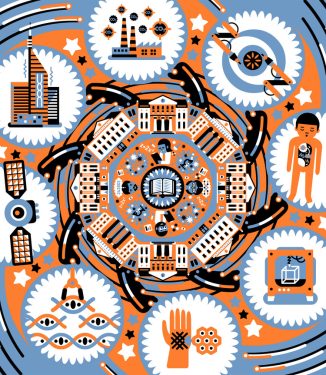

 Is our science produced merely for publication, or to solve real problems for society and the economy? Image: Nature/Jan Kallwejt

This shift is not unique to Vietnam. Around the world, universities and research institutes are undergoing a similar transformation—from the traditional “research first, application later” mindset to a more candid and pragmatic market-driven research approach.

Importantly, this does not dismiss basic science. Researchers should not be asked to give up fundamental inquiry to “go sell products.” What is changing is our understanding of the role of scientists and universities. Knowledge today is expected not only to be published but also to find its way out of the laboratory—to become products, services, policies, or tangible improvements in daily life.

From “research for publication” to “research for use”

The tradition of most universities—both in Vietnam and in advanced economies—has been to prioritize academic reputation: journal papers, patents, and citations. This creates scientific prestige and a strong knowledge foundation for the country. Yet, it also has limits: many high-value research outcomes stay on paper or in project reports because they were never tied to real user needs.

Market-driven research begins with different questions: Who will use this? Would they pay for it—and why? Instead of waiting for companies to knock on the lab door, research teams proactively explore the market, interview users, talk to industry leaders, and validate needs. They do not wait for assignment—they move first.

This approach pushes scientists beyond the familiar role of “knowledge creators” to also become “value creators”—a far more challenging expectation than many people realize.

When the laboratory is no longer the final destination

In the U.S., programs like NSF I-Corps and SBIR have reshaped commercialization. Research teams must go into the field, talk to dozens of potential customers, and confront the blunt question rarely heard at academic conferences: “Do I really need this?” The goal is not to turn scientists into salespeople but to reveal that what they consider “important” may not match what the market prioritizes. This process can lead to product adjustments, changes in research direction, or even abandoning original ideas for more viable ones.

Globally, strong ecosystems embrace both academic research and market-driven pathways rather than forcing one to mimic the other.

Korea involves industry and investors early by asking: “Who will use this technology, and in which value chain?” Universities in Australia and the U.S.—such as the University of Melbourne and Ohio State—operate dual-path commercialization models: one traditional (IP licensing, spin-offs), and one flexible (early collaboration with industry even before a product is finalized).

Middle-income countries like Egypt, the Philippines, and Kenya are building TTOs, mentorship programs, and seed funds to help researchers move from the lab to prototypes and early market engagement. They view knowledge transfer as a public mission, not only a revenue opportunity.
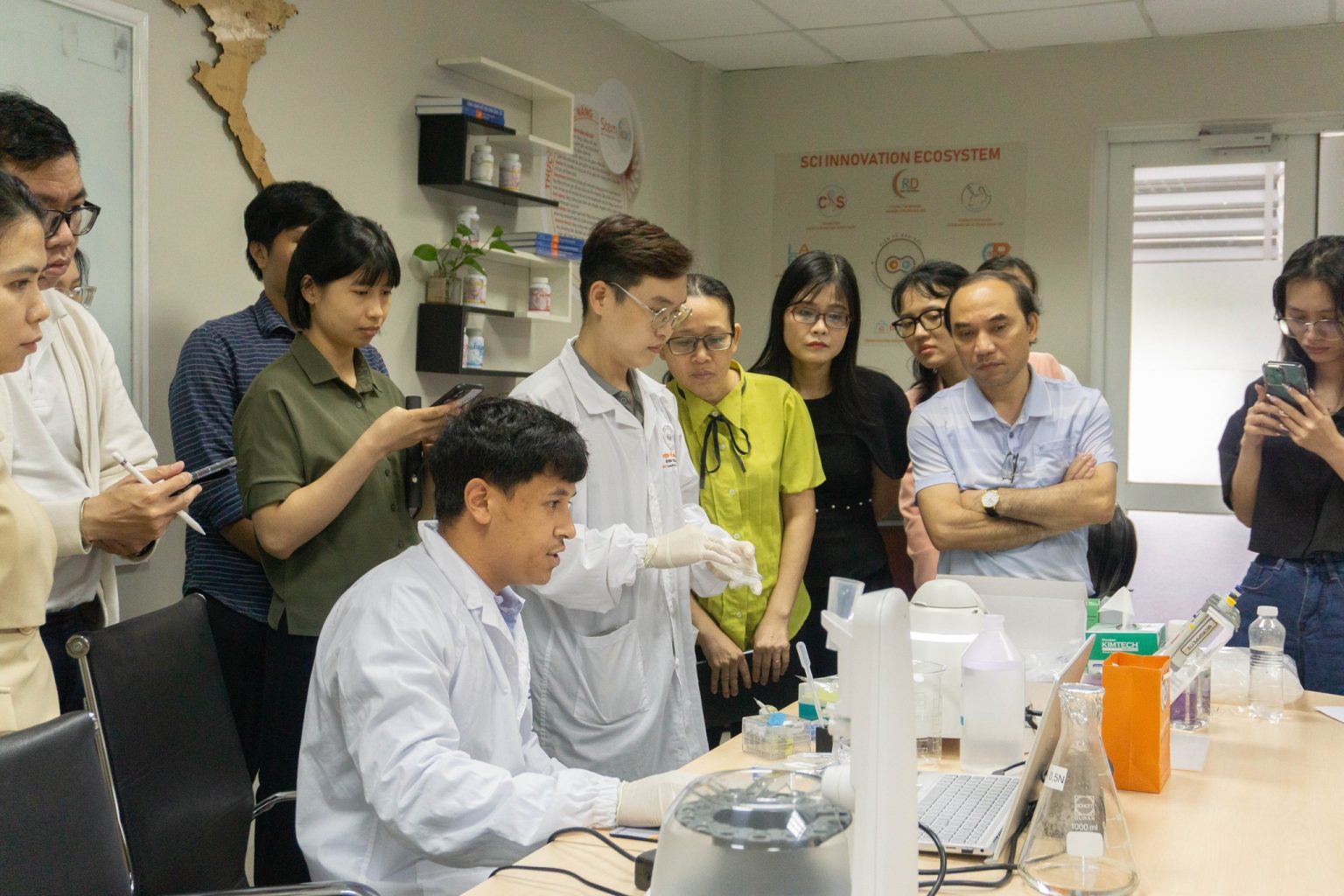
A workshop on exosome isolation techniques—ultra-small extracellular vesicles secreted by cells that contain DNA, RNA, and proteins and have numerous applications in medicine—organized by the Stem Cell Institute, University of Science, Vietnam National University Ho Chi Minh City, brought together hospitals and research institutions from across the country. Photo: Stem Cell Institute

Statistics show why this matters. Universities using market-driven approaches often generate three times more spin-offs, five times higher licensing revenue, and two to three times higher real-world adoption compared to publication-focused models. When the market is heard early, the path to market is far less congested.

A different logic of success

In traditional research, the process begins with the researcher’s idea, and success is measured by publications and patents. Businesses—if involved—appear at the end to license or adopt the technology.

Market-driven research begins with real user pain points: What is the real problem? Who faces it? Why hasn’t it been solved? Would they pay for a solution? Success is measured by tangible impact: revenue, spin-offs, high-quality jobs, or improvements in social challenges such as environment, public health, or food security.

The workflow also changes—from linear (Research → Application) to iterative (Research ↔ Validation ↔ Market Feedback ↔ Adjustment). Products do not emerge fully formed in silence; they evolve through continuous dialogue with real users. As a result, commercialization is faster, not because of shortcuts but because late-stage trial-and-error is reduced.

Vietnam: policy momentum is here—execution is the real test

Vietnam’s 2025–2030 period is shaped by a new policy mindset. The Law on Science, Technology and Innovation 2025 and Resolution 57 emphasize linking research with market capability. Decree 271/2025/ND-CP introduces benefit-sharing mechanisms, expands autonomy, and encourages collaborative technology transfer instead of handoff-style assignments.

From global experience and emerging domestic models, several practical, low-cost but high-impact steps can be taken:

1. Build market-research capacity inside universities.

Scientists trained in labs and publications cannot be expected to naturally converse with industry. Skills like understanding pain points, interpreting sector trends, and interviewing users must be taught—many countries integrate I-Corps-style training into graduate programs.

2. Make benefit-sharing clear and fair.

If scientists are expected to join commercialization, they must be compensated appropriately—not merely thanked in final reports. Transparent revenue sharing, IP licensing benefits, and equity stakes in spin-offs build trust and motivation.

3. Bring enterprises in at the beginning.

Treat businesses as co-designers of research problems. They know where bottlenecks are in production, logistics, standards, and global value chains.

4. Pilot an “I-Corps Vietnam” program.

Provide small grants not for more experiments but to meet the market, gather real feedback, and adjust assumptions. Only teams that validate real demand receive further funding.

5. Foster the idea of “scientist as potential founder.”

This does not mean forcing all faculty to start companies. Rather, it recognizes that labs can be the birthplace of science-based startups, and scientists can become co-founders or scientific advisors—with legal protection and university support.

Countries like the U.K. remind us that commercialization is slow work. University College London invested nearly a decade in spin-outs before seeing substantial returns—and remained patient because it was building foundations, not chasing metrics.

As one UCL technology-transfer director noted: “It took us 30 years to get here.”
Commercialization is not an overnight miracle—it is a shared learning journey between universities, businesses, and society.

If Vietnam wants science to become not only a source of pride but a competitive capability, the path lies not only in policy documents but in changing daily habits: taking scientists to the market, bringing businesses into the lab, and accepting that early “no-revenue periods” are normal in building long-term impact.

Knowledge truly lives only when it steps outside. The rest—patience, endurance, and mutual trust—is up to all of us.

(Published in Tia Sáng, Issue 21/2025)
Measuring Technology Readiness Level (TRL) – Bridging the Gap Between Lab and Market

When a scientist starts thinking about bringing their research results to the market, the first question shouldn’t be “Who will buy it?” but rather “How ready is my technology?” — and that’s where the Technology Readiness Levels (TRL) scale becomes an essential tool.

What is TRL?

TRL helps you assess how mature your technology is — from the initial concept to market readiness.
The scale includes 10 levels (from 0 to 9), divided into three main stages:

  • Idea (TRL 0–3): Concept formation, identifying needs, and proving feasibility.
  • Prototype (TRL 4–5): Developing and testing prototypes in the lab or in relevant environments.
  • Validation & Production (TRL 6–9): Validating the technology in real-world conditions, pilot-scale operation, and preparing for full-scale production.

Example:
If you’re developing a new CO₂-absorbing material, at TRL 2 you may only have a theoretical model and chemical formulation. Once you’ve synthesized and tested it successfully in the lab, you’re at TRL 4. When that material is tested in an actual production line, you’ve reached TRL 7–8.

Why TRL Matters

TRL not only helps you understand your technology’s maturity but also allows you to communicate more effectively with key stakeholders:

  • Speak the same language with investors, enterprises, and funding agencies. They need to know which stage you’re in to assess risk and funding needs.
  • Develop a clear roadmap. From basic research (TRL 1–2) to production readiness (TRL 8–9), you’ll know what steps come next — more testing, certification, partnership, or scaling up.
  • Align expectations and resources. Not every technology needs to jump to higher TRLs right away — taking steady, well-planned steps often gets you to market faster.

Combining TRL with the Lean Startup Mindset

We encourage scientists to apply the Lean Startup mindset — Build–Measure–Learn — alongside TRL to accelerate commercialization:

1. Build:
At every TRL level, create a “mini version” of your technology — a prototype, model, or simulation.
→ Example: A battery research team builds a small demo so manufacturers can test integration into real products.

2. Measure:
Collect feedback from users, companies, or technical experts — not only technical data but also economic and operational factors.
→ This feedback is the “raw material” to determine whether your technology truly solves a market problem.

3. Learn:
Use the insights gathered to refine your technology, process, or even pivot your approach to better fit market needs.
→ Each iteration brings you closer to the next TRL — and closer to real users.

From Lab to Market – More Than Just Technology

Commercializing technology is not simply about “selling” — it’s about shifting your mindset from “research for knowledge” to “research for impact.”
With TRL, you can clearly see where you are, what’s needed to move forward, and when it’s time to listen to the market.

KisStartup’s Advice

  • Evaluate your technology’s TRL today.
  • Share your results with colleagues, mentors, or potential business partners to discuss next steps.
  • Every cycle of testing – measuring – learning not only raises your TRL but also shortens the distance between research and market.

KisStartup accompanies scientists in their journey toward technology commercialization — from TRL assessment and business model testing to connecting with investors and enterprises at home and abroad.

Detailed TRL Framework introduced by CloudWatchHub >>Link
Level 0 – IDEA : Concept not yet proven, no testing conducted.
Level 1 – BASIC RESEARCH:  The need is identified but lacks evidence or validation.
Level 2 – TECHNOLOGY FORMULATION :  Concepts and potential applications are defined.
Level 3 – NEEDS VALIDATION :  Early “product” concept validated by key stakeholders.
Level 4 – SMALL-SCALE PROTOTYPE :  Built in laboratory conditions (“rough” prototype).
Level 5 – LARGE-SCALE PROTOTYPE:   Tested in relevant, intended environments.
Level 6 – PROTOTYPE SYSTEM:   Tested under operational conditions with near-expected performance.
Level 7 – DEMONSTRATION SYSTEM:   Operated in real-world settings at pilot scale.
Level 8 – FIRST-OF-A-KIND COMMERCIAL SYSTEM:   All systems and processes ready to support commercial operations.
Level 9 – FULL COMMERCIAL APPLICATION:   Fully ready and available for broad commercial use.Introduced by KisStartup

© Copyright belongs to KisStartup. Any form of copying, quoting, or reuse must include proper attribution to the author and KisStartup as the source.

Author: 
KisStartup

Digital Transformation Ecosystem – The Role of Universities

Digital transformation (DX) is not merely a technological trend; it has become a key driver in enhancing national competitiveness. In Vietnam, where small and medium-sized enterprises (SMEs) account for more than 90% of all businesses, an essential question arises: Who will support SMEs on their digitalization journey?
The answer lies in universities – institutions that both educate human resources and possess strong capacities for research and innovation.

However, in practice, many universities in Vietnam remain “outside” the circle of collaboration with enterprises. This separation has led to a disconnect between training and reality, research that rarely reaches the market, and missed opportunities for innovation. This article analyzes the pivotal role of universities in the digital transformation ecosystem and introduces international cooperation models for reference.
1. Why university–enterprise collaboration is the backbone of the digital transformation ecosystem

If we imagine the DX ecosystem as a “machine,” enterprises are the “operating engine,” while universities act as the “intelligent control unit,” supplying knowledge and human capital. The absence of this connection makes the system operate inefficiently: enterprises lack skilled workers, while universities lack practical outputs.

  • Digital workforce: Enterprises need employees equipped with digital skills such as data analytics, cybersecurity, and AI. Without practical-oriented curricula, graduates often lag behind market demands.
  • Knowledge application: SMEs often cannot afford research and development, but by “borrowing” the research capacity of universities, they can access innovative solutions more quickly.
  • Innovation ecosystem: Collaboration allows students, lecturers, and businesses to co-create, transforming universities into “innovation transfer hubs.”

Example: In the UK, Cardiff and Newcastle Universities collaborated with the Hartree Centre to establish SME Engagement Hubs, enabling small businesses to access AI and supercomputing technologies—resources they could not afford on their own.
2. Common forms of university–enterprise collaboration worldwide

University–enterprise partnerships can be categorized into several levels, extending far beyond traditional student internships to encompass comprehensive collaboration—from research to commercialization.

  • Research & Development (R&D) collaboration: Universities and companies jointly conduct projects on AI, Big Data, and IoT. Example: The University of South Australia collaborates with STEM enterprises to develop digitalized industrial solutions.
  • Co-designing curricula: Businesses participate in designing professional certificates and practical courses. Example: Coursera, originally from Stanford, has partnered with Google, IBM, and Meta to develop globally recognized professional certificates, reaching over 136 million learners.
  • Shared facilities: Universities open laboratories, research centers, and computing systems for enterprise use—maximizing investment efficiency while offering students hands-on experience.
  • Startups & digital incubators: Universities and enterprises jointly operate incubators and acceleration programs for startups. Example: Germany’s “Mittelstand 4.0” connects thousands of SMEs with startups to adopt modern working methods such as design thinking and agile.
  • Technology transfer & commercialization: Academic research is transformed into real-world products. Example: Utrecht University (Netherlands) collaborates with consulting firms to implement digital governance strategies and improve student experience.

3. Lessons from SME digital support programs

In Vietnam, SMEs often struggle with digital transformation due to a lack of knowledge, talent, and funding. If universities view SMEs as strategic partners, they can become companions helping enterprises overcome these challenges.

International examples:

  • IE University (Spain): In partnership with Banco Santander, the university trained 3,000 SMEs across 11 countries in digital skills such as data analytics, digital marketing, e-commerce, and cybersecurity. Upon completion, participants received official certification from the university.
  • University of Vaasa (Finland): Implemented an “ecosystem-based digitalization” model, offering consulting, training, internships, and local digital resource connections for SMEs.
  • Berlin Center HIIG (Germany): Through the “Mittelstand 4.0” initiative, provided workshops, video tutorials, and practical events for thousands of SMEs, emphasizing collaboration between startups and SMEs and training in agile and design thinking.
  • These models demonstrate that universities are not only educators but also direct digital transformation partners for enterprises.University of Vaasa (Finland): Implemented an “ecosystem-based digitalization” model, offering consulting, training, internships, and local digital resource connections for SMEs.
  • Berlin Center HIIG (Germany): Through the “Mittelstand 4.0” initiative, provided workshops, video tutorials, and practical events for thousands of SMEs, emphasizing collaboration between startups and SMEs and training in agile and design thinking.

These models demonstrate that universities are not only educators but also direct digital transformation partners for enterprises. The way forward for Vietnamese universities

To avoid being left behind in the digital era, Vietnamese universities must shift their mindset—from merely “training human resources for society” to “partnering with enterprises for sustainable development.”

Recommendations:

  • Place SMEs at the center of collaboration: Support not only large corporations but also small and medium enterprises that most need assistance.
  • Co-design programs with enterprises: Ensure graduates are job-ready without additional retraining.
  • Establish applied research and digital consulting centers: Offer digital transformation services for local businesses, generating new revenue for universities.
  • Develop shared incubators and innovation hubs: Encourage collaboration among students, faculty, and enterprises to create solutions and products.

If implemented effectively, Vietnamese universities can not only provide skilled human resources but also become key enablers of sustainable digital transformation—a role already proven successful by many global universities.

© Copyright by KisStartup. Content developed under the IDAP Project – Enhancing the Inclusive Digital Transformation Ecosystem. All rights reserved. Any reproduction, citation, or reuse must credit KisStartup/IDAP.


References

https://www.ie.edu/ie-foundation/news/ie-university-santander-support-sm...
https://www.hartree.stfc.ac.uk/news/2023/05/11/4-5m-digital-transformati...
https://osuva.uwasa.fi/bitstreams/b33ce130-cef2-47b4-9a31-c95bb3677595/d...
https://static.ie.edu/CGC/Meier-Kohne-Wolf-Gerling%20-%20SMEs.pdf
https://ueh.edu.vn/en/news/digital-transformation-strategy-for-small-and...
https://www.rmit.edu.vn/content/dam/rmit/vn/en/assets-for-production/ima...
https://www.oecd.org/content/dam/oecd/en/publications/support-materials/...)
https://smeunited.eu/admin/storage/smeunited/smeunited-digital-brochure.pdf)
https://www.sciencedirect.com/science/article/abs/pii/S0166361520305674)
https://www.sciencedirect.com/science/article/pii/S0024630125000287)
https://en.em-lyon.com.cn/news/view/421)
https://www.science-gate.com/IJAAS/Articles/2024/2024-11-04/1021833ijaas...)
https://www.ecohumanism.co.uk/joe/ecohumanism/article/view/3594)
https://www.ie.edu/our-news/supporting-smes-in-the-digital-transformatio...)
https://www.emerald.com/dts/article/doi/10.1108/DTS-11-2024-0240/1267986...)
https://www.oecd.org/content/dam/oecd/en/publications/reports/2021/02/th...)
https://journals.uniurb.it/index.php/piccola/article/view/4532?articlesB...)
https://www.aasmr.org/jsms/Vol14/No.1/Vol.14%20No.1.11.pdf)
https://researchportal.ulisboa.pt/en/publications/smes-and-industry-40-t...)
https://www.sciencedirect.com/science/article/pii/S2405844023082257)
https://researchoutput.csu.edu.au/en/publications/university-industry-co...)
https://pubmed.ncbi.nlm.nih.gov/37867890/)
https://hbsp.harvard.edu/inspiring-minds/a-new-model-for-university-indu...)
https://consensus.app/search/university-industry-collaboration-models/uV...)
https://www.cam.ac.uk/business-and-enterprise/blog/four-secrets-of-a-suc...)
https://www.ewance.com/blog/university-industry-collaboration-unveiling-...)
https://www.ie.edu/ie-foundation/news/ie-university-santander-support-sm...)
https://www.hartree.stfc.ac.uk/news/2023/05/11/4-5m-digital-transformati...)
https://osuva.uwasa.fi/bitstreams/b33ce130-cef2-47b4-9a31-c95bb3677595/d...)
https://static.ie.edu/CGC/Meier-Kohne-Wolf-Gerling%20-%20SMEs.pdf)
https://ueh.edu.vn/en/news/digital-transformation-strategy-for-small-and...)
https://www.rmit.edu.vn/content/dam/rmit/vn/en/assets-for-production/ima...)
https://www.oecd.org/content/dam/oecd/en/publications/support-materials/...)
https://smeunited.eu/admin/storage/smeunited/smeunited-digital-brochure.pdf
https://www.sciencedirect.com/science/article/abs/pii/S0166361520305674
https://www.sciencedirect.com/science/article/pii/S0024630125000287
https://en.em-lyon.com.cn/news/view/421
https://www.science-gate.com/IJAAS/Articles/2024/2024-11-04/1021833ijaas...
https://www.ecohumanism.co.uk/joe/ecohumanism/article/view/3594)
https://www.ie.edu/our-news/supporting-smes-in-the-digital-transformatio...)
https://www.emerald.com/dts/article/doi/10.1108/DTS-11-2024-0240/1267986...)
https://www.oecd.org/content/dam/oecd/en/publications/reports/2021/02/th...)
https://journals.uniurb.it/index.php/piccola/article/view/4532?articlesB...)
https://www.aasmr.org/jsms/Vol14/No.1/Vol.14%20No.1.11.pdf)
https://researchportal.ulisboa.pt/en/publications/smes-and-industry-40-t...)


Author: 
Nguyễn Đặng Tuấn Minh

Commercializing Research Outcomes: Persistence is Key

Some lessons from the UK’s experiences in technology transfer and commercialization may serve as valuable references for universities and research institutes aiming to find effective pathways for commercializing research and transferring technology.

Endomag, a spin-out from UCLB, provides groundbreaking solutions for breast cancer treatment. Its technology has been utilized in over 1,000 hospitals worldwide, benefiting approximately 450,000 patients.
Source: UCL.ac.uk

In April 2024, we had the opportunity to observe and learn about technology transfer and commercialization activities in the UK through a program organized by the Royal Academy of Engineering and funded by the British Embassy in Vietnam. This program included visits to three universities—Cambridge, Southampton, and University College London (UCL)—as well as meetings with representatives from U.S. accelerator programs, technology transfer offices (TTOs) from Portugal and the Netherlands, and discussions with various program managers at the Royal Academy of Engineering.

While comparisons between the UK and Vietnam may not be entirely fair due to differences in academic environments and socio-economic conditions, some lessons learned during the program can still be useful references for universities and research institutes in Vietnam seeking to commercialize research and transfer technology effectively.


The UK's Vision: The ICURE Program

The Innovation to Commercialisation of University Research (ICURE) program in the UK is an initiative aimed at facilitating the transfer of technology and research from universities to the market. Funded by Innovate UK (a national innovation agency under the UK Department for Science and Technology) and implemented in collaboration with universities and research organizations, ICURE focuses on three primary goals:

  1. Commercializing research: Assisting university researchers in turning their findings into commercializable products and services.
  2. Training and support: Providing researchers with training and support in market approaches, business planning, and attracting investment.
  3. Building industry connections: Creating links between researchers, businesses, and investors to facilitate the deployment of new technologies.

ICURE has proven to be a vital tool for promoting the commercialization of research and technological development in the UK, enhancing the country's economic competitiveness through innovation.

Unlike typical university TTOs, which primarily focus on existing research and its commercial potential, ICURE supports even nascent ideas as long as the researchers are committed to creating outcomes that extend beyond academic publications and generate public impact. While ICURE may seem similar to incubators, it differs significantly because its target audience is researchers whose technologies are often groundbreaking and not yet available in the market. These researchers, accustomed to publishing and teaching, face a steep learning curve in stepping outside academia to engage in business-related activities.


ICURE Program Tiers

ICURE offers four levels of engagement tailored to the maturity of ideas and researchers:

  1. Engage (4 weeks, £2,000 funding): For postgraduate students and technicians exploring commercialization opportunities and potential beneficiaries of their research.
  2. Discover (4 weeks): Encourages participants to delve deeper into market needs and practical applications of their technology.
  3. Explorer (12 weeks, full-time, £35,000 funding): Helps researchers test their hypotheses by engaging with potential customers.
  4. Exploit (12 weeks, full-time, £20,000 funding): Supports teams aiming to spin out a company, with potential follow-up funding of up to £200,000 for development.

For researchers, stepping out of their academic comfort zones to join ICURE and undertake unfamiliar tasks can be challenging. However, many, like a team from the University of Cambridge, have reported transformative experiences. By interviewing customers, redefining their initial concepts, and continuously iterating on their ideas, participants gain new perspectives on their research.

ICURE has proven to be a vital tool for promoting the commercialization of research and technological development in the UK, enhancing the country's economic competitiveness through innovation. 

Unlike typical university TTOs, which primarily focus on existing research and its commercial potential, ICURE supports even nascent ideas as long as the researchers are committed to creating outcomes that extend beyond academic publications and generate public impact. While ICURE may seem similar to incubators, it differs significantly because its target audience is researchers whose technologies are often groundbreaking and not yet available in the market. These researchers, accustomed to publishing and teaching, face a steep learning curve in stepping outside academia to engage in business-related activities.

ICURE Program Tiers

ICURE offers four levels of engagement tailored to the maturity of ideas and researchers:

  1. Engage (4 weeks, £2,000 funding): For postgraduate students and technicians exploring commercialization opportunities and potential beneficiaries of their research.
  2. Discover (4 weeks): Encourages participants to delve deeper into market needs and practical applications of their technology.
  3. Explorer (12 weeks, full-time, £35,000 funding): Helps researchers test their hypotheses by engaging with potential customers.
  4. Exploit (12 weeks, full-time, £20,000 funding): Supports teams aiming to spin out a company, with potential follow-up funding of up to £200,000 for development.

For researchers, stepping out of their academic comfort zones to join ICURE and undertake unfamiliar tasks can be challenging. However, many, like a team from the University of Cambridge, have reported transformative experiences. By interviewing customers, redefining their initial concepts, and continuously iterating on their ideas, participants gain new perspectives on their research.


Autolus, a spin-out from UCLB developed from UCL's Cancer Institute, recently went public and raised $921 million in capital.
Source: UCL.ac.uk

Perspectives from Universities

University of Cambridge: Fostering Organic Connections

As a leading global university with a reputation for exceptional research, Cambridge’s approach to commercialization is surprisingly deliberate and slow-paced. Instead of aggressively pushing spin-offs or spin-outs, Cambridge fosters an ecosystem where connections between academia and industry develop naturally.

However, this “organic” process is strategically encouraged. Faculty members are urged to engage in consultancy services, building trust between the university and industry. Cambridge provides robust support, such as allowing faculty to use the university’s brand for consulting, facilitating contract agreements, and offering insurance coverage for consulting services. This generous approach is minimally monetized by the university, emphasizing relationship-building over immediate financial gain.

One example is Cambridge’s collaboration with LEGO. Initially seeking consultation on childhood studies, LEGO recognized the research’s value and subsequently funded the PEDAL Centre (Centre for Research on Play in Education, Development, and Learning) at Cambridge, showcasing how consultancy can evolve into impactful partnerships. 

University College London (UCL): Leveraging Strengths

UCL, another top-tier research university in the UK, established UCLB, a wholly-owned subsidiary dedicated to transferring university research to society. While UCL owns UCLB and determines profit allocations, UCLB operates independently, focusing exclusively on commercialization. This autonomy allows for a more agile and market-oriented approach, avoiding bureaucratic hurdles.

UCLB concentrates on two key areas of strength: cell and gene therapies. Its notable successes include:

  • Freeline: A spin-out developing therapies for genetic diseases.
  • Orchard: Acquired for nearly $500 million for its gene therapy innovations.
  • Achilles: A company specializing in tumor-targeting immunotherapies, now publicly traded.

UCLB’s commercialization philosophy emphasizes collaboration with researchers to explore potential pathways for their technologies, requiring active participation in processes like patent discussions and investor negotiations. 

University of Southampton: Industry Collaboration and Interdisciplinary Networking

Southampton’s Innovation Hub is a science park supporting high-tech businesses and startups with state-of-the-art facilities funded entirely by industry partners. The university emphasizes demand-driven research and provides a mentoring network to help researchers commercialize their findings.

Southampton also collaborates with other top universities (e.g., Bath, Bristol, Exeter, Surrey) through the SETsquared initiative, supporting high-tech startups and scaling efforts.

One example of Southampton’s foundational research impact is Sir David N. Payne’s pioneering work in photonics, particularly fiber optics. His contributions underpin the internet and environmental sensing technologies, demonstrating how core research can drive societal advancement. 

Conclusion

To foster an effective ecosystem for technology transfer and commercialization, patience and persistence are essential. As Steven Schooling, Executive Director of UCLB, said:
"It took us 30 years to create meaningful impacts from our research. Change doesn't happen overnight, especially when it involves policy adjustments. Understanding both risk management and the imperative to create long-term value is crucial for devising short, medium, and long-term strategies."

In the UK, research impact is no longer measured solely by publications but also by contributions to economic, social, cultural, and policy domains. University TTOs play a pivotal role in extending research benefits beyond academia, even when immediate financial returns are minimal.

The lessons and practices from ICURE and leading UK universities provide valuable insights for building a robust ecosystem for research commercialization and societal impact. 

1 The author participated as a representative of an incubation and acceleration program from Vietnam, under KisImpact Social Enterprise Co., Ltd.

Source: https://tiasang.com.vn/doi-moi-sang-tao/thuong-mai-hoa-ket-qua-nghien-cuu-can-kien-tri-ben-bi/

Reference: https://www.uclb.com/about/technology-transfer-your-questions

Author: 
Nguyễn Đặng Tuấn Minh