2025-10-15
Measuring Technology Readiness Level (TRL) – Bridging the Gap Between Lab and Market
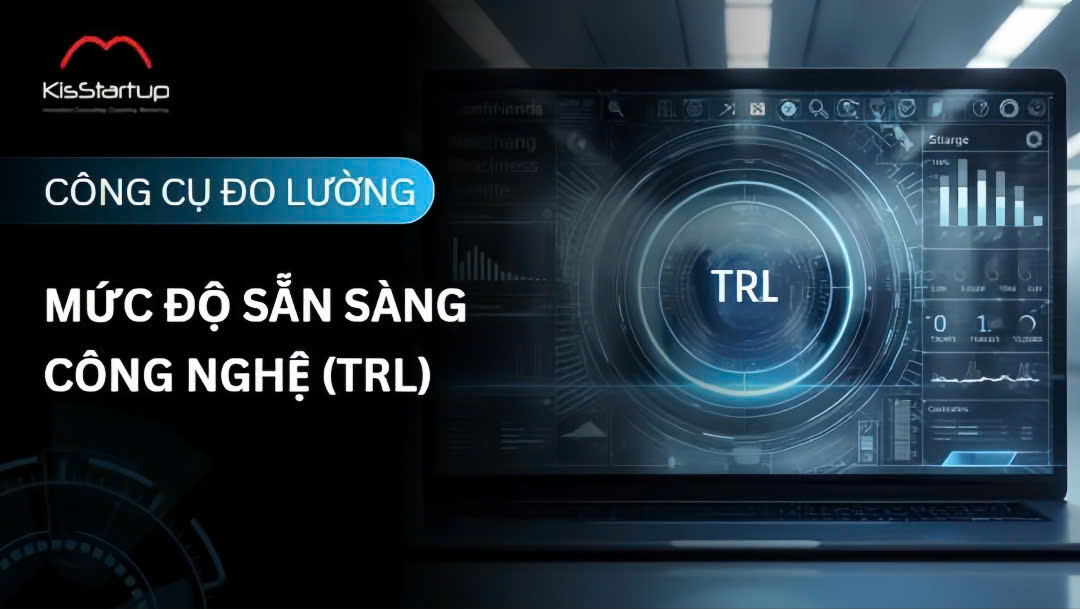
When a scientist starts thinking about bringing their research results to the market, the first question shouldn’t be “Who will buy it?” but rather “How ready is my technology?” — and that’s where the Technology Readiness Levels (TRL) scale becomes an essential tool.
What is TRL?
TRL helps you assess how mature your technology is — from the initial concept to market readiness.
The scale includes 10 levels (from 0 to 9), divided into three main stages:
- Idea (TRL 0–3): Concept formation, identifying needs, and proving feasibility.
- Prototype (TRL 4–5): Developing and testing prototypes in the lab or in relevant environments.
- Validation & Production (TRL 6–9): Validating the technology in real-world conditions, pilot-scale operation, and preparing for full-scale production.
Example:
If you’re developing a new CO₂-absorbing material, at TRL 2 you may only have a theoretical model and chemical formulation. Once you’ve synthesized and tested it successfully in the lab, you’re at TRL 4. When that material is tested in an actual production line, you’ve reached TRL 7–8.
Why TRL Matters
TRL not only helps you understand your technology’s maturity but also allows you to communicate more effectively with key stakeholders:
- Speak the same language with investors, enterprises, and funding agencies. They need to know which stage you’re in to assess risk and funding needs.
- Develop a clear roadmap. From basic research (TRL 1–2) to production readiness (TRL 8–9), you’ll know what steps come next — more testing, certification, partnership, or scaling up.
- Align expectations and resources. Not every technology needs to jump to higher TRLs right away — taking steady, well-planned steps often gets you to market faster.
Combining TRL with the Lean Startup Mindset
We encourage scientists to apply the Lean Startup mindset — Build–Measure–Learn — alongside TRL to accelerate commercialization:
1. Build:
At every TRL level, create a “mini version” of your technology — a prototype, model, or simulation.
→ Example: A battery research team builds a small demo so manufacturers can test integration into real products.
2. Measure:
Collect feedback from users, companies, or technical experts — not only technical data but also economic and operational factors.
→ This feedback is the “raw material” to determine whether your technology truly solves a market problem.
3. Learn:
Use the insights gathered to refine your technology, process, or even pivot your approach to better fit market needs.
→ Each iteration brings you closer to the next TRL — and closer to real users.
From Lab to Market – More Than Just Technology
Commercializing technology is not simply about “selling” — it’s about shifting your mindset from “research for knowledge” to “research for impact.”
With TRL, you can clearly see where you are, what’s needed to move forward, and when it’s time to listen to the market.
KisStartup’s Advice
- Evaluate your technology’s TRL today.
- Share your results with colleagues, mentors, or potential business partners to discuss next steps.
- Every cycle of testing – measuring – learning not only raises your TRL but also shortens the distance between research and market.
KisStartup accompanies scientists in their journey toward technology commercialization — from TRL assessment and business model testing to connecting with investors and enterprises at home and abroad.
Detailed TRL Framework introduced by CloudWatchHub >>Link
Level 0 – IDEA : Concept not yet proven, no testing conducted.
Level 1 – BASIC RESEARCH: The need is identified but lacks evidence or validation.
Level 2 – TECHNOLOGY FORMULATION : Concepts and potential applications are defined.
Level 3 – NEEDS VALIDATION : Early “product” concept validated by key stakeholders.
Level 4 – SMALL-SCALE PROTOTYPE : Built in laboratory conditions (“rough” prototype).
Level 5 – LARGE-SCALE PROTOTYPE: Tested in relevant, intended environments.
Level 6 – PROTOTYPE SYSTEM: Tested under operational conditions with near-expected performance.
Level 7 – DEMONSTRATION SYSTEM: Operated in real-world settings at pilot scale.
Level 8 – FIRST-OF-A-KIND COMMERCIAL SYSTEM: All systems and processes ready to support commercial operations.
Level 9 – FULL COMMERCIAL APPLICATION: Fully ready and available for broad commercial use.Introduced by KisStartup
© Copyright belongs to KisStartup. Any form of copying, quoting, or reuse must include proper attribution to the author and KisStartup as the source.

- Log in to post comments
- 276 views