Tết Việt Heritage, Technology and opportunities for culture based startups
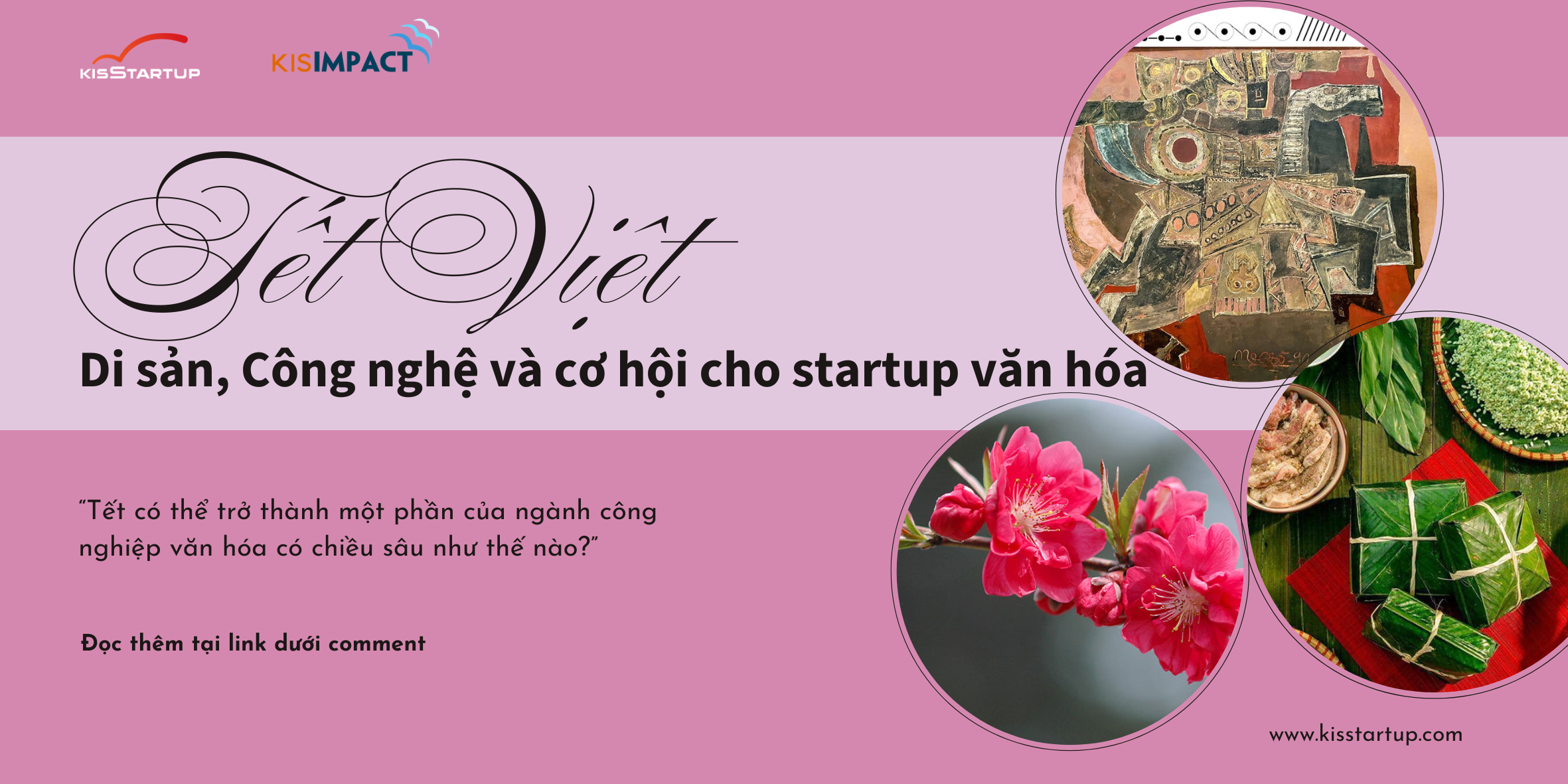
As the Lunar Year of Bính Ngọ approaches, you may find yourself asking the same question we are: How can Tết become a meaningful pillar of the cultural industries with real depth and long-term value?
In Vietnam, Tết (Lunar New Year) is not merely a peak consumption season; it is a complex cultural structure where memory, rituals, family, cuisine, craftsmanship, spirituality, and art intersect. Viewed through the lens of innovation and entrepreneurship, Tết is a ready-made cultural platform—recurring annually, supported by both domestic communities and a global diaspora, and capable of integrating technology while preserving its spiritual essence.
From the perspective of KisStartup—an organization committed to heritage-based business models and inclusive digital transformation—the greatest potential of Tết does not lie in short-term promotions or seasonal sales. It lies in transforming spiritual values into sustainable value creation within the service economy. Tết is an “intangible national asset” that has yet to be properly valued. If we see it only as a time to boost consumer sales, we are merely skimming the surface. But if we approach Tết as an experiential ecosystem and a cultural value chain, we begin to envision a cultural industry that can extend into tourism, education, e-commerce, fintech, martech, and immersive technologies such as AR and VR.
Globally, Lunar New Year marketing campaigns have been systematized into strategic playbooks on platforms such as CleverTap, demonstrating that Tết has become a major vertical within global martech (CleverTap, 2024). WeChat Pay and Alipay have transformed the red envelope tradition into digital products, driving significant spikes in user growth and transactions during the holiday. Global brands such as Coca-Cola, IKEA, and Marshall develop zodiac-themed collections and AR experiences each year (Dao Insights, 2026). These examples show that Tết is not merely a local celebration; it is a creative space that can be productized, technologized, and globalized.
In Vietnam, “Experience Tết Like a Local” tours have emerged, allowing international visitors to live with local families, make bánh chưng, visit flower markets, receive lucky money, and attend New Year’s Eve rituals (VNExpress, 2024). This marks the first step in turning Tết into a tourism product. Yet the real opportunity lies not in organizing peak-season tours, but in standardizing Tết as a scalable “festival product” complete with training materials, internationally aligned content, booking systems, experience evaluation mechanisms, and structured linkages with craft villages, artisans, and cooperatives.
From our perspective, the key lies in building a heritage value chain. When a family in Bản Liền or Tà Xùa hosts a New Year tea ceremony or bánh-making experience, the value extends far beyond ticket sales. It includes cultural storytelling, livelihoods for ethnic minority women, customer data that informs next year’s product design, and digital content reused for global marketing. In this context, technology does not replace tradition; it makes rituals traceable, measurable, and connected.
Another promising direction is the development of digital Tết experiences. AR and VR programs that allow users to “visit a Tết market” or “wrap bánh chưng” in virtual environments have already been implemented in various contexts (Tiền Phong, 2024). With thoughtful design, Vietnam could build a “Vietnam Tet VR Experience” library licensed to schools, museums, and tourism cities worldwide. Tết would then extend beyond seven days to become year-round cultural and educational content. Core spiritual values—reunion, gratitude to ancestors, the first calligraphy of the year—could be reinterpreted through technology, extending the commercial lifecycle of heritage.
In cross-border markets, Vietnamese brands bringing Tết products into European supermarket systems reveal the potential of “Tết Boxes” tailored for diaspora communities (Nhân Dân, 2025). The real value is not in exporting another box of candied fruits, but in exporting a story. If each gift box includes QR codes linking to videos about craft villages, calligraphy masters, or farmers growing kumquat and peach blossoms, the added value lies in a layered cultural experience. Technology becomes an extended storytelling layer, transforming products into cultural touchpoints.
In seasonal marketing, global martech platforms have standardized Tết campaigns into toolkits for gamification, loyalty, and personalization (CleverTap, 2024; WGSN, 2025). This opens opportunities for Vietnamese startups to build “Festival Campaign-as-a-Service” solutions for SMEs. Instead of redesigning landing pages, mini-games, and push notifications every year, businesses could access platforms offering templates, creative kits, and benchmark data. Tết thus becomes a recurring technology service vertical, scalable to Diwali, Christmas, Ramadan, or Songkran.
Notably, the online Tết flower market illustrates clear shifts in consumer behavior. Nearly 200,000 flower and ornamental plant orders on a single platform during two peak months—with growth several times higher than the previous year (Thanh Niên, 2026; Sài Gòn Economy, 2026)—signal strong digitalization of Tết commerce. Yet livestream sales of chrysanthemums or kumquat trees only capture the transaction layer. When sales data is combined with behavioral analysis, display design, and post-Tết services such as plant care or recycling, the value chain becomes longer and more sustainable.
As Bính Ngọ approaches—a symbol of energy, momentum, and breakthrough—this may be the right moment for Vietnam to redefine its approach to Tết. Not through superficial modernization, but by upgrading the business architecture around heritage. KisStartup believes the future of Vietnam’s cultural industries does not lie in imitation, but in going deeper into what we already possess. When Tết experiences are standardized, digitized, and narrated in multiple languages, they can become a form of soft export—similar to Japan’s cherry blossom culture or Korea’s K-culture.
The essence lies in balance. Technology must deepen experiences, not flatten them. Data must enable personalization without erasing uniqueness. Revenue must go hand in hand with livelihoods for artisans, craft villages, women, and young people in local communities. Only then will spiritual values—reunion, gratitude, renewal—move beyond advertising slogans to become true competitive advantages.
If approached as an ecosystem, Tết can become a living laboratory for Vietnam’s cultural industries. From a celebration lasting a few weeks, we can build a year-round value chain where heritage is regenerated through technology, where startups do not merely sell products but design meaningful experiences, and where spiritual capital becomes the most powerful asset of the service economy in the digital age.
© Copyright belongs to KisStartup. Any reproduction, citation, or reuse must clearly acknowledge KisStartup as the source.