
When "digital transformation" can become "life transformation"
Nguyen Hong Giang
In the rapidly changing landscape of the digital age, digital transformation (DX) has been opening new doors for an increasing number of social groups. However, people with disabilities (PWDs) are often forgotten or left on the sidelines of this process.
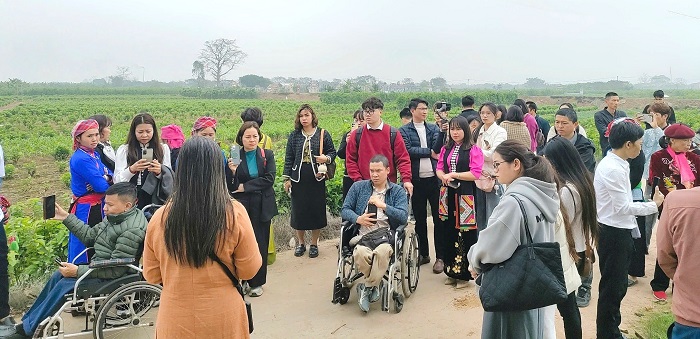
Businesses in Sơn La and Lào Cai—including those run by people with disabilities (PWDs)—have participated in learning sessions on social media sales strategies from Lụa Đũi Nam Cao (Thái Bình), as part of the IDAP project.
Photo: Provided by the organizing team
When Digital Transformation Becomes a Tool for Life Transformation
While digital transformation (DX) is often seen as a way to overcome geographical and economic challenges, for people with disabilities, it can also help break through physical limitations and invisible social biases. So how can we support them effectively and make DX a real lever for sustainable livelihoods?
Opening New Doors to Livelihood
From what we've observed, one of the biggest barriers for PWDs isn’t physical disability—it’s a lack of confidence. Years of self-doubt, combined with hesitation from family and community, often discourage them from stepping outside their comfort zone. Many grow accustomed to a life of withdrawal, relying on subsidies and family support as their only means of survival.
However, even people with severe physical impairments who find it difficult to work outdoors can still confidently apply for jobs—or even start their own businesses. With basic digital skills, they can offer products and services from home, creating income for themselves and their families. Using social media, they can promote and share their work with a wider community.
In fact, many young PWDs have proactively joined our program—“Inclusion of People with Disabilities in Technological Innovation,” under the IDAP project—to learn how to design with Canva, create content for TikTok, manage Facebook fanpages, and use Zoom. DX has become a psychological lever, helping them see their own value in a modern society.
Most PWDs in Sơn La and Lào Cai still rely on traditional means for their livelihood—growing tea, selling produce, woodworking, repairing electronics, or running small home-based shops. Like many informal vendors without marketing tools, physical limitations force them to depend solely on familiar customers and local traders, leaving their income unstable.
However, once introduced to digital tools—like creating fanpages, using TikTok, uploading products on Facebook, or using Zoom for networking—they begin to envision a much broader customer base than just those within a few kilometers of their homes.
Take for example a family of tea sellers in the highlands who were previously illiterate—now they are taking early steps to share their products online. Or a young man with mobility impairment who crafts wooden products: he had never used a computer, but now wants to learn how to film and promote his workshop on TikTok.
These are real examples of inclusive digital transformation. It’s not just about giving PWDs access to technology—but about giving them power: the power to access, to learn, and most importantly, to own their livelihoods.
How to Support Effectively?
In our online roundtable "People with Disabilities Stepping Out of the Comfort Zone" held in February 2024, guest speakers like Lê Việt Cường (Vụn Art, Hanoi), Đinh Quỳnh Nga (Trái Tim Hồng, Hanoi), and Nguyễn Hữu Hậu (Phúc Hậu Woodcrafts, Youth Union for PWDs in Sơn La)—all of whom lead cooperatives or social enterprises employing other PWDs—proved that self-reliance is absolutely possible for the disabled community.
But this requires more than just motivation. It needs the right skills and a supporting ecosystem: inclusive government policies, involvement from social enterprises and NGOs, and most importantly, sustainable training programs.
Only with coordinated support from all sides can PWDs gain equal and effective access to digital transformation—a resource still sorely lacking for many in Vietnam today.
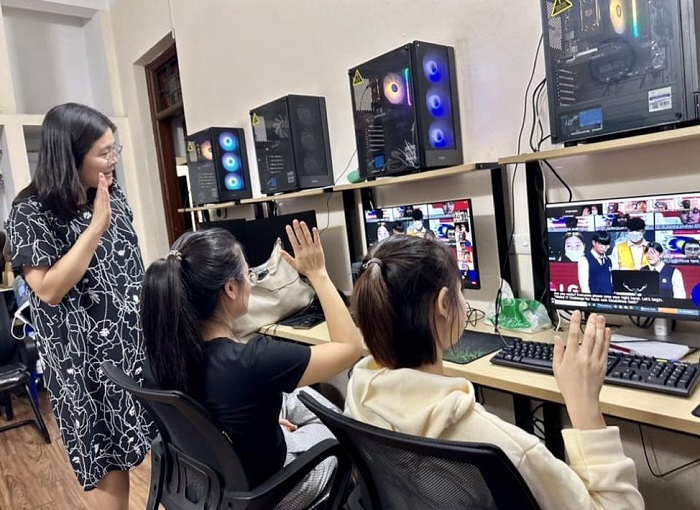
The Nghị Lực Sống social enterprise has trained thousands of students with disabilities in IT, equipping them with skills to seek employment, build their lives, and integrate into society.
Photo: Provided by the organizing team
Currently, the network of companies recruiting and supporting people with disabilities (PWDs) is concentrated mainly in big cities. Very few forums, training programs, or community fairs have brought these developed ecosystems to more remote areas where many PWDs live in isolation.
Connecting the Dots Through Digital Tools
Using the power of digital tools, we’ve organized numerous online meetups to improve connections between PWDs and a growing network of enterprises, cooperatives, and support communities. Many PWDs who had previously run small businesses on their own—with little exposure to other models—are now learning from organizations that have successfully embraced digital transformation, especially those based in Hanoi.
We’ve also hosted in-person events, such as the Digital Transformation Day in Lào Cai and Sơn La (both in February 2025), where home-based entrepreneurs, electronics repair shop owners, and even students with disabilities majoring in History and English got to exchange stories and begin building cooperative models together. In these cases, digital transformation was no longer a personal tool—it became a vehicle for forming digital professional communities for people with disabilities, something previously out of reach, especially in remote, mountainous areas.
The Digital Skills Gap: A Hidden Barrier
While digital tools are promising, digital skills themselves remain a major barrier. Though PWDs may use Facebook or TikTok for entertainment, many lack the knowledge to manage fanpages, use Canva, edit product photos, write sales content, or manage customer data—skills critical in the digital economy.
To close this gap, we’ve launched short-term training workshops combined with hands-on practice. Skills such as AI-powered content writing, filming and editing product videos using free apps, and using Zoom to connect with customers were taught in simple, accessible formats tailored to different types of disabilities.
For many, this was the first time they realized they could build a personal brand, take product photos, introduce their services, and maintain customer relationships without leaving home. This represents a revolutionary shift for a group long considered on the margins of the labor market.
The Reality: More than Just Tools
One seemingly small but critical obstacle remains: lack of access to computers. Most PWDs still use smartphones rather than computers, which limits their ability to access more advanced tools. Many cannot afford devices, better internet, or paid software. And even when they can, some still face resistance from their own families, who often adopt protective attitudes or doubt their children’s ability to learn.
It's Not Just “Going Digital”—It’s Life-Changing
Inclusive digital transformation is not easy—but it is entirely possible with the right approach and sustained support. Early results from the IDAP project in Lào Cai and Sơn La show that when people with disabilities are given the tools, the skills, and the belief in themselves, they can actively build livelihoods, connect communities, and integrate into the digital economy.
This story is not just about selling a few more kilos of tea or getting more TikTok orders—it’s the journey of individuals who once believed the digital world was closed to them. Now, they’ve learned to unlock it, step into it, and make their voices heard.
That is the true meaning of inclusive digital transformation.
When Digital Transformation Becomes Life Transformation
By Nguyễn Hồng Giang – Specialist in Disability Inclusion in Technological Innovation, IDAP Project in Lào Cai and Sơn La
Published in Science and Development Journal, Issue 1340 (No. 16/2025)