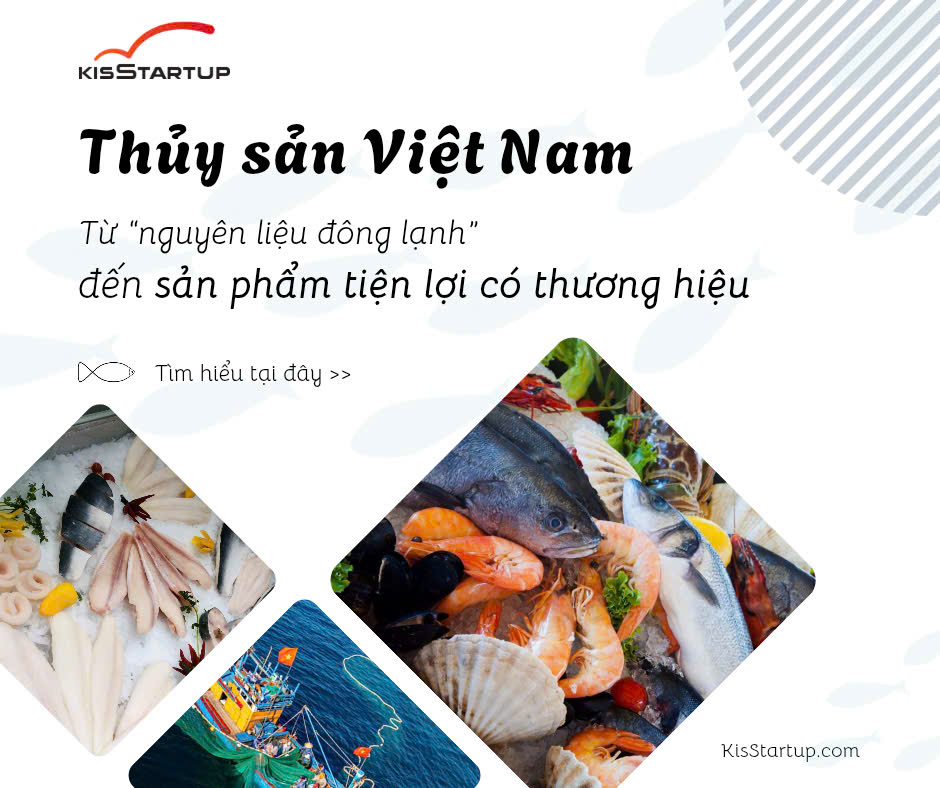
If we look back 10–15 years, most Vietnamese seafood entered global markets primarily as raw materials: frozen fillets, block-frozen shrimp, whole fish. In recent years, however, the picture has changed significantly. Several product lines have moved beyond the commodity role into deep processing, convenience, and ready-to-use segments—where value lies not in the input price of fish or shrimp, but in how the product appears on the dining table: ready to cook upon opening, heat-and-serve, or designed as toppings and meal-kit components for retail and foodservice channels. Vietfish Magazine identifies this as Vietnam’s value-added advantage in major markets such as the U.S., EU, and Japan, where processed products are increasingly preferred due to busy lifestyles and tightening import standards.
The New “Dining Table”: Markets Buy Meal Solutions, Not Raw Ingredients
The most significant shift is in consumer behavior. In many developed markets, buyers no longer wish to process seafood from scratch; instead, they seek meal solutions—portion-controlled, clearly labeled, easy to prepare, and low risk in terms of food safety. Added value now emerges through specific features: localized seasoning, pre-cooked or par-fried formats, tray packaging, IQF portion control, canned or pouched ready-to-eat items.
When products are designed around concrete meal use cases, margins depend less on raw material price cycles and more on R&D capability, factory operations, and quality management systems. Vietnam Briefing (Jan 2026) describes 2025 as positive yet more competitive: uneven demand, thicker technical barriers, and rising trade policy risks. In such an environment, deeply processed and standards-compliant products tend to demonstrate greater resilience.
Pangasius: From White Fillets to Industrialized Value Addition
Pangasius illustrates the transition most clearly. During the “fillet peak” era, competition centered on scale, price, and supply stability. As global competition intensified and market demands diversified, the industry redefined itself through product portfolio expansion: portion cuts, marinated products, pre-cooked formats, fish cakes, and fish balls targeting ready-to-cook and ready-to-eat segments.
VietnamNet characterizes this as a “high-value transformation,” where added value derives from processing sophistication, standardization, and supply chain optimization rather than output expansion alone.
By-product utilization is equally strategic. Since filleting uses only part of the fish, real profitability increasingly comes from “fully utilizing the fish” through fish oil, collagen/gelatin, fish skin snacks, and niche products such as fish maw. Vietfish Magazine highlights pangasius skin snacks as an example of converting by-products into premium consumer goods—fundamentally reshaping profit structure and incentivizing investment in QA/QC and food safety systems.
Shrimp: Vietnam’s Processing Strength in Retail and Foodservice
If pangasius represents the whitefish value chain, shrimp showcases Vietnam’s deep-processing capability: peeled/deveined formats, cooked IQF shrimp, breaded and sauced products, tray packaging, and ready-to-cook portioned meals. Growth in processed shrimp lines reflects strong demand from retail and foodservice channels.
Strategically, value-added shrimp products anchor Vietnam at critical buyer touchpoints: convenience, consistency, and safety. Factory capabilities—BRC/HACCP certification, batch traceability, residue control—have become competitive assets rather than mere compliance requirements.
Tuna, Squid/Octopus, and Surimi: Redefining Format for the Right Meal Occasion
For tuna, value addition appears through canned and pouched formats, salad mixes, and ready-to-use products aligned with convenience consumption patterns. Squid, octopus, and other seafood categories follow similar paths: cleaned, sliced, seasoned, and packaged for restaurant and supermarket channels.
Surimi and fish cake products stand out as highly industrialized deep-processing formats, well suited to hotpot, fast food, and instant meal ecosystems across Asia and increasingly beyond. VASEP reports that after a downturn, Vietnam’s surimi and fish cake exports rebounded in 2025, exceeding USD 344 million and entering a new opportunity cycle for 2025–2026.
Value Addition as a System: Traceability, Certification, and Data
Products that move beyond frozen commodities share a common foundation: robust operational systems aligned with premium markets—traceability, certification, and sustainability compliance. In ready-to-eat and ready-to-cook segments, brand risk increases significantly; a single food safety incident can jeopardize an entire premium portfolio. Thus, QA/QC and traceability are no longer compliance costs but prerequisites for commanding higher prices.
Market policy pressures reinforce this reality. Reuters reported Vietnam’s request for the U.S. to reconsider restrictions under the Marine Mammal Protection Act (MMPA), underscoring that trade barriers increasingly revolve around governance compatibility rather than price alone. In this context, value-added strategies must integrate verifiable data and compliance evidence to sustain premium positioning.
The Next Step: From Product Presence to Brand Presence
Vietnam has succeeded in bringing processed seafood onto global dining tables. The next step is ensuring that “Vietnam” appears as a recognized brand rather than remaining behind OEM/private labels.
To achieve this, enterprises must excel simultaneously in:
(1) market-specific product development across retail and foodservice channels;
(2) mastery of traceability, certification, and compliance data;
(3) storytelling around origin, farming/fishing zones, and sustainability standards in ways consumers understand.
In essence, Vietnam’s seafood value addition is evolving from production-focused upgrading to ecosystem development: processing technology + compliance data + meal-experience design. Those who master this integrated system will secure more durable positions at the global dining table.
References
[1] Vietfish Magazine, “Vietnamese seafood leveraging value-added advantages,” 2024. (Vietnam Fisheries Magazine)
[2] VietnamNet, “Vietnam’s pangasius industry eyes high-value transformation,” Jul. 14, 2025. (VietNamNet News)
[3] Vietnam Briefing, “Vietnam’s Seafood Exports: Growth Drivers, Market Shifts, and 2026 Outlook,” Jan. 12, 2026. (Vietnam Briefing)
[4] VASEP (seafood.vasep.com.vn), “2025–2026: surimi & fish cake exports enter a new cycle – opportunities for Vietnam,” Feb. 3, 2026. (seafood.vasep.com.vn)
[5] Reuters, “Vietnam asks United States to reconsider seafood export ban,” Sep. 16, 2025. (Reuters)
© Copyright KisStartup. Any reproduction, citation, or reuse must clearly attribute KisStartup as the source.