2026-02-04
Blockchain in Tea Traceability: From “Trust” to a Real Competitive Advantage
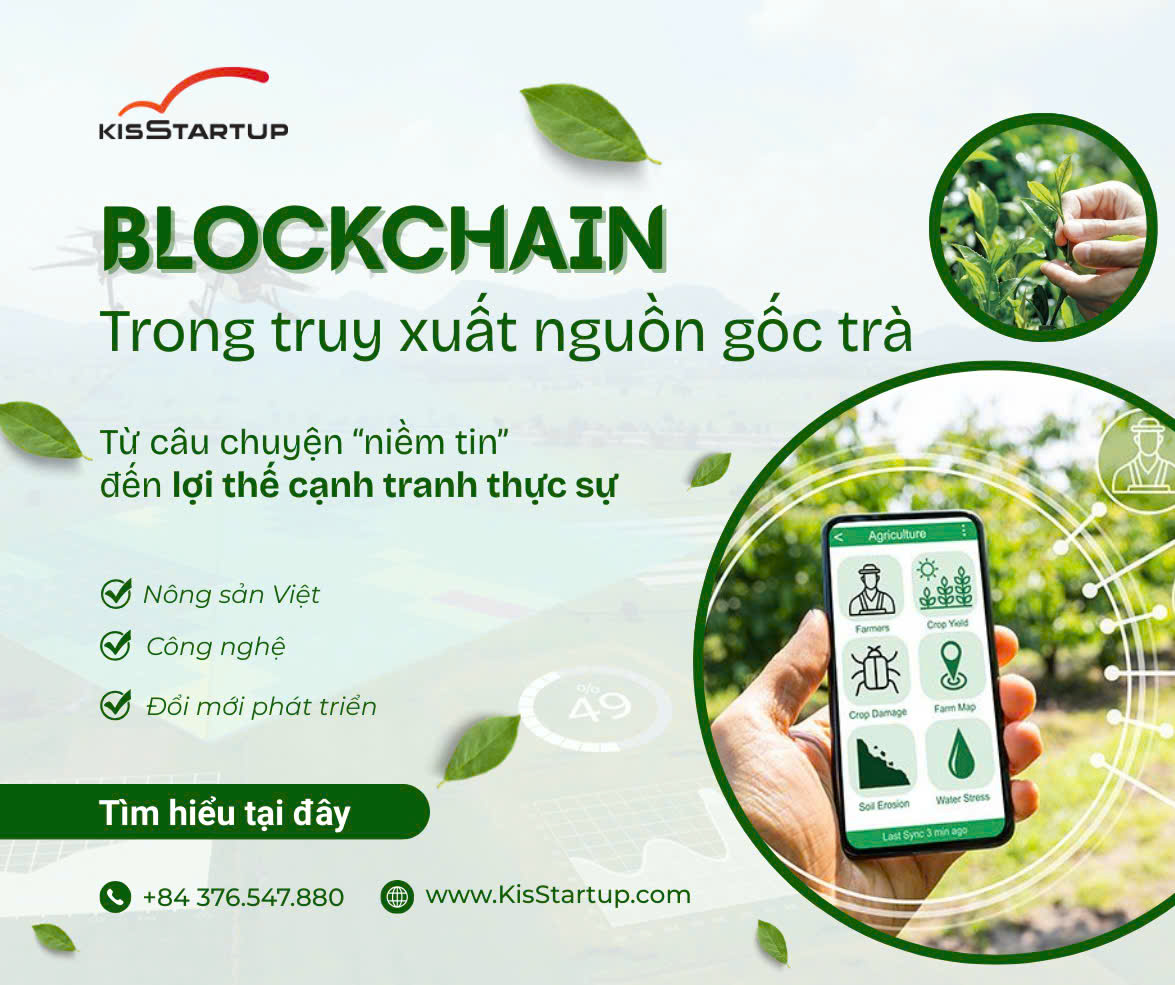
For many years, the global tea industry has operated on something inherently fragile: trust. Trust that tea truly comes from the origin stated on the packaging, that it is cultivated according to organic or sustainable standards, and that it has not been adulterated along supply chains stretching thousands of kilometers. As the tea market moves toward premiumization and the “quantification of sustainability,” trust based solely on narratives is no longer sufficient. This is where blockchain emerges as a new infrastructure for the tea industry.
Why does tea need blockchain – even if it is less visible than other crops?
In Vietnam, blockchain-based traceability has been adopted relatively early for export-oriented agricultural products such as dragon fruit, mangoes, coconuts, and seafood. Tea, however, presents a different challenge. Its supply chain is more complex, processing times are longer, and the value of each batch depends heavily on processes and storytelling rather than volume alone. This has led many tea enterprises to question whether blockchain implementation is cost-effective at their current scale.
International experience suggests that the answer lies not in the technology itself, but in system design. Blockchain does not need to be “all-encompassing” from the start. For tea, it only needs to address three core bottlenecks: origin verification, preservation of process data, and clear linkage between that data and the market.
What does blockchain actually do in the tea supply chain?
At its core, blockchain is an immutable ledger where key events in the lifecycle of a tea batch are recorded: cultivation area, harvest date, farming methods, processing batches, testing results, logistics, and distribution. Once recorded, no single party can unilaterally alter the data.
Globally, studies on organic tea supply chains in India show that blockchain significantly improves transparency and reduces fraud in organic claims and origin declarations. These models often use permissioned blockchains combined with off-chain data storage, recording only data “fingerprints” (hashes) on-chain to reduce costs and improve efficiency.
In East Africa, blockchain-based traceability platforms have been used to link tea batches to smallholder farmers, sustainable farming practices, and labor conditions. Multinational corporations such as Unilever have piloted blockchain in tea supply chains to combat counterfeiting, reduce adulteration, and enhance transparency in sustainability programs.
Where should Vietnamese tea enterprises begin?
A common misconception is viewing blockchain as a large-scale IT project. In reality, successful implementations often start small. A cooperative or tea enterprise can begin with a single flagship product—such as specialty green tea or organic tea—and a relatively standardized growing area.
Each tea batch is assigned a unique identifier from harvest. Farmers or cooperative staff input minimal but critical data: tea variety, plot code, fertilization dates, and harvest time. Processing facilities add information on withering, firing, drying, moisture levels, and residue testing. Upon packaging, a QR code is printed, allowing consumers to access the full “digital profile” of the tea batch.
The key is not collecting excessive data, but collecting the right data—what the market truly cares about. Consumers may not read technical tables, but they do value clear origins, farming practices, certifications, and authentic stories. Blockchain ensures that these stories are backed by verifiable digital evidence.
Beyond exports: blockchain as an internal management tool
An often-overlooked benefit is internal governance. When data on cultivation areas, processing batches, and quality outcomes are systematically recorded, enterprises can compare performance across regions, seasons, and processing methods. This forms the foundation for upgrading tea quality toward specialty and premium segments rather than competing solely on volume.
In Australia, the tea tree oil industry has used blockchain to protect the “100% pure” label, prevent adulteration, and preserve regional brand value. Similar logic can be applied to Vietnamese teas such as ancient Shan Tuyet tea, premium Oolong, and certified organic lines.
Practical considerations for Vietnam
Blockchain cannot replace production discipline. If harvesting, processing, and quality control are inconsistent, blockchain will merely record that inconsistency. Therefore, traceability must go hand in hand with technical standardization.
Cost is another key factor. Enterprises do not need to build systems from scratch; many traceability platforms already integrate blockchain, enabling rapid deployment at reasonable costs for cooperatives and SMEs. Most importantly, people matter. Farmers, cooperative staff, and factory workers must understand why data is entered and how it creates value.
A strategic perspective for tea enterprises
If blockchain is treated merely as a “more advanced QR code,” projects will quickly stall. But if it is seen as a verified storytelling infrastructure, tea enterprises can enter a different competitive arena—where value lies not only in tea leaves, but in the entire journey from plantation to teacup.
As markets increasingly demand transparency, sustainability, and clear origins, blockchain is no longer a luxury trend. It is steadily becoming a necessary condition for Vietnamese tea to advance on the global specialty tea map.
© Copyright belongs to KisStartup. Any form of copying, quoting, or reuse must cite KisStartup as the source.
- Log in to post comments
- 51 views