outsourced R&D for small and medium enterprises (SMEs)

KisStartup's CEO to present at conference “Promoting Innovation and Technology Commercialization Connecting Institutes – Universities – Enterprises for Sustainable Development
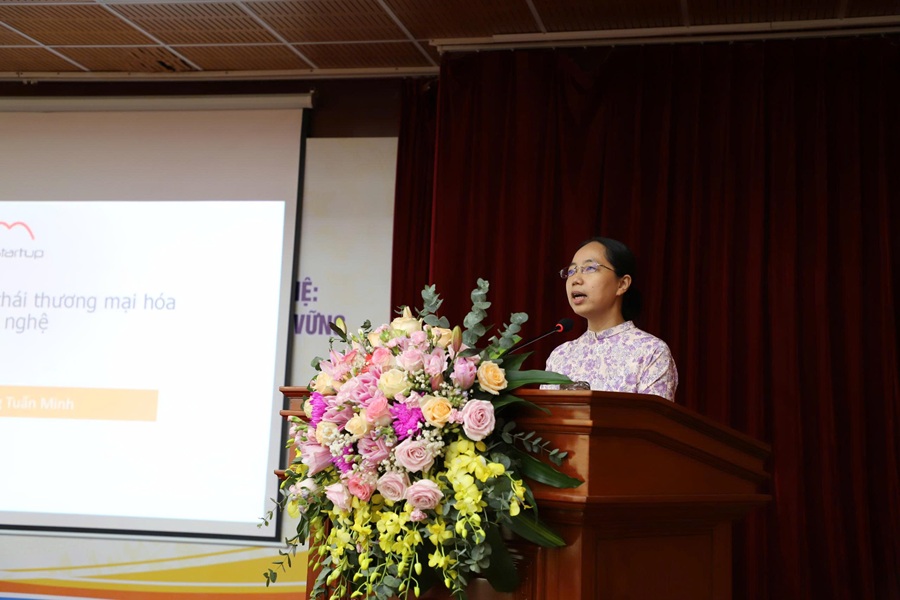
On October 3, 2025, Ms. Nguyễn Đặng Tuấn Minh – CEO of KisStartup JSC – delivered a presentation titled “Building and Connecting an Ecosystem for Commercialization,” sharing both international experiences and practical lessons from Vietnam.

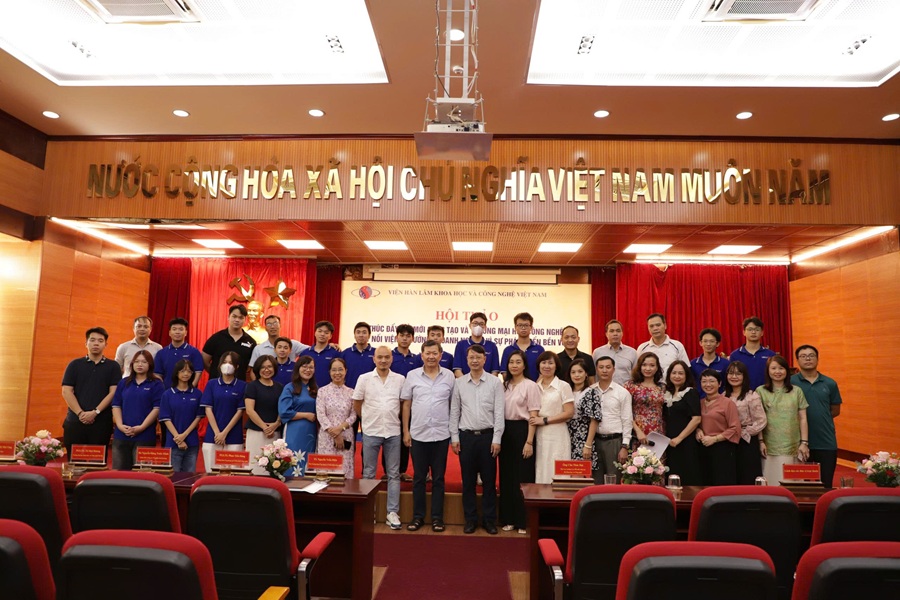
In line with Resolution No. 57-NQ/TW dated December 22, 2024 of the Politburo on the development of science, technology, innovation, and national digital transformation, as well as the National Innovation Day (October 1 each year) under Official Dispatch No. 4652/BKHCN-ĐMST dated September 14, 2025 from the Ministry of Science and Technology, the Vietnam Academy of Science and Technology (VAST) organized the conference “Promoting Innovation and Technology Commercialization: Connecting Institutes – Universities – Enterprises for Sustainable Development.”

Open Innovation Model: Lessons from Collaboration with Mitsui Chemicals

Ms. Tuấn Minh introduced the Open Innovation model that KisStartup has co-implemented with Mitsui Chemicals (Japan) in Vietnam. A key feature of this model is that the corporation publicly discloses its core technologies—ranging from thermoplastic resins resistant to abrasion, staining, and gas permeability/barrier, to polyolefin additives such as slip agents and viscosity control materials—and calls for co-invention and new applications.

Instead of merely seeking “customers,” Mitsui Chemicals seeks technology partners to jointly turn technology into market-ready products and solutions.
This creates a trust-based and transparent mechanism, ensuring that scientists and startups no longer fear their “ideas being taken,” but rather see real opportunities to engage in long-term collaboration with a major corporation.

Impact and Opportunities for Collaboration

  • For Mitsui Chemicals: expands innovation space, identifies new applications for existing technologies, and connects directly with practical needs in Vietnam.

  • For scientists and startups: access to cutting-edge global technologies, opportunities for co-creation, testing, and commercialization within a large corporate environment.

  • For Vietnamese enterprises: reduced R&D costs, access to suitable solutions, and opportunities to enter global supply chains
 SME Needs: The R&D Outsourcing Model

Ms. Tuấn Minh also emphasized the urgent needs of small and medium-sized enterprises (SMEs) in the context of the dual transition—digitalization and greening. One practical solution is the R&D outsourcing model:

  • Enables SMEs to access multi-disciplinary expertise and advanced technologies not readily available in-house.

  • Reduces costs for infrastructure, equipment, and internal staff.

  • Accelerates product development and shortens time-to-market.

  • Provides flexibility when R&D needs change, minimizing risks of long-term investments.

Commercialization Hub: KisStartup’s Open Incubator

To make this concrete, KisStartup is establishing a commercialization hub within its current network, functioning as an “open commercialization incubator”:

  1. Collect issues and needs from enterprises.

  2. Connect with ready-to-transfer technologies.

  3. Support testing, validation, and refinement.

  4. Deliver practical solutions for enterprises, market outputs for scientists, and sustainable products for communities.

This approach has already been tested in KisStartup’s programs such as IDAP (Inclusive Digital Acceleration Program) and LIF Global, serving not only digital transformation but also as a launchpad for impactful technology commercialization.

The process is implemented in an iterative loop: Problem Identification → Experimentation → Adjustment → Commercialization, engaging multiple stakeholders: institutes, universities, enterprises, and startups.

Conclusion

The CEO of KisStartup underscored the critical role of connecting the technology commercialization ecosystem in advancing the implementation of Resolution 57-NQ/TW and in celebrating the National Innovation Day.

When institutes – universities – enterprises – startups collaborate within a transparent and trust-based framework, Vietnam can leverage cutting-edge global technologies, address real-world challenges, and simultaneously create sustainable products and solutions—ultimately strengthening national innovation capacity.

Author: 
KisStartup

IDAP – A Living Lab for Twin Transition: When Digitalization Enables Greening, and Greening Drives Digital Innovation

In response to the global urgency for sustainable development, the program IDAP – Inclusive Digital Acceleration Program in Lào Cai and Sơn La has evolved beyond its initial mission of promoting digital transformation for small and medium enterprises (SMEs). It is now establishing itself as a testing ground for green transition powered by data and digital technologies. By pioneering the integration of digitalization and greening into one strategic framework – the Twin Transition – IDAP introduces a new pathway for rural development, community innovation, and ecological entrepreneurship.


Twin Transition: Not Just a Pairing, But a Synergistic Development Strategy

The initiative “Twin Transition: Digitalization & Greening” was launched as a strategic response to two rising imperatives: rural digitalization and ecological regeneration. In Phase 1 (2025–2026), KisStartup moved beyond awareness-raising to craft a structured journey: from community education and mindset shift, to the formation of voluntary green groups, from value chain experimentation to early-stage data infrastructure for ecological agriculture. Through mini learning kits, green field tours, and student-supported storytelling, IDAP cultivated a culture of learning, sharing, and doing among rural producers and young learners.

IDAP as an Open Incubator for Impact Technologies

One of IDAP’s distinctive contributions is its role as a community-based impact technology incubator, connecting scientists, SMEs, farmers, and students through a model of outsourced R&D for grassroots deployment. Rather than relying on in-house innovation, SMEs and cooperatives with limited resources were able to test low-cost, high-impact technologies—ranging from compact composting devices, soil sensors, to digital tools for ecological farm management.

Critically, these trials did not take place in labs but in real community settings, creating a virtuous loop of learning–adapting–scaling based on real production needs. The R&D outsourcing model operated by KisStartup provided a rare but vital mechanism to bridge innovation and local adoption, thus accelerating the commercialization of early-stage environmental technologies.

Data for Green Transition – The Foundation of a Digital Ecological Economy

As pilot models gained traction, IDAP entered a new phase focused on datafication and digital enhancement of green practices. By training producers to record inputs, processes, and yields—and digitizing these through open-source tools—IDAP enabled communities to manage resources more efficiently, understand cost-benefit patterns, and build data portfolios that could support market access, funding applications, or environmental certifications.

This effort marks the foundation of an open library of replicable twin transition models – grounded in both narrative and numbers – which can be adapted across provinces. Such data-driven practices also unlock access to green finance, transparency in supply chains, and alignment with global sustainability standards.

Digitalization for Greening – When Digital Becomes an Environmental Driver

Beyond being a promotional tool, digitalization in IDAP was positioned as an enabling infrastructure for sustainable production. By equipping participants with skills in content creation (e.g., Canva, TikTok), traceability (e.g., QR codes), and online marketing, the program supported green products to tell their stories and reach new markets.

More importantly, when green products are backed by transparent data, they are not just goods—they become evidence of responsible production, making them more attractive to buyers, partners, and investors in sustainability-conscious markets.

From Seeds to Ecosystems: Building a Replicable Green–Digital Model

By the end of Phase 2 (October 2026), IDAP aims to establish at least 30 data-documented green transition models, 20 branded ecological products available on digital platforms, and an interactive map and storytelling library that can be adapted across other provinces. The closing Green–Digital Fair will not just showcase results, but catalyze new partnerships and investments.

IDAP as a Platform for the Digital Ecological Economy

From a modest digital acceleration initiative, IDAP has become a catalyst for synergistic innovation, where digital and ecological solutions converge, where community voices shape innovation, and where data becomes a shared asset for learning and scaling. KisStartup plays a vital role as a commercialization enabler and strategic ecosystem connector, combining technology fluency with grassroots engagement.

With its multi-stakeholder, flexible approach, IDAP’s twin transition model is ready to be scaled and adapted, contributing to the emergence of a digital ecological economy, where innovation serves not just growth, but regeneration, resilience, and inclusion.

ABOUT THE IDAP PROJECT
The IDAP (Inclusive Digital Acceleration Program) – Strengthening the Inclusive Digital Transformation Ecosystem for MSMEs focusing on agriculture and tourism in Lao Cai and Son La provinces is a project funded by GREAT (Gender Equality through Enhancing Agricultural Production Efficiency and Tourism Development) and is being executed by KisStartup as the main partner from 2024 to 2027.

The project "Gender Equality through Enhancing Agricultural Production Efficiency and Tourism Development in Lao Cai and Son La Provinces" (GREAT) is an initiative funded by the Australian Government and managed by Cowater International. The first phase of GREAT was implemented from 2017-2022, and the second phase (GREAT 2) will be carried out from 2024-2027 with a total investment from the Australian Government of 67.4 million AUD.

For inquiries, please contact: