
God is fair to both the rich and the poor—we all have the same 24 hours in a day. What you do with that time is entirely up to you.
Timo offers some highly practical and engaging strategies to help you improve your daily productivity. I’ve realized that building habits through consistent practice is much harder than just spending 5 minutes reading this section.
That said, if you’re anything like me, start by focusing on one principle or tip that stands out to you the most. Try it out first. No matter where you begin, your productivity will surely improve.
Let’s read and put it into practice together.
Ta Huong Thao – Program Coordinator for Capacity Building at KisStartup
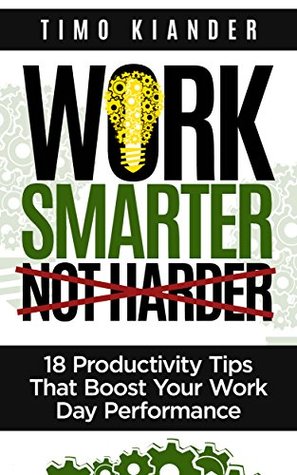
WORK SMARTER NOT HARDER by Timo Kiander
Timo Kiander’s Work Smarter Not Harder presents 18 practical ways to improve your workday. From learning useful computer skills to understanding your personal rhythms and task flow, the book walks you through step-by-step techniques to boost your productivity.
“To build a strong foundation for productivity, you need the right mindset, regular exercise, a healthy diet, and enough sleep.”
1. START YOUR DAY ENERGETICALLY
By learning to wake up earlier, you give yourself more time in the morning and a better start to your day. Make the decision, set an alarm, and stick to the plan.
Adjust your sleep cycle gradually—try shifting your wake-up time by 15 minutes every few nights. Once you’re comfortable, adjust again, and don’t forget to align your bedtime accordingly.
Once your body adapts, use that extra time to invest in yourself—meditate, read, or start a new workout routine.
2. KNOW YOUR OPTIMAL WORK RHYTHM
To improve focus and efficiency, identify the work pattern that suits you best. Here are some options:
-
Pomodoro Technique: Work for 25 minutes, break for 5 minutes. After four cycles, take a longer 15–30 minute break.
-
90-Minute Cycle: Our bodies naturally work in 90-minute focus cycles, followed by a 20-minute rest.
-
52–17 Rule: Work for 52 minutes, rest for 17 minutes.
3. AVOID DISTRACTIONS
There are three main sources of distraction: communication tools, other people, and internal noise.
Control email and social media usage—limit checking to twice a day for 15–20 minutes.
Minimize interruptions from family or coworkers by setting boundaries, adjusting your work environment, using noise-canceling headphones, or arriving early.
Get enough sleep and rest to reduce mental distractions and wandering thoughts.
4. SET DAILY GOALS
Make it a habit to plan your day in advance. This helps you know exactly what to focus on without relying on memory—everything is laid out on paper and ready to go.
5. DRINK WATER
Drinking water is not only healthy but also boosts productivity. A study by the University of East London found that hydration can increase brain performance by 14%.
Start drinking more water today—your body and brain will thank you!
6. IDENTIFY YOUR MOST IMPORTANT TASK AND DO IT FIRST
To find your most important task, consider:
-
Long-term impact
-
Short-term urgency
If completing a task could significantly influence your future, prioritize it—even if the results aren’t immediate.
On the other hand, some tasks, though not important to you, may be critical for others who depend on them. These should also be addressed promptly.
(You can explore more on prioritization in the article: “2×2 – A Tool for Startup Prioritization.”)
At KisStartup, we know that for startup founders, reading full-length books isn’t always realistic. That’s why we sought a more efficient approach—offering well-crafted summaries, short enough to read in 5 minutes, but detailed enough to convey the book’s most valuable insights.
With a recommendation from Phan Dinh Tuan Anh, mentor at SME Mentoring 1:1, we found carefully curated book summaries at Paul Minors. With his permission, we selected titles most relevant to startups, then read the original books to ensure alignment—and translated them into Vietnamese.
Throughout 2018, we’ll continue to introduce these books to you, broken down into short parts to match your available reading time.
These books were translated by my colleagues at KisStartup:
Ta Huong Thao – Program Coordinator for Capacity Building
Mai Pham – Communications and Network Development Coordinator
I hope you’ll find the same value in them as I have. As Ben Horowitz said:
“The hard thing is not setting big, bold, audacious goals. The hard thing is having to lay people off when you fail to meet them.”
If you’re building a vision, striving to become a true CEO, and staying committed to creating value—keep reading, exploring, and applying.
Nguyen Dang Tuan Minh
Manager & Co-founder, KisStartup
STARTUP COACH | STARTUP BOOKS | ENTREPRENEURIAL THINKING
Tags: KisStartup, Timo Kiander, productivity improvement, setting daily goals, identifying priorities