
KisStartup realized that reading an entire book is often not feasible for startup founders. That’s why a more effective summary is needed—not just a book introduction, but a careful summary of moderate length with key messages. Recommended by mentor Phan Đình Tuấn Anh from SME Mentoring 1:1, we discovered thoughtfully summarized books at Paul Minors. With Paul’s permission, we selected the most relevant books for startups. The KisStartup team read the original versions to ensure the books truly fit startup needs, then translated them into Vietnamese.
Throughout 2018, we will introduce these books to you one by one, broken down into sections to match your reading time—no more than 5 minutes per session.

The Hard Thing about Hard Things is the first book we chose to introduce because we saw in it a deep sense of empathy with startups—timeless stories about people and how they behave in the face of challenges and temptations while building new business models. Starting up is hard and demands extraordinary effort. Ben Horowitz delivers concise messages and highlights essential lessons we sometimes forget.
While reading the book, I realized that company culture may actually stem from the personal growth of a startup founder—from being a startup founder to becoming a business owner who creates real value.
The book was translated by my colleague at KisStartup, Tạ Hương Thảo – Capacity Building Program Coordinator at KisStartup. I hope you, like me, find value in this book. As the author Ben Horowitz said: “The hard thing is not setting big, bold, audacious goals. The hard thing is having to fire people when you fail to hit those goals.”
So how do we build a shared vision, become a true CEO, and stay committed on the path of creating value? Let’s read, explore, and practice together.
— Nguyễn Đặng Tuấn Minh, Manager & Co-founder of KisStartup 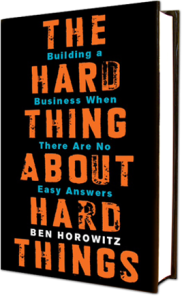
The book The Hard Thing About Hard Things by entrepreneur Ben Horowitz—one of the most respected and experienced business leaders in Silicon Valley—offers guidance on how to start and run a startup. Ben Horowitz shares his own journey, from which he draws advice on how to become a successful CEO, build a visionary company, promote a strong workplace culture, hire and lay off employees, and much more. This is a must-read for anyone seeking practical business advice.
Every CEO faces tough times.
So what’s the secret to becoming a successful CEO? Unfortunately, there is no magic formula. But if there’s one critical skill, it’s grit—the ability to persevere and find the best path forward for your company. When you feel like a complete failure, that’s often when you’re closest to making the biggest difference.
The Struggle
Every CEO starts out with a clear vision. You’ll build a great workplace, attract the smartest people, create a product that delights customers, and make the world better. Sounds perfect, right?
But then, after working day and night to make the dream real, you wake up to find that things aren’t going as planned. The product has issues. The market doesn’t behave as expected. Employees lose confidence and leave. Customers disappear. Everything starts to collapse in front of you.
And you fall into The Struggle.
The Struggle isn’t failure—but it can lead to failure if you give up. Most people don’t have the strength to push through this phase. But don’t worry—legendary entrepreneurs like Steve Jobs and Mark Zuckerberg also went through their own Struggles. Not everyone makes it through, which is why it’s called The Struggle. But the hardest moments are also where the most meaningful change begins.
How to survive The Struggle
-
Don’t carry it all alone.
-
This isn’t checkers; it’s chess. It’s more complex.
-
The longer you stay in the game, the more chances you have to get lucky.
-
Don’t go it alone.
-
Remember: this phase helps you grow.
Be an Honest CEO
CEOs often believe that worrying about the company’s problems is their burden alone—but that’s not true. If your company loses a major client, the entire team should know why—so everyone can help fix the gaps in product, marketing, and sales. Assign problems to people who not only can solve them but are eager to do so.
Be transparent, for 3 reasons:
-
Trust – You can’t work without it.
-
Collaboration – The more people solving a problem, the better.
-
Culture – A strong culture spreads like a routing protocol (RIP): good news travels fast, but bad news travels faster.
As a founder, you must stay optimistic. Push through pressure, face fears, and confront problems head-on.
How to Lay Off Employees
Letting people go is never easy. Here are some practical tips for doing it with clarity and compassion:
-
Know what you’re doing.
-
Don’t delay.
-
Understand and communicate the reason behind each layoff.
-
Train your managers to handle layoffs properly.
-
Announce the layoff company-wide and explain why.
-
Be clear and honest—don’t sugarcoat the company’s situation.
Translated by Tạ Hương Thảo – Capacity Building Program Coordinator at KisStartup
Source: Paul Minors
Tags: KisStartup, Paul Minors, Startup Books, Tạ Hương Thảo, The Hard Thing About Hard Things
Knowledge for Startups | Entrepreneurial Mindset | Innovation & Startup Education