2025-12-09
Food – Circular Agriculture & Biotechnology: from Jackfruit and Banana Trunks to Coffee Beans
1. Anh Tuan Tran – Lemit Foods
Lemit Foods: Upcycled Protein – The Net-Zero Jackfruit Solution
Lemit tackles the problem of 382,500 tons of unripe jackfruit wasted annually and the rising demand for sustainable protein by creating an “Upcycled Protein” platform. Their solution turns unripe jackfruit into fermented jackfruit powder for B2B applications and ready-to-cook B2C product lines. The model both reduces emissions (by 60–90% compared to meat) and increases farmers’ income by 20–25%, while aiming to build a real-time MRV (measurement–reporting–verification) system for carbon impact.
LIF Global will support Lemit in refining its international expansion strategy, positioning within global alternative-protein supply chains, and forming partnerships with major food manufacturers—where net-zero commitments, inclusive business models, and impact data become competitive advantages.
2. Mai Linh Dinh – Hanoi University of Science and Technology
BioGel Solus – Edible Hydrogel Coating from Banana Trunks
BioGel Solus transforms banana trunks—typically considered agricultural “waste”—into biodegradable, edible hydrogel films that coat fruit and extend shelf life by up to two times, reducing post-harvest loss at low cost. Production residue becomes slow-release fertilizer, forming a truly zero-waste model.
The commercial potential lies in the multi-billion-dollar markets of post-harvest solutions and biomaterials. The product targets smallholder farmers and export-oriented supply chains—where extended shelf life, reduced plastic use, and improved income are all critical. BioGel is a strong example of how green material technology can directly support agriculture and food security.
3. Thi Kim Cuc Nguyen – Thuyloi University
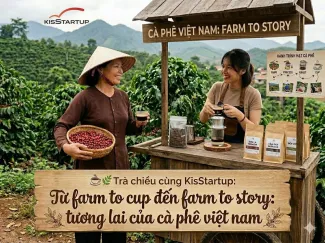
Koji Technology – Koji Fermentation for Specialty Coffee and Circular Economy
Thi Kim Cuc Nguyen’s Koji fermentation solution uses Aspergillus oryzae to elevate coffee flavor—producing notes of chocolate, peach, and apple, and increasing SCA scores by around 10%. The process also generates valuable byproducts such as kombucha and compost, minimizing waste. The project already has a patent application, has been presented at VAST, and has been tested with farmers—many of whom are ethnic minority women.
The potential of Koji Technology goes beyond better-tasting coffee. It lies in building an inclusive specialty coffee value chain where farmers capture more value from each coffee cherry, women are economically empowered, and SDG goals 1, 3, 5, and 12 are embedded in a meaningful way.
4. Hoang Nguyen – University of Science, VNU-HCM
CymbionX – Beneficial Microorganisms & Biostimulants from Food Waste
CymbionX combines mycorrhizal fungi and biostimulants extracted from food waste to create a microbial formula with highly infective AMF spores of micrometer size. The product is easy to apply through liquid solutions, drone spraying, or drip irrigation.
Amid rising chemical fertilizer costs and increasing pressure to reduce agricultural emissions, CymbionX offers a new class of biological agriculture solution: improving plant and soil health, reducing reliance on chemical fertilizers, and enabling access to demanding markets like North America and Europe—where microbial products linked with emissions data and soil-health metrics are in high demand.
About the LIF Programme
The Leaders in Innovation Fellowships (LIF), run by the Royal Academy of Engineering, supports talented entrepreneurs in transforming engineering innovations into sustainable businesses that tackle environmental, economic, and social challenges. The programme equips entrepreneurs with startup and growth skills, facilitates investment readiness, and connects them to a global network of researchers, investors, and industry leaders.
The programme charges no fees and requires no equity or intellectual property rights.
About KisStartup
KisStartup is a pioneer in Vietnam in the commercialization of scientific research, connecting scientists, businesses, and international organizations. Since 2025, KisStartup has partnered with the Royal Academy of Engineering to advance the LIF Global programme in Vietnam. In 2025, ten Vietnamese projects were selected, with seven successfully completing the programme.
We are committed to serving as an effective bridge between Vietnamese scientists and the UK innovation ecosystem, helping elevate Vietnam’s research commercialization to the international stage.
LIF Programme Contact in Vietnam
Email: hello@kisstartup.com | minh@kisstartup.com | phong.kisstartup@gmail.com
Hotline: +84 879 300 303 (Mr. Phong)
- Log in to post comments
- 19 views