
If we had to choose a single keyword to describe what is unfolding in the current global economy, it would undoubtedly be "change."
- Technology is changing.
- Customers are changing.
- Markets are changing.
- Business models are changing.
Even the industries once deemed the most stable are now confronting unprecedented volatility.
In this landscape, an enterprise's most vital resource is no longer merely capital, technology, or production scale. It is the capacity to innovate.
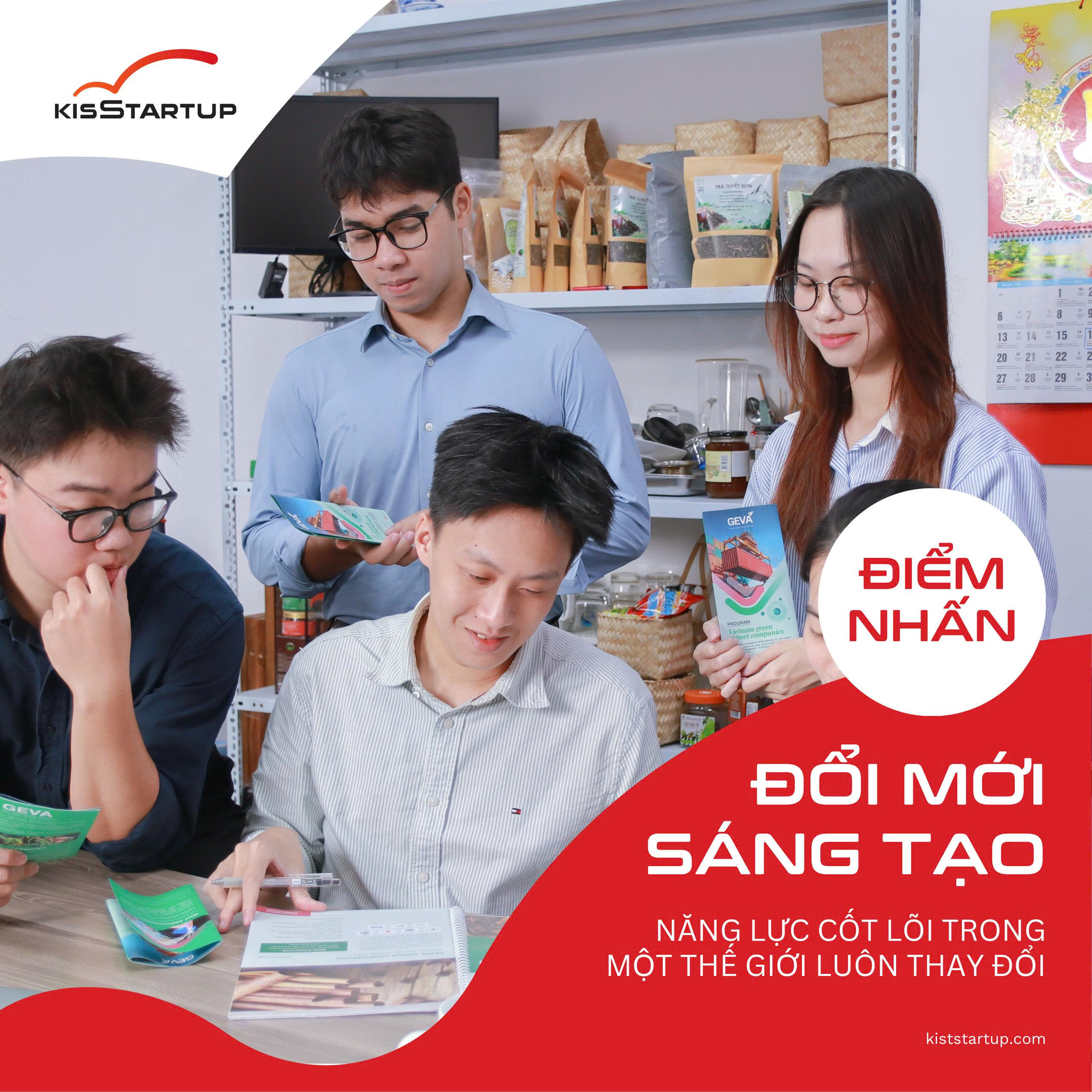
That is precisely why KisStartup has chosen "Innovation" as the keyword for this week’s Spotlight.
Innovation is Not Just for Startups
When innovation is mentioned, many immediately think of tech startups, modern research labs, or groundbreaking inventions.
However, through over a decade of working alongside enterprises, startups, universities, development organizations, and regulatory bodies across various regions, KisStartup has observed that innovation manifests in far more diverse forms than we realize:
A cooperative transforming how it tells its product story.
A manufacturing enterprise piloting a new sales channel.
A community-based tourism establishment building a fresh experience for guests.
An exporting enterprise pivoting from selling products to selling solutions.
An organization leveraging AI to elevate workplace productivity.
These are all clear expressions of innovation.
Innovation does not necessarily mean creating something that has never existed on earth. In many cases, it is the ability to see fresh opportunities within existing resources and generate new value for customers.
From Innovation Projects to Innovation Capability
One of the most significant shifts in modern management thinking is moving away from the approach of "running an innovation project" toward "building an innovation capability."
In a volatile world, no enterprise can accurately predict the future. However, an enterprise can absolutely build the capacity to adapt to that future. This is why an increasing number of organizations globally are focusing on developing foundational capabilities such as:
- Observing and identifying trends.
- Deeply understanding customers.
- Rapid experimentation.
- Learning from failure.
- Leveraging data for decision-making.
- Connecting with external resources.
- Cultivating an internal culture of innovation.
While these capabilities do not shield an enterprise from every risk, they enable it to respond far more rapidly when the market shifts.
Lean Startup: Learning Faster over Growing Bigger
One of the most profoundly influential frameworks in innovation over the past years is the Lean Startup methodology.
The core of this method does not lie in cutting costs. The core is learning.
Instead of spending years building a perfect product before introducing it to the market, enterprises test early, learn from real-world feedback, and continuously pivot.
Today, the "Build – Measure – Learn" feedback loop is just as relevant for mature enterprises as it is for startups. In an era dominated by AI, rapid digital transformation, and constantly shifting global markets, the ability to learn fast is emerging as a much more vital competitive advantage than the ability to rigidly draft long-term plans.
Design Thinking: Starting with People
While Lean Startup helps enterprises learn faster, Design Thinking helps them understand their customers more deeply.
Countless projects fail not due to weak technology or a lack of resources. They fail because they solve the wrong problem.
Design Thinking reminds us that innovation must begin with real human needs:
- Observe the customer.
- Listen to the customer.
- Empathize with the customer.
Only then, design the solution.
In KisStartup’s practical experience - working with highland agricultural enterprises, cooperatives producing indigenous goods, and international exporters alike - the most successful innovations consistently stem from a profound empathy for the customer rather than complex technology.
Innovation Does Not Occur in a Vacuum
An isolated enterprise can rarely innovate if it stands outside the ecosystem. Today, innovation is increasingly open.
Enterprises need to connect with customers, experts, universities, startups, investors, support organizations, and tech partners. It is through these very connections that new ideas, resources, and opportunities take shape.
Having accompanied numerous innovation ecosystems both in Vietnam and internationally over the years, KisStartup has learned a vital lesson: strong ecosystems are not defined by having the most resources, but by how effectively those resources are interconnected.
Therefore, innovation is never just a solo business story. It is a story of communities, networks, and ecosystems.
From Strategy to Action
In many corporate boardrooms, innovation is still viewed as a rather abstract concept. Ultimately, however, innovation must be translated into concrete action:
- A new strategy.
- A new business model.
- A more efficient workflow.
- A new product.
- A better customer experience.
- A smarter way of working.
Or simply the capacity to ask better questions about the future.
Small, continuous changes consistently generate a far greater impact than sporadic, trend-chasing transformation campaigns.
Stay Tuned for KisStartup’s Series on Innovation
In the coming period, KisStartup will continue to share perspectives, research, practical insights, and case studies related to:
- Innovative entrepreneurship.
- Lean Startup methodology.
- Design Thinking applications.
- Business model innovation.
- Open Innovation.
- Digital transformation and AI.
- Data strategy.
- Innovation ecosystems.
Innovation across agriculture, tourism, manufacturing, and exports.
Real-world lessons from enterprises within KisStartup’s domestic and international networks.
In a world where change has become the new normal, the question is no longer whether an enterprise needs to innovate. The more critical question is: To what extent is your enterprise actively building its innovation capability?
And perhaps, that will be one of the defining factors determining an enterprise's capacity to grow sustainably over the coming decade.