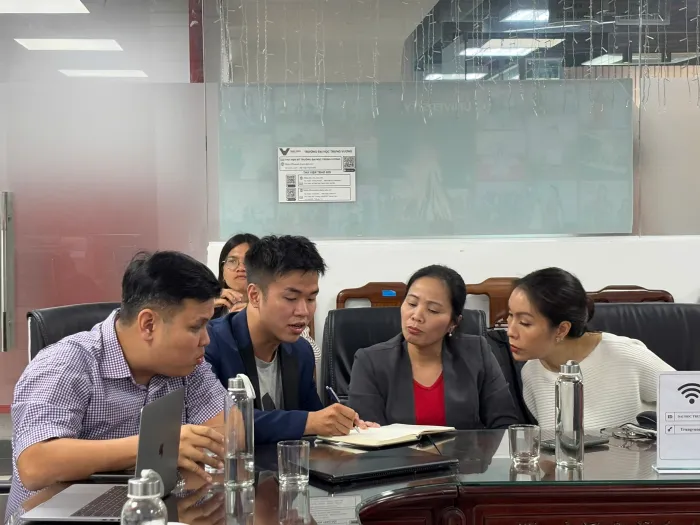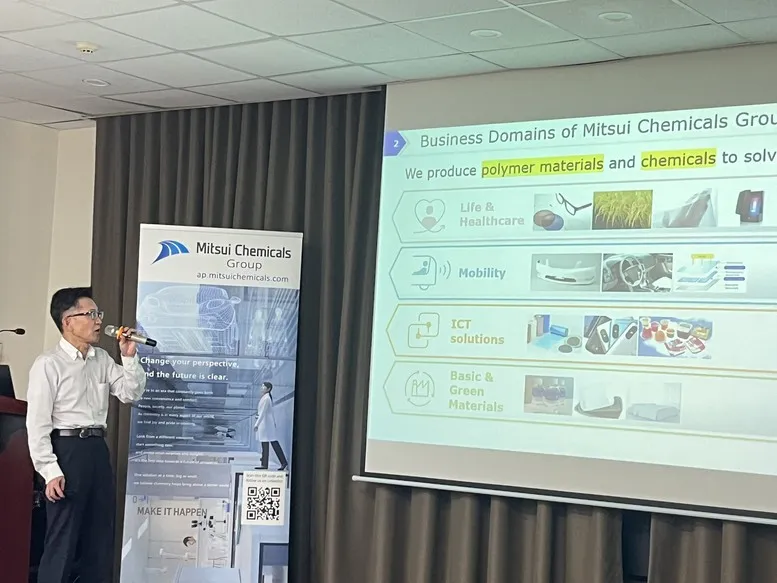
Instead of startups "selling" their solutions, corporations, enterprises, investment funds, development organizations, or even government agencies will stand up to present their challenges, needs, and collaboration opportunities directly to the innovation community.
In other words, instead of asking:
"What does your startup have?"
Reverse pitching asks:
"What problem are we facing, and who can help us solve it?"
While this might sound like a simple reversal of presenting roles, it actually marks a profound shift in the mindset of innovation.
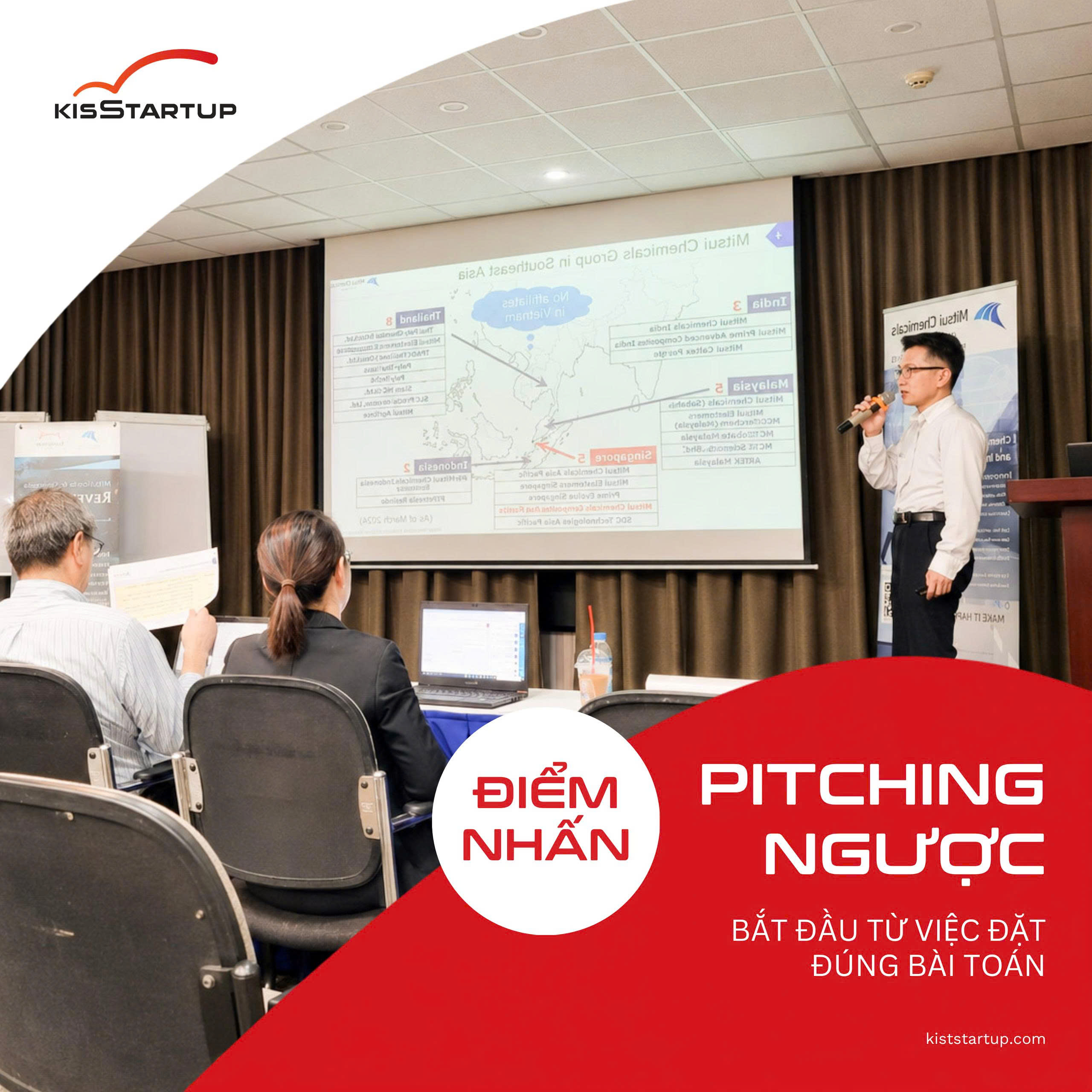
From Solution-Driven to Challenge-Driven Innovation
For years, the majority of startup and innovation programs have operated on a "solution-driven" basis—meaning they focus heavily on searching for new solutions.
However, reality reveals a striking paradox:
- There is an abundance of startups.
- There is an abundance of technology.
- There is an abundance of solutions.
Yet, the number of successfully deployed solutions remains remarkably low. The root cause is rarely that the solutions are poor. Rather, it is because many solutions are attempting to solve ill-defined problems.
As generative AI, cloud computing, and technological platforms become increasingly ubiquitous, the world no longer suffers from a shortage of solutions. What has become scarce are problems articulated clearly enough for others to step in and solve them.
This is precisely why modern Open Innovation models are progressively shifting toward a "challenge-driven innovation" approach. Reverse Pitching stands as one of the most vital tools of this strategy.
What Makes Reverse Pitching So Compelling?
1. Reducing Information Asymmetry within the Ecosystem
In traditional pitching events, startups usually spend a tremendous amount of time trying to understand investors or corporates. More often than not, they are left guessing:
- Which sectors do investors care about?
- What is their allocated budget?
- How do they wish to collaborate?
- What are their selection criteria?
Conversely, in Reverse Pitching, it is the investors or corporates who must publicly lay out their priorities, needs, and benchmarks. Information becomes transparent. Startups can self-assess their alignment before opting in, enabling both sides to allocate their resources much more efficiently.
2. Shifting the Focus from Technology to Value
One of the most common pitfalls in innovation is over-indexing on technology. Many enterprises ask:
- "Which AI is the best?"
- "Which blockchain is the most advanced?"
- "Which platform is the most modern?"
Meanwhile, the far more critical questions are left unasked:
- "What problem is the business facing?"
- "What is the actual cost of that problem?"
- "If resolved, what value does it generate?"
Reverse Pitching forces organizations back to the true essence of innovation: It is not about the technology. It is about creating value by solving real problems.
3. Forging More Substantive Partnerships
Countless corporate-startup matchmaking programs fail simply because the two parties do not genuinely understand each other. The startup pitches a product; the corporate pitches a vague need. After a few meetings, they realize they are not even talking about the same problem.
Reverse Pitching flips this trajectory. The corporate must clarify:
- The exact problem.
- The operational context.
- The existing data.
- The technical constraints.
- The pilot budget.
- The success metrics.
Armed with this clarity, startups and tech partners can propose highly targeted solutions, drastically increasing the likelihood of a successful collaboration.
A Vital Capability for Enterprises in the AI Era
Fascinatingly, AI is making Reverse Pitching more critical than ever.
In the past, sourcing solutions was the hard part. Today, within minutes, anyone can find dozens of different AI tools addressing the same need. The difficulty is no longer in finding the tool; the difficulty lies in pinning down the exact problem.
Consequently, one of the most vital capabilities for an enterprise in the AI era might not be the ability to use AI itself. Rather, it is the capacity to:
- Identify core challenges.
- Standardize foundational data.
- Define the underlying problem.
- Articulate innovation needs clearly.
In other words, enterprises must learn how to "pitch" their own problems.
From KisStartup’s Experience
Reflecting on a journey of over a decade anchoring startups, corporates, and open innovation programs, we have consistently observed that:
- The greatest bottleneck is rarely a lack of solutions.
- The bottleneck is almost always a failure to correctly define the problem.
In many of the open innovation programs that KisStartup has rolled out alongside conglomerates, development partners, and international organizations, the bulk of our time is not spent scouting for startups. Instead, it is dedicated to:
- Clarifying exact needs.
- Analyzing internal challenges.
- Translating raw business needs into sharp innovation prompts.
- Developing comprehensive Challenge Briefs.
- Establishing tangible success metrics.
Only when this groundwork is laid can the ecosystem step in to solve the problem effectively. This is the core spirit of Reverse Pitching.
Explore KisStartup's Reverse Pitching Case Study Series
In the coming period, KisStartup will introduce a series of articles and real-world case studies on Reverse Pitching and Open Innovation, drawing directly from our hands-on experience working alongside Mitsui Chemicals and numerous other partners across the innovation ecosystem.
The series will focus squarely on these central questions:
- How do you identify and define the right innovation challenge?
- Why do many enterprises recognize they are struggling but fail to articulate their core problem?
- What essential elements make up a highly effective Challenge Brief?
- How can startups, researchers, and corporates collaborate practically through Reverse Pitching?
- What role does AI play in discovering, analyzing, and translating complex innovation problems?
We firmly believe that innovation does not spark from merely having a brilliant idea. Innovation begins with seeing the right problem and posing questions sharp enough to mobilize the entire ecosystem toward a solution.
And that is precisely why Reverse Pitching is emerging as one of the most noteworthy trends in global open innovation today.