2026-07-28
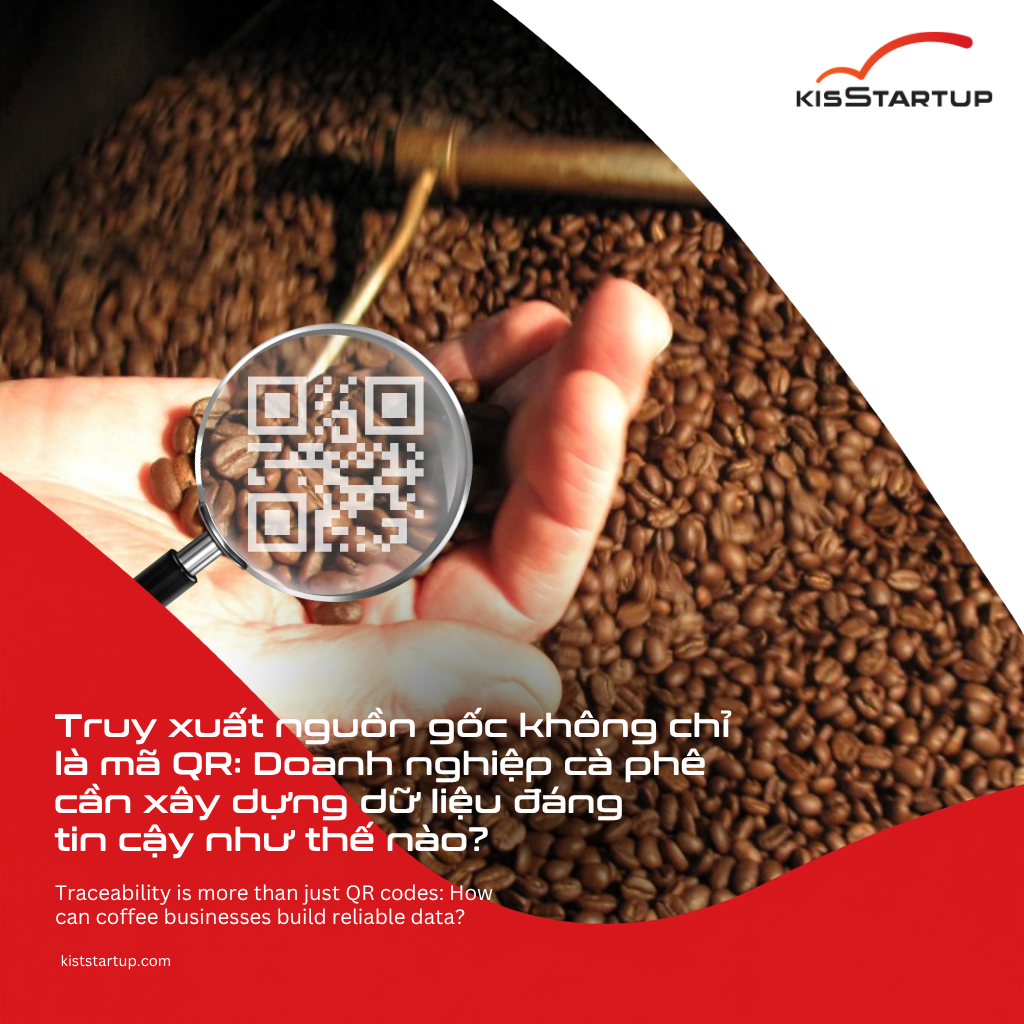
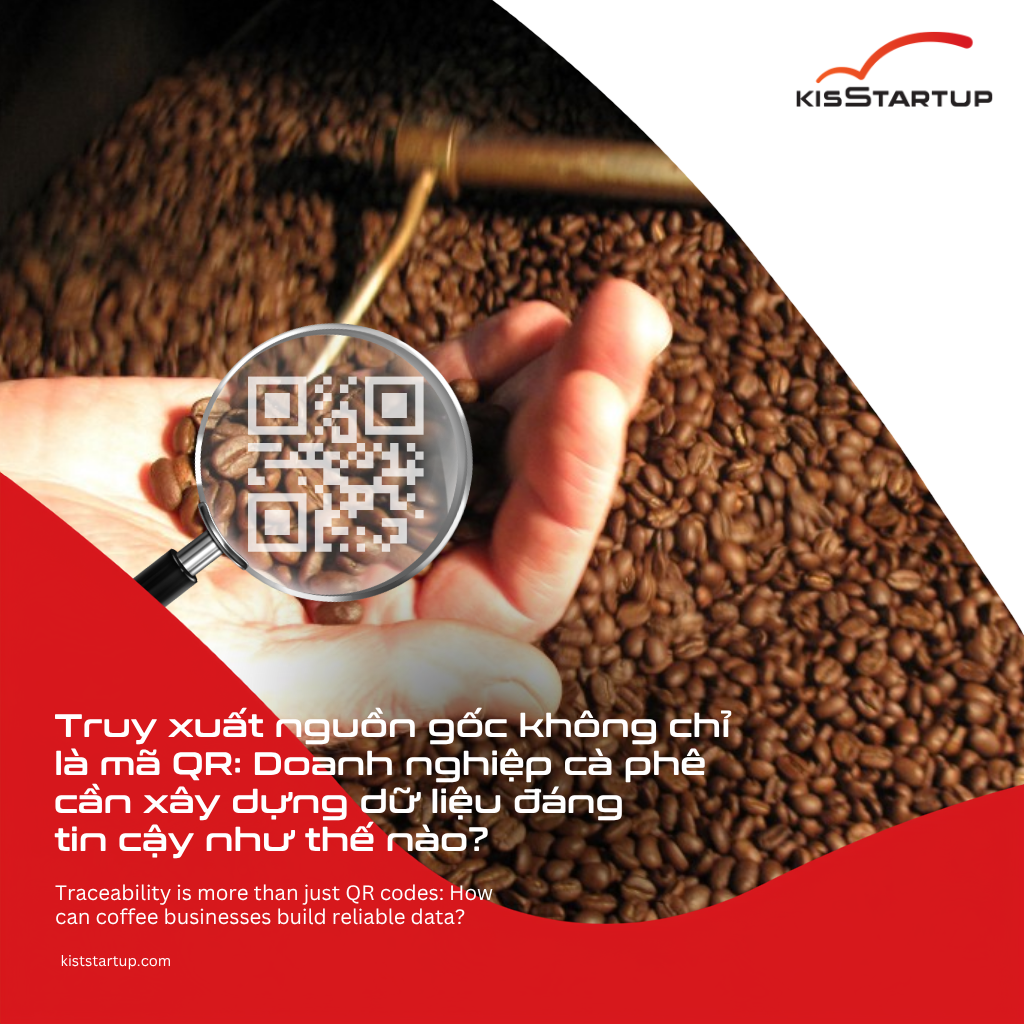
Traceability is more than just QR codes: How can coffee businesses build reliable data?
![]() A QR Code Is Only the Gateway, Not the Entire Traceability System
A QR Code Is Only the Gateway, Not the Entire Traceability System
 A QR Code Is Only the Gateway, Not the Entire Traceability System
When traceability is mentioned, many businesses immediately think of printing a QR code on the packaging.
A customer scans the code and sees a page containing images of the growing area, the farmer’s name, the product story, and some information about the production process. From a communication perspective, this is convenient and visually engaging.
However, a QR code does not automatically create traceability.
A QR code is only a tool that allows users to access information. The real value lies in the data system behind it.
If the information behind the QR code is not linked to a specific lot, is not updated, has no supporting evidence, and cannot be cross-checked, the business is only creating a product introduction page rather than a trustworthy traceability system.
This distinction is extremely important.
A product introduction page may answer the question:
Which region does this product come from?
A traceability system needs to answer much deeper questions:
- Which specific lot does this product belong to?
- When was the lot purchased?
- Which farmers or growing areas supplied the raw material?
- What were the input and output volumes?
- Which stages did the lot go through?
- Who was responsible for recording and confirming the data?
- What supporting evidence is available?
- Is the data consistent with warehouse, production, and order records?
- If a discrepancy is found, can the business trace the cause?
Traceability is not about “telling a beautiful story” about a product.
It is the ability to demonstrate the product journey through structured, connected, and verifiable data.
Why Is Traceability Becoming Increasingly Important for Coffee Businesses?
For many years, businesses may have sold primarily based on sample quality, commercial relationships, pricing, and delivery capability.
However, market requirements are changing.
Buyers increasingly want to know more about origin, growing areas, cultivation practices, labor conditions, certification, sustainability, and the business’s ability to control supply-chain risks.
For coffee businesses, traceability can serve several purposes at the same time.
Meeting Customer Requirements
Buyers may request lot documentation, growing-area information, quality results, or evidence of raw material origin.
If the data is well organized, the business can respond quickly and consistently.
If the data is fragmented, every buyer request becomes a manual search process.
Managing Quality
When a lot has problems with moisture, flavor, or defect rates, the business needs to trace backwards to identify the cause.
The cause may be related to:
- A specific growing area.
- Harvest timing.
- Processing method.
- Drying conditions.
- Storage duration.
- Transportation.
- The blending of raw materials from multiple sources.
Without traceability data, the business can only estimate the cause based on experience.
Controlling Risks
Traceability helps a business isolate problems.
If a shipment receives negative feedback, the business needs to know exactly which products are affected. If it cannot identify them, it may have to inspect or recall a larger volume than necessary.
Demonstrating Sustainability Commitments
Claims such as “sustainably sourced,” “deforestation-free,” “supporting farmers,” or “responsibly produced” increasingly need to be supported by data.
Without data, these commitments are difficult to verify.
Creating Commercial Value
Traceability is not only a compliance requirement.
When developed effectively, it can help a business:
- Increase buyer trust.
- Differentiate products.
- Develop premium product lines.
- Tell evidence-based brand stories.
- Shorten supplier due diligence.
- Increase the likelihood of repeat business.
Traceability Is Essentially the Ability to Connect Events Across the Value Chain
To understand this more simply, consider a coffee lot as a journey with multiple stops.
That journey may begin at the growing area and continue through harvesting, purchasing, processing, quality control, storage, packaging, and delivery.
At each stop, an event takes place and new data is created.
For example:
- Farmer A harvests coffee on 10 November.
- The collection point receives 500 kilograms on 11 November.
- The raw material is assigned to processing lot B.
- After processing, 390 kilograms remain.
- Testing shows a moisture level of 11.5%.
- The lot is stored at warehouse location C.
- Part of the lot is sold to customer D.
A good traceability system must connect these events into one continuous chain.
If one link is missing, the business will face difficulties when tracing backwards or forwards.
Backward Traceability
Starting from a product or order and tracing it back to the raw material source.
For example: Which farmers supplied the coffee delivered to the German customer?
Forward Traceability
Starting from a raw material source and identifying the related final products.
For example: Which shipments used coffee from this growing area, and to whom were they sold?
Both capabilities are important.
If a business knows the general origin but cannot identify which product used the raw material, the system is still incomplete.
The Starting Point of Traceability Is Identification Codes
Each important entity in the chain needs a clear identifier.
For a coffee business, basic identifiers may include:
- Farmer code.
- Growing-area or land-plot code.
- Collection-point code.
- Raw-material lot code.
- Processing lot code.
- Finished-product lot code.
- Warehouse or storage-location code.
- Order code.
- Customer code.
- Document or inspection-result code.
Identifiers help businesses avoid complete dependence on names.
For example, several farmers in one area may share the same name. A growing-area name may be written in different ways. A lot may be identified by the customer name in the sales department but by production date in the warehouse.
If each department uses its own naming method, linking data becomes extremely difficult.
A good identifier should:
- Be unique.
- Not change arbitrarily.
- Be easy to read.
- Follow a clear coding rule.
- Avoid excessive dependence on information that may change.
- Be used consistently across departments.
For example: CF-SL-2026-001
Where:
- CF: coffee.
- SL: Son La region.
- 2026: year the lot was created.
- 001: sequence number.
A business may design a different coding method, but what matters is that the whole team follows the same rule.
A Common Error: One Lot with Multiple Different Codes
Suppose the purchasing team names a lot: Purchased on 15/11
The production department calls it: Roasting Batch No. 8
The warehouse stores it under: Warehouse A – Bags 15 to 25
The sales department records it as: Sample Sent to Customer X
These four names may refer to the same source material, but there is no common code connecting them.
When the customer provides feedback about the sample, the business must ask several people to determine which lot it came from.
The risk becomes greater if the person who previously handled the data has left or no longer remembers the details.
The business therefore needs to retain one continuous traceability code, even when the lot is divided, blended, or moved to another stage.
How Should Data Be Managed When Lots Are Split or Blended?
This is one of the most complex aspects of traceability.
In practice, raw materials do not always follow a straight path from one farmer to one final product.
One raw-material lot may be divided into several parts.
Several raw-material lots may be blended into one finished-product lot.
For example:
- Lot A contains 1,000 kilograms.
- 600 kilograms are used for finished-product lot X.
- 400 kilograms are used for finished-product lot Y.
Or:
- Lot A contributes 300 kilograms.
- Lot B contributes 500 kilograms.
- The two lots are blended into finished-product lot Z.
If the business only creates a new code for the finished-product lot but does not retain the link to the input lots, traceability is lost.
The business needs to record the “parent–child” relationship between lots.
For a split lot:
- Parent lot: A.
- Child lots: X and Y.
- Volume allocated to each child lot.
For a blended lot:
- Input lots: A and B.
- Output lot: Z.
- Contribution percentage or volume from each input lot.
This enables the business to calculate:
- The raw material sources for each product.
- The contribution of each growing area.
- Total volume used.
- Remaining inventory.
- Customers affected if an incident occurs.
What Is the Minimum Data Required for Traceability?
Businesses do not need to collect every possible piece of information from the beginning.
A system with too many data fields may be difficult for employees and farmers to maintain.
The minimum data set should allow the business to determine:
- What the product is.
- Where it came from.
- When it was created.
- Which stages it went through.
- Who was responsible.
- Where it went afterwards.
For a coffee lot, the basic data set may include:
Identification Information
- Lot code.
- Product type.
- Crop year.
- Lot creation date.
- Current status.
Origin Information
- Farmer or farmer-group code.
- Growing-area code.
- Location.
- Related land area.
- Harvest date.
- Purchase date.
Volume Information
- Input volume.
- Volume after each processing stage.
- Loss rate.
- Remaining inventory.
- Volume sold.
Processing Information
- Processing method.
- Processing date.
- Responsible unit or person.
- Equipment or production area.
- Key processing conditions.
Quality Information
- Moisture level.
- Defect rate.
- Cupping results.
- Testing results.
- Test date.
- Testing person or organization.
Storage Information
- Warehouse.
- Location.
- Warehouse entry date.
- Warehouse exit date.
- Packaging condition.
- Storage conditions, where necessary.
Transaction Information
- Order code.
- Customer.
- Delivery date.
- Delivered volume.
- Document number.
- Post-delivery feedback.
Supporting Evidence
- Images.
- Purchase receipts.
- Weighing slips.
- Inspection results.
- Certifications.
- Production records.
- Related contracts or documents.
Businesses do not necessarily need to implement all of these immediately. However, lot code, origin, time, volume, and transformation events are core elements that should not be omitted.
Traceability Data Must Reflect Actual Operations, Not Only Reporting Requirements
A traceability system that is only updated before an inspection or before documents are sent to a customer will struggle to maintain credibility.
Traceability data needs to be created during daily operations.
For example:
- During purchasing, the employee records the farmer code and volume.
- When goods enter the warehouse, the warehouse employee confirms the lot code and storage location.
- During processing, the production team records input and output volumes.
- During quality testing, results are attached directly to the lot code.
- When the product is delivered, the sales department links the order to the outgoing lot.
If staff have to re-enter all information into a separate traceability system after the work is completed, the risk of errors and omissions becomes high.
A better approach is to integrate data creation into daily tasks.
Traceability should not be an additional record layer built separately from operations.
It should reflect how the business actually operates.
Three Levels of Reliability in Traceability Data
Not all data has the same level of reliability.
Businesses should clearly understand the source of each piece of information.
Level 1: Self-Declared Data
This is data provided by farmers, employees, or partners without independent verification.
Examples include:
- A farmer declaring the farm area.
- An employee entering the harvest date.
- A supplier reporting its cultivation method.
This data is still useful, but it should be clearly identified as self-declared.
Level 2: Data Supported by Evidence
The information is accompanied by documentation or evidence.
Examples include:
- Weighing slips.
- Timestamped images.
- Handover records.
- Testing results.
- Contracts.
- Growing-area maps.
The level of reliability is higher because the information can be cross-checked.
Level 3: Verified Data
The data has been reviewed by a responsible person, an internal process, or a third party.
Examples include:
- Coordinates checked in the field.
- Quality results confirmed by a laboratory.
- Volumes reconciled across purchasing, warehouse, and accounting records.
- Certifications authenticated.
- Documentation reviewed during an audit.
Distinguishing between these three levels prevents businesses from presenting all data as though it has been fully verified.
This is essential for maintaining credibility.
Traceability and the Challenge of Mass Balance
A trustworthy traceability system needs to answer the question:
Is the total output volume reasonable compared with the total input volume?
Suppose a business purchases 10 tonnes of coffee cherries.
After processing, it records 8 tonnes of green coffee beans.
If this conversion rate is inconsistent with production reality, the data needs to be reviewed.
Or suppose the business purchases only 5 tonnes of certified raw material but sells 8 tonnes of finished product under a certified claim. This is a serious discrepancy.
Mass balance helps verify:
- Input volume.
- Production loss.
- Finished-product volume.
- Inventory volume.
- Volume sold.
- Volume destroyed or used internally.
The basic formula can be understood as:
Opening inventory + Inputs – Losses – Sales = Closing inventory
If the figures do not match, the business needs to identify the cause.
Possible causes include:
- Data-entry errors.
- Incorrect units of measurement.
- Unrecorded losses.
- A lot being split without an update.
- Goods being shipped without a record.
- Warehouse and accounting data using different cut-off times.
- Actual physical loss.
Mass balance is one of the simplest and most effective ways to assess the reliability of a traceability system.
What Can and Should Not Be Displayed Through a QR Code?
Not all internal data should be shown to consumers or buyers.
Businesses need to create information layers.
Information That Can Be Displayed Publicly
- Production region.
- Coffee variety.
- Processing method.
- Crop year.
- Flavor characteristics.
- Certification.
- Farmer story.
- Usage instructions.
- Business commitments.
Information That Should Only Be Shared with Buyers
- Detailed lot documentation.
- Testing results.
- Exact coordinates or maps.
- Certification records.
- Supply-chain data.
- Compliance documents.
- Full quality reports.
Internal Information
- Purchase prices.
- Production costs.
- Customer lists.
- Contracts.
- Sensitive personal data.
- Blending formulas.
- Internal supplier assessments.
- Accounts and access rights.
A public QR code should be viewed as a communication layer.
The internal data system needs to be deeper, more detailed, and more strictly controlled.
Traceability Does Not Mean Making All Farmer Data Public
When developing a traceability system, businesses may collect significant amounts of personal data.
Examples include:
- Full name.
- Phone number.
- Address.
- Coordinates.
- Land area.
- Production volume.
- Payment information.
- Images.
- Household-member information.
Not all of this data needs to be published on a public platform.
The business needs to define:
- The purpose of collection.
- Who is allowed to access the data.
- How long it will be retained.
- How it will be used.
- How it will be protected.
- Which information can be shared externally.
For example, consumers may need to know that a product comes from a particular community or region, but they do not necessarily need the phone number or financial information of each farmer.
A professional traceability system must balance transparency with data protection.
Traceability Fails When Data Users Do Not See Its Value
A form may be designed extremely well, but if users do not understand why the data must be entered, the system will not be sustainable.
Employees may see traceability as additional work.
Farmers may feel that recordkeeping takes too much time.
Warehouse staff may prioritize receiving and dispatching goods, leaving data entry until later.
The sales department may create a new code to process an order more quickly.
Over time, the system begins to accumulate missing data, duplicate codes, and delayed updates.
To avoid this, businesses need to explain the specific value for each group.
For Purchasing Staff
Data helps reduce disputes about volume, price, and source.
For the Quality Department
Data helps identify causes when quality is inconsistent.
For Warehouse Staff
Clear lot codes reduce product mix-ups and make stocktaking faster.
For the Sales Department
Available documentation allows faster responses to buyers.
For Farmers
Data can help demonstrate production practices, maintain market access, and access support programs.
For Management
Data helps control risk and evaluate the performance of each growing area.
Traceability is sustainable only when it creates operational value instead of merely creating more reports.
Do Not Digitize a Disorganized Process
A business may purchase traceability software, but the software will not automatically solve problems such as:
- No lot-coding rules.
- Inconsistent units of measurement.
- No clearly assigned responsibility.
- No record of lot splitting or blending.
- No volume reconciliation.
- No process for correcting data.
- No supporting evidence.
- Employees not using the system.
If the process is unclear, digitization may simply create incorrect data more quickly.
Before selecting technology, the business therefore needs to clarify:
- Which events need to be recorded?
- Who records them?
- When are they recorded?
- Which codes are used?
- What evidence is required?
- Who verifies the data?
- Who is allowed to correct errors?
- How is the data linked with warehouse, quality, and order information?
Technology should support a designed process, not replace process design.
A Traceability Roadmap Suitable for SMEs
Businesses do not need to implement traceability across the entire supply chain from the beginning.
A practical roadmap may include five stages.
Stage 1: Select One Product or Group of Lots
Choose a high-value product, an important growing area, or a customer with clear requirements.
Do not begin with the entire business.
Stage 2: Map the Product Journey
List the stages from raw material to delivery.
For example:
- Harvesting.
- Purchasing.
- Transportation.
- Processing.
- Quality control.
- Storage.
- Packaging.
- Delivery.
Stage 3: Define the Minimum Data Set
At each stage, identify:
- What information needs to be recorded.
- Who records it.
- When it is recorded.
- What evidence is attached.
- Which code is used.
Stage 4: Test on a Small Scale
The business can begin with five to ten lots.
During the pilot, record:
- Which data fields are difficult to complete.
- Which data is frequently missing.
- Which codes are easily confused.
- At which stage the link is lost.
- What additional guidance users need.
Stage 5: Standardize and Expand
Once the process operates consistently, the business can expand to additional growing areas, products, or customers.
This approach reduces costs and helps avoid investing in a system that does not fit the business.
Practical Exercise: Trace One Lot in 30 Minutes
A business can test its current system with a simple exercise.
Randomly select one lot sold within the last three to six months.
Then ask the team to find:
- Lot code.
- Customer who purchased it.
- Delivery date.
- Delivered volume.
- Warehouse from which it was dispatched.
- Quality results.
- Production or processing date.
- Input volume.
- Raw material source.
- Related farmers or growing areas.
- Weighing slip.
- Certification or supporting documentation.
- Person who confirmed each stage.
During the search, record:
- How long did it take to find the complete documentation?
- How many people had to be contacted?
- In how many places was the data stored?
- Was any information inconsistent?
- Were there files with no clearly identified official version?
- Were there figures that did not balance?
- Was any information based only on memory?
If the business cannot trace one lot within a reasonable amount of time, creating another QR code is not the priority.
The priority should be correcting the underlying data flow.
A Basic Traceability Checklist
Businesses can assess themselves using the following questions.
Identification
- Does each farmer have a unique code?
- Does each growing area have a unique code?
- Does each lot have a unique code?
- Are codes used consistently across departments?
Data
- Are date, location, and volume recorded?
- Are inputs linked to outputs?
- Is the history of lot splitting or blending retained?
- Are quality results linked to lot codes?
Evidence
- Are weighing slips available?
- Are images or records available?
- Are certification documents available?
- Can the source of the data be verified?
Responsibility
- Who enters the data?
- Who checks it?
- Who is allowed to edit it?
- Is editing history retained?
Recovery
- Can the business trace backwards from an order to the growing area?
- Can it trace forwards from a growing area to the customer?
- Can it isolate affected products when an incident occurs?
If the business answers “no” to many of these questions, the existing traceability system should be strengthened before it is expanded.
Traceability Can Support Product Innovation
When data is connected, a business can do more than demonstrate origin. It can also identify new opportunities.
For example, the business may discover:
- A group of growing areas consistently creates a stable flavor profile.
- A processing method performs well with a particular variety.
- A farmer group has a lower defect rate.
- Certain lots may be suitable for the specialty segment.
- A customer group responds positively to products with a clear origin story.
- A product line may command a higher price when supported by traceability documentation.
Based on these insights, the business may develop:
- Region-specific products.
- Crop-specific products.
- Limited-edition products.
- Coffee lines with distinctive flavor profiles.
- Products connected to farmer communities.
- Products designed to meet specific sustainability requirements.
Traceability is therefore not only a compliance cost.
It can become a foundation for product innovation and market strategy.
Traceability and Green Transformation Need the Same Data Foundation
Green transformation requires businesses to understand how products are created and where impacts occur.
For example, if a business wants to reduce water use, it needs to know where water is used and for which lots.
If it wants to reduce transport emissions, it needs to know where raw materials come from, which routes they follow, and in what volumes.
If it wants to demonstrate responsible sourcing, it needs to connect growing-area data with each product lot.
Traceability and green transformation should therefore not be implemented as separate systems.
Both require:
- Identifiers.
- Origin data.
- Volume data.
- Process data.
- Evidence.
- Responsible persons.
- Verification and reconciliation capability.
If a business builds a strong traceability data foundation, adding environmental and social indicators becomes much easier.
KisStartup’s Perspective: Traceability Is a System Innovation Challenge, Not Only a Technology Challenge
KisStartup approaches traceability as a process of innovating how businesses operate, coordinate, and use data.
The key question is not:
Should the business use a QR code or blockchain?
The questions that need to be asked first are:
- What does the business need to prove?
- Which data is required by buyers or target markets?
- Where is the data currently stored?
- Which links are frequently missing?
- Who is responsible at each stage?
- Does the data reflect actual operations, or is it compiled afterwards?
- Can the business verify mass balance?
- Can the team maintain the system every day?
- Which technology is appropriate for the current scale and resources?
A system using simple technology but complete, consistent, and verified data is often more reliable than an advanced platform with inaccurate input data.
KisStartup prioritizes an approach that begins with actual problems, designs a minimum data set, pilots the process on a small scale, and expands once the business has gained control of the process.
How Does KisStartup Support Businesses?
Through data consulting, operational optimization, technology connection, and market development activities, KisStartup supports businesses in:
- Assessing the current state of traceability.
- Mapping the product chain.
- Identifying points where data is created.
- Designing farmer, growing-area, and lot codes.
- Developing a minimum data set.
- Designing lot-splitting and blending processes.
- Developing mass-balance verification mechanisms.
- Standardizing evidence storage.
- Designing data access permissions.
- Developing discrepancy-handling processes.
- Piloting the system with a selected product group.
- Training staff and supply-chain partners.
- Assessing and connecting businesses with suitable technology providers.
- Preparing data documentation for buyers and export markets.
The goal is not to help businesses create another QR code.
The goal is to help them build a data system capable of answering, proving, and protecting the commitments they make to customers.
Conclusion: Traceability Is Trustworthy Only When the Data Behind It Is Trustworthy
A QR code can be created in a few minutes.
However, a trustworthy traceability system needs to be built from many elements:
- Consistent identifiers.
- Data created during operations.
- Links between inputs and outputs.
- Records of lot splitting and blending.
- Mass-balance verification.
- Clear supporting evidence.
- Assigned responsibilities.
- Access control.
- Error-correction procedures.
- Both backward and forward traceability.
Businesses do not need to begin with a complicated platform.
They can begin with one lot, a minimum data set, and a 30-minute traceability test.
If a business can clearly explain where a product came from, which stages it went through, who verified the information, and to whom it was sold, the QR code then has real value.
Traceability is not an additional information layer attached to a product.
It is a management capability that allows a business to understand, control, and demonstrate the entire journey through which value is created.
Does Your Business Have a QR Code, or Does It Truly Have Traceability?
Choose one recently sold lot and try tracing it backwards from the order to the growing area. If the team has to search across multiple people and files or rely on memory, the problem is not how the information is displayed.
The problem lies in the data structure and the process behind it.
KisStartup supports businesses in reviewing data chains, designing lot codes, standardizing minimum data sets, developing verification processes, and selecting technology solutions that match their actual capabilities.
-------------------------
Does your business have plenty of data but aren't sure where to begin with standardization?
KisStartup works alongside businesses to assess their current data landscape, identify operational bottlenecks, prioritize the most critical business challenges, and design a transformation roadmap that aligns with their available resources.
We don't start by selling software. We start by helping businesses identify which data can truly create value.
Contact KisStartup to learn more about our Data Consulting & Operational Optimization
program for businesses.
- Log in to post comments
- 68 views